
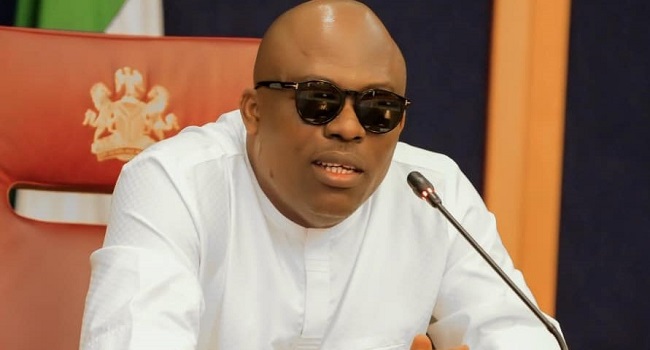
A Rivers State High Court sitting in Port Harcourt has issued an order stopping the Chief Judge of Rivers State from receiving or acting on any impeachment notice against Governor Siminalayi Fubara and his deputy, Professor Ngozi Odu. The court decision has temporarily halted moves by the Rivers State House of Assembly to begin impeachment proceedings against the state’s top political leaders.
The ruling followed an application brought before the court after members of the Rivers State House of Assembly formally wrote to the Chief Judge on Friday. In the letter, the lawmakers asked the Chief Judge to set up a seven-man panel to investigate allegations of gross misconduct against Governor Fubara and his deputy, as required by the Constitution.
According to sources within the Assembly, the decision to initiate the impeachment process was reached through a unanimous vote by the lawmakers. They insisted that the process was lawful and that they were determined to pursue it to its logical conclusion. However, the court’s latest order has put the process on hold pending further legal action.
In its ruling, the High Court restrained the Chief Judge from taking any steps related to the impeachment notice, including acknowledging it or acting on the request to constitute an investigative panel. The court said the order would remain in force until the substantive matter before it is heard and determined.
The development has added a new twist to the political tension that has gripped Rivers State in recent months. The state has been embroiled in a power struggle between Governor Fubara and some members of the House of Assembly, a crisis that has affected governance and drawn national attention.
Governor Fubara, who took office in May 2023, has faced opposition from a faction of lawmakers believed to be loyal to his political predecessor, former Governor Nyesom Wike. The disagreement has led to repeated clashes between the executive and legislative arms of government, including disputes over the state budget, appointments, and control of the Assembly.
At different times, the crisis has resulted in court cases, police presence at the Assembly complex, and parallel sittings by rival groups of lawmakers. Despite efforts by political leaders and elders to mediate, the situation has remained tense.
The impeachment move against Governor Fubara is seen by many observers as the peak of the political conflict. Impeachment is a serious constitutional process that can lead to the removal of a governor and deputy governor from office if they are found guilty of gross misconduct.
Under the 1999 Constitution, impeachment begins when at least one-third of the members of the House of Assembly sign a notice of allegation. The notice is sent to the Chief Judge, who is then required to set up a panel to investigate the claims. If the panel finds the allegations proven, the Assembly can proceed to remove the governor with a two-thirds majority vote.
Following the court order, reactions have been mixed across the state. Supporters of Governor Fubara welcomed the decision, describing it as a victory for the rule of law and constitutional order. They argued that the impeachment move was politically motivated and aimed at destabilising the state.
Some civil society groups also praised the court for stepping in, urging all parties to respect the judicial process. They called on political leaders to put the interest of the people first and avoid actions that could lead to unrest.
On the other hand, some lawmakers and their supporters expressed disappointment with the ruling. They maintained that the House of Assembly has the constitutional power to carry out its oversight functions, including impeachment, and accused the governor’s camp of using the courts to delay the process.
As of the time of filing this report, the Rivers State House of Assembly had not issued an official statement on the court order. The Chief Judge of the state has also not made any public comment on the matter.
The court is expected to fix a date for the hearing of the main case in the coming days. Until then, the impeachment process against Governor Fubara and his deputy remains suspended.
For many residents of Rivers State, the hope is that dialogue and respect for the law will prevail, allowing the state to move past the political crisis and focus on delivering good governance to the people.