
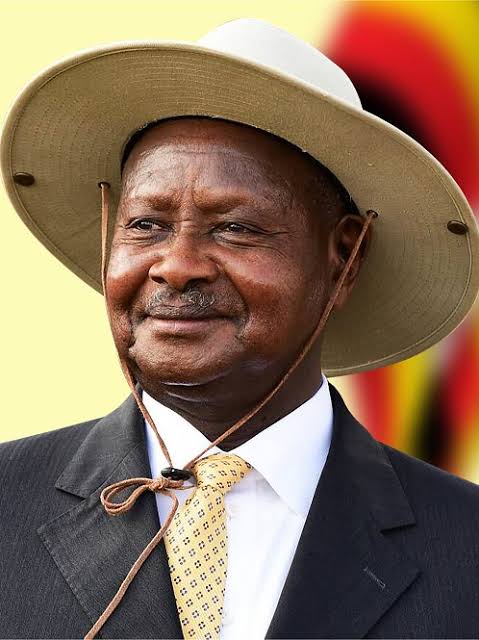
Uganda has officially declared President Yoweri Museveni the winner of its 2026 presidential election, extending his rule to about 40 years in power. The announcement has sparked fresh debate within and outside the country about leadership, democracy, and the future of Uganda.
The declaration was made by the Chairman of the Uganda Electoral Commission, Mr Simon Byabakama, who said Museveni polled the highest number of votes among all candidates. According to the commission, the 81-year-old leader scored over 7.9 million votes, crossing the constitutional requirement of more than 50 per cent of total valid votes cast.
“Having obtained the highest number of votes in the election and the votes cast in his favour being more than 50 per cent of the total valid votes cast at the election, the Commission hereby declares Candidate Yoweri Museveni as the winner of the election,” Byabakama said.
Official figures released by the commission show that about 11.4 million Ugandans voted in the election held on Thursday. This represents a voter turnout of 52.50 per cent of registered voters, meaning just over half of eligible voters took part in the poll.
Museveni, who first came to power in 1986 after a guerrilla war, has now ruled Uganda for four decades. His continued stay in office makes him one of Africa’s longest-serving leaders. Over the years, he has won several elections, though many of them have been criticised by opposition groups and international observers.
The 2026 election was closely watched both locally and internationally. It was described as tightly contested, with strong opposition participation and high public interest. However, the process was also marked by serious challenges, including an internet blackout and restrictions on civil society organisations.
On election day and during the vote counting period, authorities shut down internet access across the country. Social media platforms and messaging services were also blocked. The government said the move was necessary to maintain security and prevent the spread of false information.
Opposition figures and rights groups, however, criticised the shutdown, saying it limited free expression and access to information. Many Ugandans complained they could not share updates, monitor results, or communicate freely during the critical period.
In addition to the internet shutdown, several civil society groups reported restrictions on their activities. Some election observers said they faced difficulties accessing polling units, while others said their movements were limited by security agencies.
Despite these concerns, the Electoral Commission maintained that the election was conducted in line with the law. The commission said voting took place peacefully in most parts of the country and that the results reflected the will of the people.
President Museveni’s supporters have welcomed the outcome, describing it as a vote of confidence in his leadership. They argue that Museveni has brought stability to Uganda after years of political unrest before he took power.
When Museveni assumed office in 1986, Uganda had just emerged from years of civil war and military coups. His government focused on restoring order, rebuilding state institutions, and reviving the economy. In his early years, Museveni was praised by Western countries and international financial institutions for economic reforms and efforts to fight poverty.
Over time, however, criticism of his rule has grown. Opponents accuse him of tightening his grip on power, weakening democratic institutions, and suppressing dissent. Constitutional changes that removed presidential term limits and age limits allowed him to continue contesting elections.
Before these changes, Uganda’s constitution limited presidents to two terms and set an age limit of 75 years. Both provisions were removed by parliament after heated debates and protests, clearing the way for Museveni to remain in office.
The opposition has often argued that elections in Uganda are not held on a level playing field. They cite the use of state resources by the ruling party, heavy security presence, and arrests of opposition supporters as major concerns.
Although details of the opposition’s performance in the 2026 election were not fully highlighted in the commission’s announcement, earlier campaigns suggested a strong challenge from younger candidates who appealed to the country’s large youth population.
Uganda has one of the youngest populations in Africa, with a majority of citizens under the age of 30. Many young people face unemployment and rising living costs, issues that featured prominently during the campaign.
For Nigeria and other African countries, Uganda’s election once again raises questions about leadership succession and democratic growth on the continent. Several African leaders have remained in power for decades, often changing constitutions to extend their stay.
While some citizens value stability and experience, others argue that long rule limits fresh ideas and weakens accountability. These debates are also familiar in Nigeria, where issues of good governance, credible elections, and leadership renewal remain major public concerns.
International reaction to Museveni’s victory is expected to be mixed. While some governments may congratulate him, rights groups are likely to call for reforms, especially regarding internet freedom, civil liberties, and electoral transparency.
As Museveni begins another term, attention will turn to how he plans to address Uganda’s economic challenges, youth unemployment, rising debt, and demands for political reform. His government will also face pressure to improve relations with civil society and opposition groups.
For now, the Electoral Commission’s declaration has settled the immediate question of who won the election. But the wider conversation about Uganda’s political future, democracy, and leadership transition is far from over.