
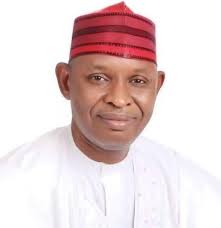
The leadership crisis within the New Nigeria People’s Party (NNPP) took a new turn on Tuesday as a faction of the party asked Kano State Governor, Abba Kabir Yusuf, to formally resign from the NNPP if he plans to defect to the All Progressives Congress (APC).
The call was made by the Boniface Aniebonam-led faction of the NNPP during a press conference held in Kano. The faction’s Kano State Chairman, Senator Masu’d el Jilbreen Doguwa, addressed journalists and said Governor Yusuf remains a registered member of the NNPP and must follow party rules if he wishes to leave.
According to Doguwa, the party has not received any official letter from the governor indicating his resignation from the NNPP, despite widespread rumours that he is planning to join the APC.
“Abba Kabir Yusuf is still a member of the NNPP, and as party members, we owe him respect,” Doguwa said. “However, if he intends to defect to another party, he must follow due process.”
He explained that the party’s constitution is clear on how members can resign, especially those holding public office under the party’s platform.
“He should formally submit a resignation letter to the NNPP chairman at his ward level, which we are yet to receive,” Doguwa added.
In recent weeks, Kano State has been filled with speculation about the possible defection of Governor Yusuf from the NNPP to the ruling APC. Though the governor has not publicly confirmed the move, several political meetings and visits by APC leaders to Kano have fueled the rumours.
Governor Yusuf, a close ally of former Kano State Governor Rabiu Musa Kwankwaso, was elected on the NNPP platform after defeating the APC candidate in a closely watched election.
During the press conference, Doguwa also restated the position of the Aniebonam-led faction that Rabiu Musa Kwankwaso is not the national leader of the NNPP.
Kwankwaso, who was the NNPP’s presidential candidate in the 2023 general elections, is widely seen by the public as the face of the party. He also leads the Kwankwasiyya Movement, a political group with strong influence in Kano and some other states.
However, Doguwa said court rulings have clearly shown that Kwankwaso does not hold any official leadership position within the NNPP.
He cited three court judgments that, according to him, confirmed the leadership and ownership of the party in favour of the Boniface Aniebonam-led faction.
These rulings were delivered by Justice M.A. Hassan of the Abuja High Court, Justice Bello Kawu of the Abuja High Court, and Justice C.U. Okoroafor of the Abia High Court.
“The courts have spoken clearly on the leadership of the NNPP,” Doguwa said. “These judgments confirm that Senator Kwankwaso is not the national leader of the party.”
Doguwa further claimed that Kwankwaso stopped being a major stakeholder in the NNPP after the 2023 general elections.
According to him, Kwankwaso’s involvement with the party was mainly tied to his presidential ambition, which ended after the elections.
“After the 2023 elections, Senator Kwankwaso ceased to be a major stakeholder in the NNPP,” he said.
This claim is likely to deepen the rift within the party, as many NNPP supporters still see Kwankwaso as the party’s main figure, especially in Kano State where his political movement enjoys massive grassroots support.
Another major issue raised at the press conference was the role of the Kwankwasiyya Movement within the NNPP.
Doguwa said the NNPP in Kano State remains open to individuals who wish to remain party members, but it will not accept any group trying to operate within the party under a different political identity.
“The NNPP in Kano State is open to members who want to remain with the party on an individual basis,” he said. “However, we will not accept those who want to operate within the party under the banner of the Kwankwasiyya Movement.”
This statement suggests a clear line being drawn between the party structure and the popular movement associated with Kwankwaso.
The NNPP has faced internal disputes for several years, mainly over leadership and control of the party. The crisis became more visible after the party gained national attention during the 2023 elections.
Kwankwaso’s defection to the NNPP before the elections brought many supporters and candidates into the party, especially in Kano. This sudden growth also exposed existing cracks within the party leadership.
Since the elections, disagreements over who controls the party and who speaks for it have led to court cases, public arguments, and parallel party activities.
The Aniebonam-led faction insists it is the legally recognised leadership, while supporters of Kwankwaso argue that political reality on the ground places him at the centre of the party.
Kano State remains one of the most politically important states in Nigeria due to its large population and voting strength. Any major political shift in the state often has national impact.
If Governor Yusuf defects to the APC, it could significantly change the balance of power in Kano and weaken the NNPP’s hold on the state.
It could also strengthen the APC ahead of future elections, especially as the ruling party seeks to expand its influence in opposition-controlled states.
For now, the governor has not officially declared his intention, and his silence has left many questions unanswered.
The NNPP faction’s message was clear: any move by the governor must follow party rules.
By insisting on a formal resignation, the faction aims to assert its authority and reinforce internal discipline.