
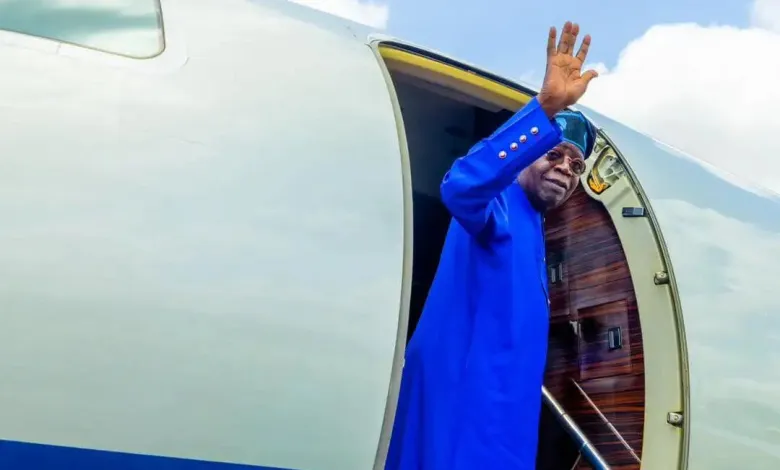
President Bola Ahmed Tinubu is set to depart Abuja on Monday, January 26, for a state visit to the Republic of Türkiye, as part of ongoing efforts to strengthen Nigeria’s foreign relations and attract new opportunities for growth. The Presidency announced the trip through a statement by the Special Adviser to the President on Information and Strategy, Mr Bayo Onanuga.
According to the Presidency, the visit is aimed at deepening the long-standing friendly relationship between Nigeria and Türkiye, while also opening new areas of cooperation that will support Nigeria’s development goals. Key focus areas of the visit include security, education, social development, innovation, aviation, trade, and investment.
Nigeria and Türkiye have enjoyed cordial relations for decades, with cooperation in diplomacy, business, and people-to-people exchange. Over the years, Turkish companies have increased their presence in Nigeria, especially in construction, manufacturing, energy, and services. At the same time, Nigeria has remained an important partner for Türkiye in Africa due to its large population, strategic location, and growing market.
President Tinubu’s visit comes against the background of Turkish President Recep Tayyip Erdoğan’s official visit to Nigeria in October 2021. That visit helped to renew diplomatic engagement between the two countries and laid the foundation for deeper cooperation. The current state visit is expected to build on those earlier discussions and move many plans into action.
During the visit, President Tinubu and President Erdoğan are expected to hold high-level talks on political and diplomatic matters of shared interest. These discussions will focus on areas such as finance, communication, trade, investment, and regional security. Both leaders are also expected to exchange views on global issues and how developing countries like Nigeria and Türkiye can work together in a changing world.
Security cooperation is expected to be a major part of the discussions. Nigeria continues to face security challenges, including terrorism, banditry, and other forms of organised crime. Türkiye has developed strong capacity in defence production, intelligence, and counter-terrorism over the years. Nigerian officials believe that closer cooperation with Türkiye could help improve training, intelligence sharing, and access to modern defence technology.
Education and social development are also on the agenda. Türkiye has become a popular destination for Nigerian students, with many studying in Turkish universities through scholarships and private arrangements. The visit is expected to explore ways to expand educational exchange programmes, support skills development, and promote cultural understanding between the two countries.
Another key area of interest is innovation and technology. Türkiye has made significant progress in areas such as digital technology, manufacturing, and creative industries. Nigeria, with its youthful population and growing tech sector, sees opportunities to learn from Türkiye’s experience and attract partnerships that can support local innovation and job creation.
As part of the visit, several memoranda of understanding (MoUs) are expected to be signed between Nigeria and Türkiye. These agreements will cover areas such as scientific research, energy, technical cooperation, media and communications, military collaboration, and protocol matters. Government officials say these MoUs will provide clear frameworks for cooperation and help ensure that discussions lead to practical results.
Energy cooperation is especially important for Nigeria as it works to improve power supply and fully develop its oil and gas resources. Türkiye’s experience in energy infrastructure and alternative energy sources could offer useful lessons and investment opportunities. Discussions are also expected to touch on renewable energy and ways to support sustainable development.
Trade and investment will receive special attention during the visit. A Nigeria–Türkiye business forum is planned to bring together investors and business leaders from both countries. The forum will provide a platform for discussions on trade opportunities, joint ventures, and ways to reduce barriers to doing business. Nigerian officials hope the forum will attract new Turkish investment into key sectors of the economy, including manufacturing, agriculture, aviation, and infrastructure.
Trade between Nigeria and Türkiye has grown steadily in recent years, but both sides believe there is still room for expansion. Nigeria exports raw materials and agricultural products, while Türkiye exports manufactured goods, machinery, and construction services. By improving trade relations, both countries hope to create jobs and support economic growth.
President Tinubu will be accompanied on the visit by several top government officials, reflecting the wide scope of the discussions. Members of the delegation include the Minister of Foreign Affairs, Ambassador Yusuf Tuggar; the Attorney General of the Federation and Minister of Justice, Prince Lateef Fagbemi SAN; and the Minister of Defence, General Christopher Musa (rtd).
Also on the delegation is the Chairman of the House Committee on Defence, Hon. Jimi Benson, highlighting the importance of legislative support for defence cooperation. Other key officials include the Minister of Women Affairs and Social Development, Hajiya Imaan Suleiman-Ibrahim; the Minister of Interior, Olubunmi Tunji-Ojo; and the Minister of Culture and Creative Economy, Hannatu Musawa.
Security agencies are also well represented. The National Security Adviser, Malam Nuhu Ribadu, and the Director-General of the National Intelligence Agency, Ambassador Mohammed Mohammed, are part of the entourage. Their presence underscores the focus on security, intelligence sharing, and regional stability.
The inclusion of officials responsible for culture, women affairs, and social development shows that the visit is not only about politics and security but also about people-centred cooperation. Cultural exchange, tourism, and creative industries are seen as important tools for strengthening ties and promoting mutual understanding.
Since assuming office, President Tinubu has placed strong emphasis on economic diplomacy, using foreign visits to attract investment and build partnerships that can support Nigeria’s economic reforms. The visit to Türkiye fits into this broader strategy of engaging key partners across Europe, Asia, and the Middle East.
Analysts say the success of the visit will depend on how quickly agreements reached are implemented after the talks. Nigerians will be watching closely to see whether the visit leads to tangible benefits such as new investments, improved security cooperation, and expanded opportunities for students and businesses.
As President Tinubu heads to Türkiye, the visit is seen as another step in Nigeria’s efforts to strengthen its global standing, diversify its partnerships, and pursue development through diplomacy. The outcome of the discussions is expected to shape Nigeria–Türkiye relations for years to come.