
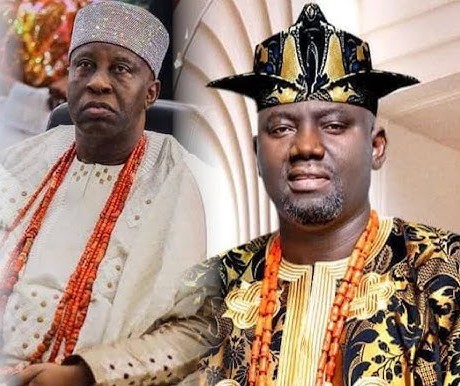
Oyo State on Monday formally began activities to mark its 50th anniversary, but the celebration opened with noticeable absences that sparked public discussion across the state. Two major traditional rulers, the Alaafin of Oyo, Oba Akeem Owoade, and the Soun of Ogbomoso, Oba Olaoye Ghandi, did not attend the flag-off ceremony held at the International Conference Centre, Ibadan.
The event, which brought together past and present leaders, political figures, traditional rulers, religious leaders, and members of the public, marked exactly 50 years since the creation of Oyo State on February 3, 1976. The state was carved out of the former Western Region, with Ibadan named as its administrative capital.
Governor Seyi Makinde presided over the ceremony, describing the anniversary as a time to reflect on the journey so far and to plan for a stronger future. He said the celebration was not just about history, but about setting a clear direction for the next 50 years of the state.
Despite the colourful gathering, attention quickly shifted to the absence of the Alaafin and the Soun, especially because of recent developments involving the Oyo State Council of Obas. The Olubadan of Ibadan and Chairman of the Council, Oba Rashidi Ladoja, attended the event and played an active role.
Only weeks earlier, Governor Makinde had announced a major change in the leadership structure of the Council of Obas. He declared that the chairmanship would no longer be permanent for the Alaafin, but would rotate among the Alaafin of Oyo, the Soun of Ogbomoso, and the Olubadan of Ibadan. For decades, the Alaafin had held the position by tradition.
At the inauguration of Oba Rashidi Ladoja as Olubadan, the governor said all three monarchs had agreed to the new arrangement. However, the Alaafin later released a statement denying that he was part of any meeting where such an agreement was reached. The Soun also raised concerns, creating a public debate over the matter.
Monday’s anniversary event was the first major state function since the disagreement became public. While no official reason was given for the absence of the Alaafin and the Soun, many observers linked it to the unresolved issues surrounding the rotational chairmanship.
Still, the state government moved ahead with the programme, which it described as inclusive and forward-looking. The anniversary activities are scheduled to last for one week, following the unveiling of the programme on January 21, 2026.
The events lined up include Christian and Muslim thanksgiving services, cultural and heritage exhibitions, youth and innovation programmes, an awards and dinner night, and a public lecture titled, “Consolidating the Legacy, Navigating the Present and Reimagining the Future.” The grand finale is expected to hold on Tuesday, January 27, 2026.
Governor Makinde appointed a former member of the House of Representatives, Saheed Fijabi, as chairman of the 11-member planning committee for the anniversary. Fijabi, in his address, said the golden jubilee was a chance for the state to celebrate its achievements while recommitting to development and good leadership.
He spoke on the early years of the state, the role of past leaders, and the steady growth of Oyo in areas such as education, agriculture, infrastructure, and civil service reforms. According to him, the anniversary represents both remembrance and renewed commitment.
During the ceremony, Governor Makinde delivered a speech highlighting his administration’s vision for the future. He said the focus of his government is to build a strong and competitive economy that creates jobs, attracts investors, and improves the lives of residents across the state.
“The next 50 years must bring greater prosperity, fairness, dignity, and hope to every resident of Oyo State,” the governor said. He stressed that development must reach all parts of the state and that no community should be left behind.
Makinde also reflected on the legacy of some past leaders, particularly the late Chief Bola Ige, who served as governor during the Second Republic. He praised Ige’s education policies, including the provision of free textbooks, school furniture, and learning materials.
According to the governor, those policies helped shape Oyo State’s belief in equal opportunity and access to education, values his administration is working to strengthen through school reforms and investments in learning facilities.
As part of the anniversary celebrations, Makinde revealed that the state launched a digital tribute platform where citizens can share their personal stories and experiences of living and working in Oyo State. He said the platform has already received hundreds of submissions.
“One resident tells the story of running a small business that now employs eight young people. Another speaks about the quiet pride of being educated and nurtured in this state,” the governor said. “These stories show opportunity, resilience, and a strong sense of belonging.”
He also commended security agencies in the state for maintaining peace and stability, assuring them of continued government support. Makinde urged residents to participate actively in the anniversary programmes and to see the celebration as a shared moment in the state’s history.
In his remarks, the Olubadan of Ibadan, Oba Rashidi Ladoja, called for proper recognition of past political leaders and unsung heroes who contributed to the growth of Oyo State. He noted that development is a collective effort built over time.
The monarch reflected on leadership during the Third Republic, mentioning the late Chief Kolapo Adewuyi Ishola and his deputy, Ahmed Gbadamosi. He also spoke about later administrations, including those of former Governors Rashidi Ladoja and Otunba Christopher Adebayo Alao-Akala, noting their roles in shaping the state’s development path.
While the celebration continued in a peaceful atmosphere, the absence of the Alaafin and the Soun remained a talking point. Analysts say it highlights deeper issues within the traditional institution, particularly around status, recognition, and power-sharing.
For now, the state government insists that its approach remains inclusive. Governor Makinde maintained that dialogue and mutual respect remain key to resolving differences, stressing that traditional institutions remain important partners in governance.