
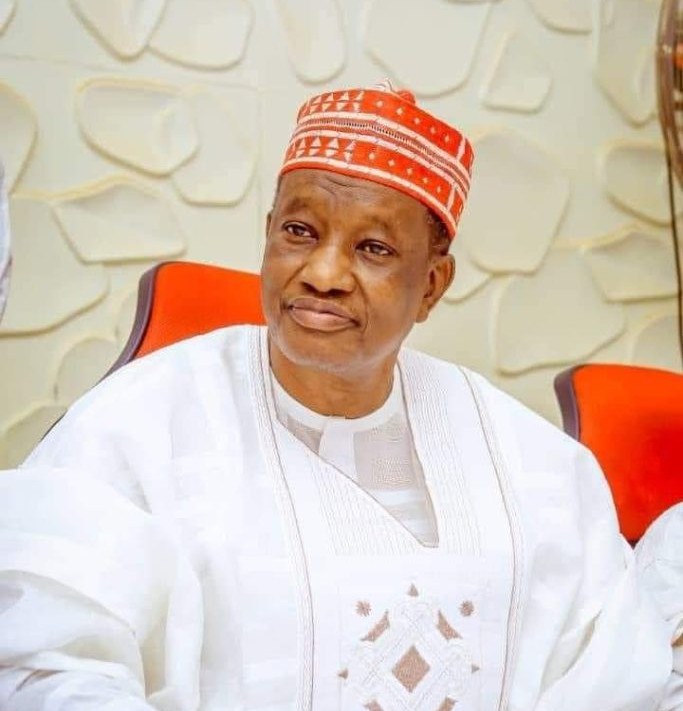
The Kano State Government has been thrown into fresh political debate following a call by the Commissioner for Information and Internal Affairs, Ibrahim Waiya, for the Deputy Governor, Aminu Gwarzo, to resign from office.
Waiya said the deputy governor should step down because he chose not to defect alongside Governor Abba Kabir Yusuf to the All Progressives Congress (APC). According to the commissioner, it would be difficult for the government to function smoothly when the governor and his deputy no longer belong to the same political party.
The commissioner made the statement on Thursday while speaking with journalists in Kano. He said effective governance depends on trust, loyalty, and shared political goals among members of the executive council.
Waiya argued that once a deputy governor no longer shares the same political platform with the governor, it becomes inappropriate for such an official to continue participating in sensitive government meetings.
“This is his personal decision, but there is no way someone who is no longer with you should be part of routine council meetings,” Waiya said.
“Who knows with whom he might share important government secrets? In government, things are done based on trust, and you can’t trust someone who is not with you.”
According to him, resignation would be the most honourable option available to the deputy governor under the current situation.
“If I were him, I would humbly resign,” the commissioner added.
The comments come amid major political realignments in Kano State following Governor Abba Yusuf’s recent defection from the New Nigeria Peoples Party (NNPP) to the APC.
Governor Yusuf, who won the 2023 governorship election on the platform of the NNPP, announced his decision to join the ruling APC earlier this year. He said the move was in the best interest of Kano State.
According to the governor, aligning the state with the party in control at the federal level would help Kano attract more development projects, federal appointments, and economic support.
Yusuf officially dumped the NNPP at a well-attended ceremony in Kano, where he was formally received into the APC. The event marked a major political shift in the state.
Several key political figures followed the governor into the APC. These included members of the Kano State House of Assembly, federal lawmakers, local government chairmen, councillors, and party leaders across the state.
The mass defection significantly weakened the NNPP’s structure in Kano, a state where the party had gained strong support during the 2023 general elections, largely due to the influence of its presidential candidate, Senator Rabiu Musa Kwankwaso.
Unlike many top officials in the state, Deputy Governor Aminu Gwarzo reportedly chose not to defect with Governor Yusuf to the APC. His decision has now raised questions about unity within the state executive council.
Although Gwarzo has not publicly explained his reasons for staying back, political observers believe his choice may be linked to personal loyalty, political principles, or allegiance to the NNPP and its leadership.
Under Nigeria’s constitution, a deputy governor is elected on a joint ticket with the governor, but there is no legal requirement that both must defect together if the governor changes party.
However, history has shown that political differences between governors and their deputies often lead to tension, sidelining, or calls for resignation.
Commissioner Waiya said governance cannot be separated from trust, especially at the executive level where key decisions affecting the state are taken.
He warned that having a deputy governor from a different political party could create suspicion and slow down decision-making.
“In government, sensitive issues are discussed at council meetings. You need people you trust, people who share the same vision and direction,” he said.
Waiya insisted that the issue was not personal but political, stressing that loyalty to the governor’s agenda was necessary for smooth governance.
His remarks have sparked mixed reactions across Kano State, with some residents supporting his view, while others argue that political differences should not be a reason to force an elected official out of office.
Some supporters of the APC in Kano say the commissioner’s position is realistic, noting that divided leadership could harm the state.
They argue that since the governor has moved to the APC and taken most of the political structure with him, it would be difficult for the deputy governor to operate effectively from a different party.
Others, however, see the call for resignation as unfair and undemocratic. They argue that the deputy governor was elected by the people and should not be forced out simply because of party differences.
According to them, the deputy governor can only leave office through resignation, impeachment by the House of Assembly, or at the end of the administration’s tenure.
Kano State has a long history of intense political competition and party loyalty. The state has often played a key role in national politics due to its large population and strong voter turnout.
The NNPP rose to prominence in Kano during the 2023 elections, riding on the popularity of Senator Kwankwaso and his political movement, known as the Kwankwasiyya group.
Governor Yusuf’s victory in 2023 was seen as a major win for the NNPP, especially as the party defeated both the APC and the Peoples Democratic Party (PDP) in the state.
However, Yusuf’s defection to the APC has reshaped the political landscape, raising questions about the future of the NNPP in Kano and the loyalty of remaining party officials.
Commissioner Waiya defended the governor’s decision to join the APC, saying it would bring more benefits to Kano State.
He said being in the same party with the Federal Government would improve access to federal funds, infrastructure projects, and security support.
“Politics is about interest, and the interest of Kano people must come first,” Waiya said.
He added that many states aligned with the ruling party often enjoy smoother relationships with federal agencies.
As of Thursday, Deputy Governor Aminu Gwarzo had not officially responded to the commissioner’s call for his resignation.
It remains unclear whether the deputy governor will reconsider his political position or remain in office despite the growing pressure.
For now, the spotlight remains on the deputy governor and how he will respond to calls for him to step aside in the wake of Kano’s shifting political landscape.