
A prosecution witness on Tuesday told a High Court of the Federal Capital Territory (FCT), Abuja, that the redesigned naira notes introduced in 2022 were printed in Nigeria by the Nigerian Security Printing and Minting Company (NSPMC), following a clear directive from late President Muhammadu Buhari.
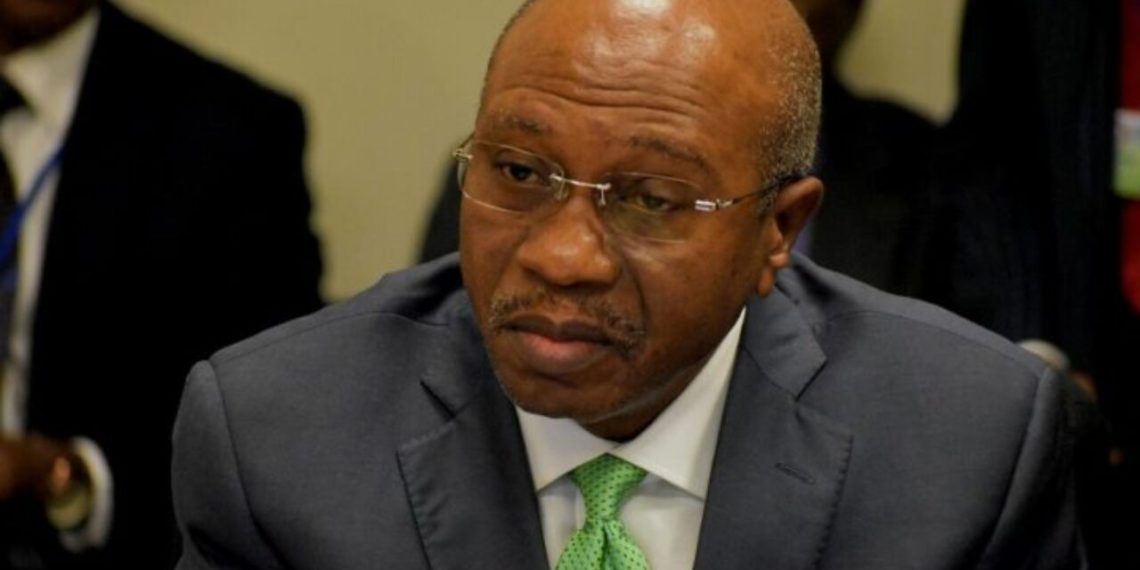
The witness gave the testimony in the ongoing trial of the immediate past Governor of the Central Bank of Nigeria (CBN), Godwin Emefiele, who is being prosecuted by the Economic and Financial Crimes Commission (EFCC).
Emefiele is standing trial before Justice Maryann Anenih of the FCT High Court sitting in Maitama, Abuja. He is facing a four-count charge bordering on disobedience to lawful direction and acts alleged to have caused harm to the Nigerian public.
The charges are contained in suit number CR/264/2024. According to the EFCC, Emefiele allegedly approved the printing of large volumes of redesigned naira notes without following the proper process laid down in the CBN Act.
The anti-graft agency alleged that between October 19, 2022, and March 5, 2023, Emefiele approved the printing of 375,520,000 pieces of colour-swapped N1,000 notes at a total cost of over N11 billion. The EFCC claimed this was done without the recommendation of the CBN Board and without strict approval from the President, as required by law.
The commission said the alleged actions violated Section 19 of the CBN Act and were punishable under Section 123 of the Penal Code, Cap 89, Laws of the Federation of Nigeria, 1990.
Emefiele, however, pleaded not guilty to all the charges when they were read to him in court.
At the resumed hearing on Tuesday, the seventh prosecution witness, Chinedu Emere, an EFCC investigator, took the witness box. He was cross-examined by Emefiele’s lawyer, Olalekan Ojo, SAN.
While responding to questions, Emere told the court that Emefiele had indeed written a memo to former President Muhammadu Buhari seeking approval to redesign and reissue some denominations of the naira.
According to the witness, the memo was dated October 6, 2022, and it requested approval to redesign, produce, and reissue the N1,000, N500, N200, and N100 notes.
He said Buhari approved the request but gave a clear instruction that the printing of the redesigned notes must be done within Nigeria.
“The defendant sought approval for banknotes attached to the memorandum which had already been redesigned,” Emere told the court.
He added: “The minute of the former President was that the production be done locally. He wrote: ‘Approved. But to be produced locally.’”
The witness explained that in the memo to the President, Emefiele gave several reasons for the decision to redesign the naira notes.
These reasons, according to him, included the rising level of counterfeit naira notes in circulation, the growing shortage of cash, and the hoarding of banknotes by members of the public, especially outside the banking system.
The redesign of the naira notes later became one of the most controversial economic policies under the administration of former President Buhari. The policy, announced in October 2022, led to widespread cash shortages across the country, long queues at banks, and public protests in some areas.
During the court session, Emere also confirmed that the CBN raised bills of settlement to the Nigerian Security Printing and Minting Company for the production of the redesigned notes.
When asked directly whether NSPMC printed the redesigned naira notes, the EFCC investigator answered “yes.”
He said: “The Nigerian Security Printing and Minting Company produced the redesigned notes. This was in compliance with the presidential directive for local production of the naira notes.”
However, the witness made an important distinction between the design and the printing of the notes.
He told the court that although the notes were printed locally by NSPMC, the redesign itself was carried out by a foreign company, De La Rue.
De La Rue is a well-known international security printing company based in the United Kingdom and has worked with Nigeria for decades on currency design and security features.
Emere informed the court that the CBN made payments to De La Rue in British pounds for the redesign of the notes, while payments to NSPMC for printing were made in naira.
He also said De La Rue was the original designer of the naira notes that were later redesigned and that the security features on the notes were also developed by the foreign firm.
When asked whether any Nigerian company had ever designed naira notes for the country, the witness said he could not remember any such claim being made during the investigation.
He added that whether Nigerian firms had the capacity to design banknotes was not part of the EFCC’s investigation.
The witness further told the court that former President Buhari later officially launched the redesigned naira notes after they were produced.
However, he said he could not recall if Buhari ever raised any complaints about the notes after their launch.
Emere also confirmed that the EFCC investigation team prepared an investigative report at the end of its probe into the naira redesign process.
During the proceedings, Emefiele’s lawyer requested that the prosecution make the investigative report available to the defence team to help them prepare their case.
The prosecuting counsel, Rotimi Oyedepo, SAN, objected to the request.
Despite the objection, Justice Maryann Anenih ruled in favour of the defence. She ordered the prosecution to provide the investigative report to Emefiele’s legal team.
The judge said the document was necessary to ensure a fair trial and to allow the defence properly respond to the allegations.
She then adjourned further hearing in the case to Tuesday, February 10, 2026.
The trial of Godwin Emefiele is one of several high-profile cases involving former public officials being handled by the EFCC.
Emefiele served as CBN Governor from 2014 until his suspension in June 2023. During his time in office, he oversaw major monetary policies, including the naira redesign, cash withdrawal limits, and various intervention programmes.
Supporters of the naira redesign policy have argued that it was aimed at reducing corruption, tackling vote buying, and improving control over money supply.
Critics, however, say the policy was poorly implemented and caused hardship for millions of Nigerians, especially those in rural areas who rely heavily on cash.
As the trial continues, the court is expected to hear more testimonies that will shed light on how the naira redesign decision was taken and whether due process was followed.