
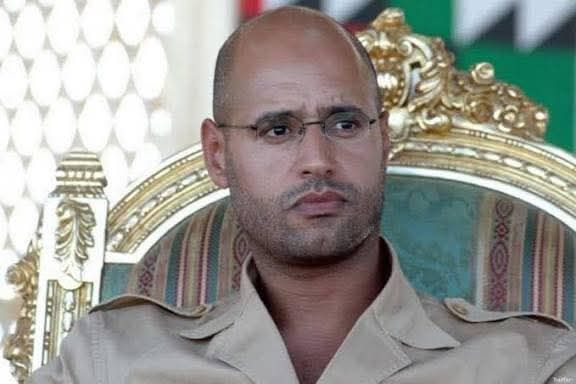
Russia has called for a full and transparent investigation into the killing of Saif al-Islam Gaddafi, the second son of former Libyan leader Muammar Gaddafi, following reports that he was murdered at his home in western Libya.
In a statement released this week, Russia’s Foreign Ministry said it was deeply concerned by the incident and condemned the killing in strong terms. The ministry said the circumstances surrounding Saif Gaddafi’s death were still unclear and raised serious questions.
“It is imperative that a thorough and transparent investigation is conducted, and that those responsible are held accountable,” the ministry said.
According to reports from Libya, Saif Gaddafi was killed on February 3 when armed men attacked his residence in the town of Zintan. Zintan is located about 136 kilometres southwest of Tripoli, Libya’s capital. The town has long been a stronghold of armed groups that played a key role during the 2011 uprising that ended Muammar Gaddafi’s 42-year rule.
A statement issued by Saif Gaddafi’s political team described the killing as a “cowardly and treacherous assassination.” The statement said four masked men stormed his home and attacked him.
The associates claimed that Saif tried to resist the attackers and clashed with them during the invasion. They also alleged that the attackers blocked the security cameras in the house in an attempt to hide their actions and avoid being identified.
The killing has sparked renewed tension in Libya, a country that has struggled with instability, violence, and political division since the fall of Muammar Gaddafi in 2011.
Khaled al-Mishri, a former chairman of the High Council of State, which serves as an advisory body to Libya’s Government of National Accord, also reacted to the incident. He called for an “urgent and transparent investigation” into Saif Gaddafi’s death, saying the truth must be known and justice must be served.
Saif al-Islam Gaddafi was born in June 1972 in Tripoli. He was widely seen as his father’s most prominent political heir and played an important role in Libya’s government from the early 2000s until the 2011 uprising. During that period, he was often presented as a reform-minded figure who spoke to Western governments and institutions.
However, his position changed dramatically when protests broke out against his father’s rule in February 2011, inspired by the Arab Spring movements across North Africa and the Middle East. The protests quickly turned into a civil war after government forces cracked down on demonstrators.
As the conflict escalated, Saif Gaddafi became a central figure in the regime’s response. In February 2011, the United Nations placed him under sanctions, including a travel ban. Later that year, in June 2011, the International Criminal Court (ICC) issued a warrant for his arrest over alleged crimes against humanity linked to the violent crackdown on protesters.
After Tripoli fell to rebel forces in August 2011, Saif went into hiding. In November 2011, he was captured by the Abu Bakr al-Siddiq Brigade, a militia group based in Zintan, as he attempted to flee the country through southern Libya towards Niger.
Unlike his father, who was captured and killed by opposition fighters in October 2011, Saif remained alive but in detention. In 2015, a court in Tripoli sentenced him to death in absentia, even though he was still being held by the Zintan-based militia at the time.
In June 2017, Saif Gaddafi was released from detention under an amnesty law passed by Libya’s parliament. Despite his release, he largely stayed out of public view and reportedly remained in or around Zintan for years, fearing assassination and possible arrest by rival groups.
His re-emergence into public life came in November 2021, when he announced his intention to contest Libya’s long-delayed presidential election. The announcement caused outrage among many Libyans, especially those who suffered during his father’s rule or lost relatives in the 2011 conflict.
Anti-Gaddafi political groups, activists, and sections of the public strongly opposed his candidacy, arguing that he symbolised the abuses of the former regime and should face justice rather than seek political power. Supporters, however, said he represented stability and national reconciliation in a deeply divided country.
Libya’s planned elections in 2021 were eventually postponed due to legal disputes, security concerns, and disagreements among political leaders. Since then, the country has remained divided between rival administrations in the east and west, with armed groups continuing to wield significant influence.
Saif Gaddafi’s killing has added another layer of uncertainty to Libya’s fragile political situation. Analysts say the incident highlights the ongoing lack of security and the difficulty of enforcing the rule of law more than a decade after the civil war.
Russia has been an active player in Libyan affairs, supporting dialogue efforts while also maintaining contacts with various factions in the country. Its call for an investigation reflects wider international concern about the continued violence and political instability in Libya.
For many Libyans, Saif Gaddafi’s death closes a controversial chapter in the country’s history. For others, it raises fresh fears about the cycle of revenge, unresolved justice, and the absence of strong national institutions.