
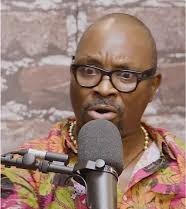
Social activist and politician, Isaac Fayose, has strongly criticized the All Progressives Congress (APC) over its stance on electronic transmission of election results, saying the ruling party has no reason to fear transparency in Nigeria’s electoral process.
In a strongly worded public statement that has since gained wide attention on social media, Fayose questioned why a party that controls most state governments and key security institutions would oppose the real-time electronic transmission of election results from polling units.
According to him, the APC currently controls 30 out of Nigeria’s 36 states, giving it a strong political advantage that should make it confident enough to support transparent elections.
“The APC has 30 governors, thirty,” Fayose said, stressing that the party dominates Nigeria’s political space.
Fayose argued that a party with such wide control should be leading the call for electronic transmission rather than resisting it. He noted that the APC also claims to have over 10 million registered members on its electronic membership register.
“You should be the ones championing electronic transmission,” he said.
He listed several institutions that he said are under the control or influence of the federal government led by the APC. These include the Nigerian Army, Police, Navy, Air Force, Department of State Services (DSS), National Security Adviser (NSA), Economic and Financial Crimes Commission (EFCC), Independent Corrupt Practices Commission (ICPC), Independent National Electoral Commission (INEC), and the judiciary.
Fayose also mentioned other bodies and groups such as the Nigeria Security and Civil Defence Corps (NSCDC), the Nigerian Television Authority (NTA), religious groups, and regional security outfits like Amotekun in the South-West and Ebube Agu in the South-East.
With all these institutions, he questioned why the ruling party would still be afraid of transparent election processes.
“Why are you afraid of transparency?” he asked.
Fayose made it clear that Nigerians are not demanding electronic voting, but a simple process where votes are cast manually and results are transmitted electronically from polling units in real time.
“No one is even asking for electronic voting,” he said. “Nigerians are simply saying vote manually, then transmit the result at the polling unit in real time.”
He described the process as simple and achievable, especially in a country that already uses technology for voter registration and other official processes.
According to him, refusing electronic transmission only increases suspicion and distrust in the electoral system.
“How difficult is that?” he asked.
The issue of electronic transmission of election results has remained a major topic in Nigeria’s electoral reforms over the years. Supporters believe it will reduce rigging, result manipulation, and delays in announcing election outcomes.
Opponents, however, often argue that challenges such as poor network coverage, insecurity, and technical capacity make it difficult to fully implement electronic transmission across the country.
The Independent National Electoral Commission (INEC) has previously experimented with electronic transmission using the Bimodal Voter Accreditation System (BVAS), especially during the 2023 general elections. While the system recorded some successes, it also faced technical challenges that led to disputes and court cases.
Fayose also criticized what he described as the concentration of power in the hands of political leaders, warning that no individual should be placed above democratic institutions.
“Akpabio cannot hold 230 million citizens at ransom,” he said, referring to Senate President Godswill Akpabio.
He warned that Nigeria must not allow its democracy to be weakened by the actions or decisions of a few powerful individuals.
According to Fayose, electronic transmission is not about any particular politician or political party.
“Electronic transmission is not about Peter Obi, it’s not about Tinubu,” he said. “It’s about the future.”
Fayose stressed that Nigeria’s problems cannot be solved by focusing on individuals, but by strengthening institutions.
“You don’t build a country around an individual. You build a nation around institutions,” he said.
He added that his concern goes beyond party politics, saying he does not care whether it is APC, PDP, Labour Party, ADC, or any other party.
“I only care about the future,” he stated.
In his closing remarks, Fayose issued a strong warning, saying Nigeria is at a crossroads and must choose between protecting democracy or protecting individuals in power.
“We either save Nigeria, or we save Bola Tinubu. We can’t save both,” he said.
“So choose: democracy or Asiwaju?”
Fayose’s comments have sparked mixed reactions across the country. While some Nigerians agree with his call for transparency and electoral reforms, others believe his statements are too confrontational.