
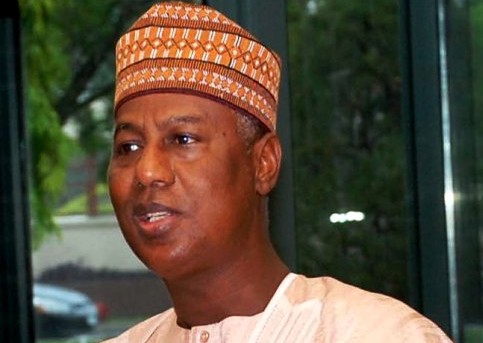
President Bola Ahmed Tinubu has re-nominated former Kebbi State Governor, Alhaji Usman Dakingari, for appointment as an ambassador of the Federal Republic of Nigeria.
The renewed nomination comes about two weeks after Dakingari’s name was earlier sent to the Senate but later withdrawn following controversy.
The President’s letter conveying the fresh nomination was read during plenary on Tuesday by the Senate President, Senator Godswill Akpabio. After reading the letter, Akpabio referred the nomination to the Senate Committee on Foreign Affairs for screening and directed the panel to submit its report within one week.
According to the letter, the nomination was made in line with Section 171(1), (2)(c) and (4) of the 1999 Constitution (as amended). These sections of the Constitution give the President the power to appoint ambassadors, subject to confirmation by the Senate.
The re-nomination has formally reopened the process of considering Dakingari for diplomatic service. His appointment will only take effect if he successfully passes the Senate screening and receives confirmation by the upper chamber.
Dakingari, who served as Governor of Kebbi State from 2007 to 2015, is a well-known political figure in the North-West region. He has also held other public positions at the state and federal levels over the years.
The fresh nomination follows an earlier development that generated debate within political and diplomatic circles.
Two weeks ago, Dakingari’s name was included in a list of ambassadorial nominees sent to the Senate by President Tinubu. In that list, he was reportedly designated for one of Nigeria’s major foreign missions, including the United States, the United Kingdom or France.
The inclusion of his name among nominees for these key countries sparked discussion and criticism in some quarters. Observers questioned the basis for the specific posting and raised concerns about the selection process. Following the controversy, his name was withdrawn from the earlier list.
Although no official reason was publicly detailed for the withdrawal, the move was widely seen as an effort to address concerns raised after the initial submission.
Ambassadorial appointments in Nigeria are often divided into two categories: career and non-career ambassadors. Career ambassadors are professional diplomats who have risen through the ranks of the Ministry of Foreign Affairs. Non-career ambassadors, on the other hand, are usually political appointees. They may include former governors, ministers, lawmakers, and other prominent individuals who have served in public office.
In recent years, there has been ongoing debate about the balance between career and non-career ambassadors. Supporters of political appointments argue that experienced politicians can effectively represent Nigeria’s interests abroad due to their leadership experience and network. Critics, however, believe that professional diplomats are better suited for the role because of their training and experience in foreign service.
The earlier controversy surrounding Dakingari’s nomination reflected this wider national conversation about ambassadorial appointments and postings.
During Tuesday’s plenary, some senators raised concerns about the wording of the President’s letter. The letter appeared to suggest a career diplomatic posting. However, lawmakers clarified that Dakingari’s nomination was for a non-career ambassadorship.
They noted that his political background and long years in public service align more with a political appointment rather than a professional foreign service role.
Based on this clarification, the Senate resolved that the screening process would proceed on the basis of a non-career ambassadorial nomination.
The Senate Committee on Foreign Affairs is expected to invite Dakingari for screening in the coming days. During the screening, lawmakers are likely to ask questions about his experience, vision for Nigeria’s foreign relations, and understanding of diplomatic responsibilities.
In Nigeria, ambassadorial nominees are usually assessed on their educational background, work experience, knowledge of international relations, and understanding of Nigeria’s foreign policy goals. After the screening, the committee will submit its report to the full Senate for debate and final confirmation.
President Tinubu has been gradually making key appointments since assuming office. Ambassadorial appointments are considered important because ambassadors serve as Nigeria’s representatives in foreign countries. They are responsible for promoting Nigeria’s political, economic and cultural interests abroad. They also help protect the rights of Nigerian citizens living overseas.
Nigeria has missions in several countries across Africa, Europe, Asia and the Americas. Some of these postings, especially in major world capitals, are seen as strategic because of their impact on trade, security cooperation and foreign investment.
The re-nomination of Dakingari signals the President’s continued interest in having him serve in a diplomatic role, despite the earlier setback. Political observers say the move shows that the Presidency remains confident in his suitability for ambassadorial duties.
However, the final decision now rests with the Senate. If confirmed, Dakingari will join the list of non-career ambassadors representing Nigeria abroad. If rejected, the President may need to submit another nominee.
As the Senate Committee on Foreign Affairs begins its work, attention will be focused on how lawmakers handle the screening and whether any further issues will arise.
For now, the process has entered a new phase, with the former Kebbi governor once again in line for possible appointment as one of Nigeria’s envoys.
The committee is expected to conclude its assignment and report back to the Senate within the stipulated one-week period, after which the chamber will take a final decision on the nomination.