
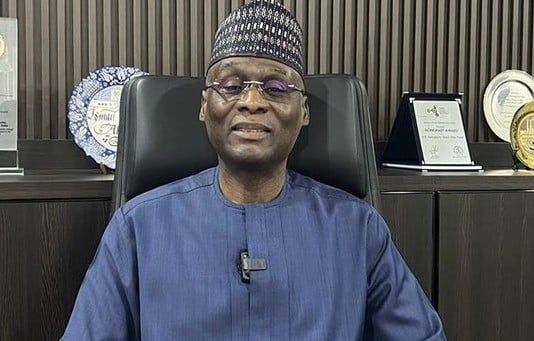
President Bola Ahmed Tinubu has appointed Ambassador Ismail Abba Yusuf as the new Chairman and Chief Executive Officer of the National Hajj Commission of Nigeria (NAHCON). The appointment comes just 48 hours after the former chairman, Professor Abdullahi Saleh Usman, resigned from the position.
The announcement was made by the President’s Special Adviser on Information and Strategy, Mr. Bayo Onanuga. According to him, the President has already written to the Senate President, Senator Godswill Akpabio, seeking quick confirmation of the appointment.
Mr. Onanuga said the appointment is in line with Section 3(2) of the NAHCON Act, 2026, which requires the Senate to confirm the chairman before he can fully assume office. He explained that President Tinubu requested the Senate to treat the matter with urgency in order to ensure stability at the commission.
Ambassador Yusuf will replace Professor Usman, who stepped down after serving for about 14 months. The reasons for Professor Usman’s resignation were not officially stated, but his exit created a leadership gap at the commission at a time when preparations for the next Hajj exercise are ongoing.
NAHCON is the federal government agency responsible for organizing and supervising Hajj operations for Nigerian pilgrims. The commission plays a key role in coordinating travel, accommodation, feeding, and welfare for thousands of Nigerians who travel to Saudi Arabia each year for the annual Islamic pilgrimage.
The appointment of a new chairman is seen as important to maintain smooth planning and coordination ahead of the 2026 Hajj season.
Ambassador Ismail Abba Yusuf is described as a seasoned Nigerian career diplomat with years of experience in public service. Before his appointment, he served as Nigeria’s Ambassador Extraordinary and Plenipotentiary to the Republic of Türkiye from 2021 to 2024.
As ambassador, Yusuf represented Nigeria’s interests in Türkiye and worked to strengthen diplomatic and economic ties between both countries. His experience in international relations is expected to be an added advantage in managing relations with Saudi authorities and other stakeholders involved in Hajj operations.
The Hajj exercise requires strong coordination between Nigeria and the Kingdom of Saudi Arabia. Every year, the Saudi government allocates a quota to Nigeria, determining how many pilgrims can travel from the country. NAHCON works closely with state Muslim pilgrims’ welfare boards, private tour operators, airlines, and Saudi service providers to ensure that the pilgrimage runs smoothly.
In recent years, the commission has faced several challenges, including rising costs of airfares, foreign exchange issues, accommodation concerns in Makkah and Madinah, and complaints from some pilgrims about services. There have also been calls for greater transparency and accountability in the management of Hajj funds.
Observers believe that Yusuf’s diplomatic background may help improve Nigeria’s engagement with Saudi authorities, especially in negotiating better arrangements for Nigerian pilgrims. His experience in handling government-to-government relations could also support efforts to address some of the long-standing issues affecting Hajj operations.
However, his appointment is still subject to Senate confirmation. Lawmakers are expected to screen him and assess his qualifications and plans for the commission before giving their approval.
The leadership change at NAHCON comes at a critical time. The annual Hajj pilgrimage is one of the five pillars of Islam, and thousands of Nigerian Muslims participate in it every year. Nigeria is one of the countries with the highest number of pilgrims from Africa.
In 2023 and 2024, Nigerian pilgrims faced several difficulties, including delays in flight schedules and concerns over accommodation standards. There were also complaints about the high cost of Hajj fares, which many prospective pilgrims struggled to afford due to the economic situation in the country.
The Federal Government has repeatedly stated its commitment to improving the Hajj experience for Nigerians. President Tinubu’s administration has emphasized the need for transparency, efficiency, and better service delivery in public institutions.
Professor Abdullahi Saleh Usman, who has now resigned, was appointed in 2024 and served for about 14 months. During his tenure, the commission worked to stabilize Hajj operations after earlier disruptions. His sudden resignation, however, led to speculation and concern among stakeholders about continuity in the commission’s activities.
With Ambassador Yusuf’s nomination, attention will now shift to the Senate. If confirmed, he will be expected to quickly settle into office and continue preparations for the next pilgrimage season. Stakeholders, including state Muslim pilgrims’ boards and private operators, are likely to look to the new chairman for clear direction and early planning.
Religious leaders and members of the Muslim community will also be watching closely. Many hope that the new leadership will address issues such as cost reduction, better accommodation, improved welfare services, and timely communication with pilgrims.
As preparations for the 2026 Hajj gather pace, the successful confirmation and smooth transition of leadership at NAHCON will be important. For thousands of Nigerian Muslims who save for years to perform the pilgrimage, effective leadership at the commission is not just a government matter, but a deeply personal and spiritual concern.