
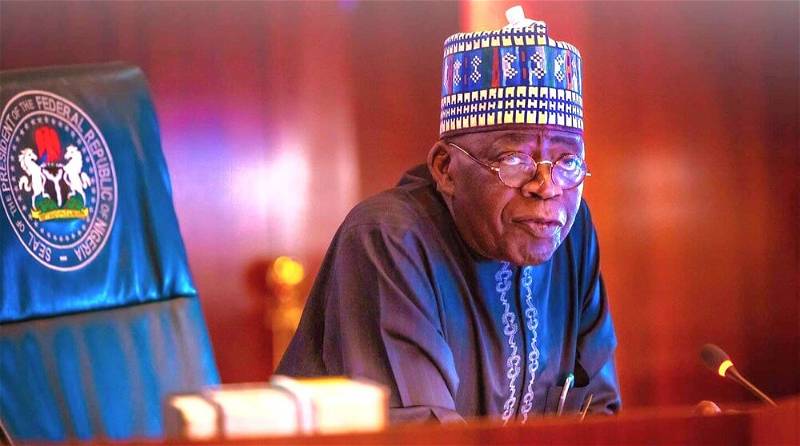
President Bola Ahmed Tinubu has expressed deep concern for traders and residents affected by the devastating fire at Singer Market in Kano, describing the incident as tragic and urging swift support for those impacted.
The fire reportedly broke out on Saturday evening and continued into Sunday morning, destroying goods and equipment in one of Kano’s busiest food markets. Traders have been left counting their losses as the blaze affected hundreds of businesses.
In a statement issued by his Special Adviser on Information and Strategy, Bayo Onanuga, the President said he had contacted Abba Kabir Yusuf, the Governor of Kano State, to obtain a firsthand report on the disaster and its impact.
“This tragic incident is deeply concerning, especially coming less than two weeks after another fire outbreak at the same market. My thoughts are with the affected traders and their families,” President Tinubu said.
Singer Market, located in the heart of Kano, has a long history as a major commercial hub for food items and other essential goods. Over the years, several fire outbreaks have occurred, highlighting the vulnerability of market infrastructure and the need for preventive safety measures.
President Tinubu has directed relevant authorities to conduct a thorough investigation into the causes of the recurring fire incidents at Singer Market. He stressed the need for urgent measures to prevent such disasters in the future.
“The recurring market fires that leave our hardworking traders in despair must be addressed decisively. I have ordered a comprehensive investigation to determine the causes and recommend lasting solutions,” the President stated.
Kano markets, like Singer Market, are densely packed with shops and stalls, making them particularly susceptible to fires. Previous incidents, according to local authorities, have been linked to electrical faults, cooking accidents, and insufficient safety infrastructure, including lack of fire hydrants and limited access for emergency responders.
Traders, many of whom operate small-scale businesses, have suffered heavy losses in this latest fire. Some reports suggest that goods worth billions of naira were destroyed. The damage underscores the economic and social impact of such disasters on the livelihoods of families who depend entirely on market activities for income.
The Governor of Kano State, Abba Kabir Yusuf, had earlier visited the scene while the fire was still raging, showing solidarity with the traders and coordinating initial emergency response efforts. President Tinubu’s call for an investigation complements state-level actions aimed at uncovering the causes and preventing further occurrences.
In addition to ordering an investigation, President Tinubu assured affected traders of the Federal Government’s concern and support as recovery efforts begin. He emphasized that the government would work closely with the state to assist traders in rebuilding their businesses and restoring livelihoods.
The Singer Market fire comes less than two weeks after a previous blaze at the same location, raising questions about fire safety measures and the need for stricter regulations and monitoring. Analysts note that repeated fires not only disrupt local trade but also threaten food supply chains and economic stability in Kano, one of Nigeria’s key commercial cities.
Emergency responders and security agencies have been working to assess the damage, salvage what remains, and provide relief to traders. The federal and state governments’ joint efforts are expected to focus on compensating affected traders, improving fire prevention systems, and implementing stricter safety protocols for densely populated market areas.
Residents and traders alike have expressed appreciation for the prompt response by both state and federal authorities. However, many are calling for long-term solutions, including better infrastructure, accessible fire exits, and regular safety audits to prevent future disasters.
The recent fire incident at Singer Market serves as a reminder of the vulnerability of public markets in Nigeria to fire hazards, and highlights the importance of coordinated action between federal and state authorities to safeguard lives, livelihoods, and economic assets.
President Bola Ahmed Tinubu has expressed deep concern for traders and residents affected by the devastating fire at Singer Market in Kano, describing the incident as tragic and urging swift support for those impacted.
The fire reportedly broke out on Saturday evening and continued into Sunday morning, destroying goods and equipment in one of Kano’s busiest food markets. Traders have been left counting their losses as the blaze affected hundreds of businesses.
In a statement issued by his Special Adviser on Information and Strategy, Bayo Onanuga, the President said he had contacted Abba Kabir Yusuf, the Governor of Kano State, to obtain a firsthand report on the disaster and its impact.
“This tragic incident is deeply concerning, especially coming less than two weeks after another fire outbreak at the same market. My thoughts are with the affected traders and their families,” President Tinubu said.
Singer Market, located in the heart of Kano, has a long history as a major commercial hub for food items and other essential goods. Over the years, several fire outbreaks have occurred, highlighting the vulnerability of market infrastructure and the need for preventive safety measures.
President Tinubu has directed relevant authorities to conduct a thorough investigation into the causes of the recurring fire incidents at Singer Market. He stressed the need for urgent measures to prevent such disasters in the future.
“The recurring market fires that leave our hardworking traders in despair must be addressed decisively. I have ordered a comprehensive investigation to determine the causes and recommend lasting solutions,” the President stated.
Kano markets, like Singer Market, are densely packed with shops and stalls, making them particularly susceptible to fires. Previous incidents, according to local authorities, have been linked to electrical faults, cooking accidents, and insufficient safety infrastructure, including lack of fire hydrants and limited access for emergency responders.
Traders, many of whom operate small-scale businesses, have suffered heavy losses in this latest fire. Some reports suggest that goods worth billions of naira were destroyed. The damage underscores the economic and social impact of such disasters on the livelihoods of families who depend entirely on market activities for income.
The Governor of Kano State, Abba Kabir Yusuf, had earlier visited the scene while the fire was still raging, showing solidarity with the traders and coordinating initial emergency response efforts. President Tinubu’s call for an investigation complements state-level actions aimed at uncovering the causes and preventing further occurrences.
In addition to ordering an investigation, President Tinubu assured affected traders of the Federal Government’s concern and support as recovery efforts begin. He emphasized that the government would work closely with the state to assist traders in rebuilding their businesses and restoring livelihoods.
The Singer Market fire comes less than two weeks after a previous blaze at the same location, raising questions about fire safety measures and the need for stricter regulations and monitoring. Analysts note that repeated fires not only disrupt local trade but also threaten food supply chains and economic stability in Kano, one of Nigeria’s key commercial cities.
Emergency responders and security agencies have been working to assess the damage, salvage what remains, and provide relief to traders. The federal and state governments’ joint efforts are expected to focus on compensating affected traders, improving fire prevention systems, and implementing stricter safety protocols for densely populated market areas.
Residents and traders alike have expressed appreciation for the prompt response by both state and federal authorities. However, many are calling for long-term solutions, including better infrastructure, accessible fire exits, and regular safety audits to prevent future disasters.
The recent fire incident at Singer Market serves as a reminder of the vulnerability of public markets in Nigeria to fire hazards, and highlights the importance of coordinated action between federal and state authorities to safeguard lives, livelihoods, and economic assets.