
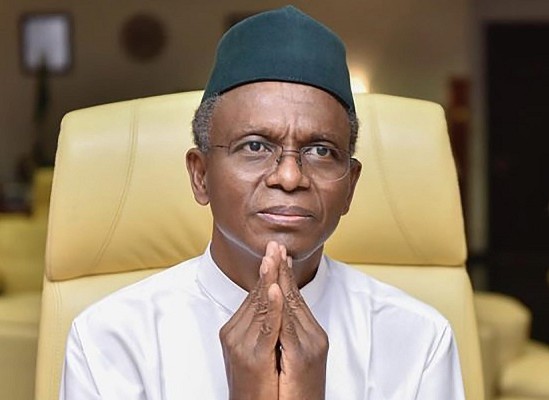
Former Kaduna State Governor, Nasir El-Rufai, on Thursday spent a second night in the custody of the Independent Corrupt Practices and Other Related Offences Commission (ICPC), as his lawyers protested the search of his Abuja residence.
El-Rufai was first detained on Monday by the Economic and Financial Crimes Commission (EFCC). He was released late on Wednesday. However, shortly after his release, he was taken into custody by the ICPC, where he has remained.
An official of the ICPC confirmed on Thursday night that the former governor was still with the commission. The official, however, declined to disclose the offence under investigation.
“He is still very much with us. I can’t say the offence he is being investigated for,” the source said. “I have not really been in the office, but I was informed that the former Kaduna State governor is still with us.”
The ICPC had earlier confirmed taking custody of El-Rufai on Wednesday night but did not provide details about the case.
Background to the Investigation
Before his arrest, El-Rufai had written to the ICPC through his lawyers, stating that he was willing to honour an invitation scheduled for Tuesday.
This development followed an earlier incident at an airport, where his passport was reportedly seized by operatives of the Department of State Services (DSS). The reason for the seizure was not made public.
There have been unverified claims that the investigation may be linked to the failed N11.1 billion Joint Venture Kaduna light rail project. The project was introduced during El-Rufai’s administration as part of efforts to improve transportation in Kaduna State. However, it did not materialise as planned.
Efforts to independently confirm whether the probe is connected to the light rail project were unsuccessful as of press time.
El-Rufai served as governor of Kaduna State from 2015 to 2023. During his tenure, he introduced reforms in education, urban development, and public service. His administration also faced criticism over security challenges and some major projects that were either delayed or abandoned.
Lawyers Condemn House Search
Meanwhile, El-Rufai’s media aide, Muyiwa Adekeye, disclosed on social media platform X that operatives of the ICPC searched the former governor’s residence on Aso Drive in Abuja.
According to Adekeye, El-Rufai’s lawyer, Ubong Akpan, described the search as unlawful and a violation of due process and fundamental rights.
“The Aso Drive residence of Malam Nasir El-Rufai was today searched by the ICPC,” Adekeye wrote. “Ubong Akpan, Malam El-Rufai’s lawyer, condemned the action as unlawful and a clear violation of legal procedures and fundamental rights.”
The lawyer argued that proper legal steps were not followed before the search was carried out. However, the ICPC has not publicly responded to the allegation.
Searches of homes and offices are common in corruption investigations. Anti-graft agencies often say such actions are necessary to gather documents and other evidence. However, such operations can also attract criticism, especially when high-profile political figures are involved.
Political and Public Reactions
El-Rufai is a well-known political figure in Nigeria. Before becoming governor, he served as Minister of the Federal Capital Territory. He has also remained active in national politics after leaving office.
His detention by two major anti-corruption agencies within the same week has drawn attention from political observers and supporters.
Some of his allies have called for transparency in the investigation, urging the authorities to clearly state the allegations. They argue that keeping the details secret may fuel speculation and political tension.
Others, however, say anti-corruption agencies must be allowed to carry out their duties without interference. They note that no individual, regardless of status, should be above the law.
Nigeria’s anti-corruption agencies, including the EFCC and ICPC, were established to investigate and prosecute cases involving financial crimes and abuse of office. Over the years, they have handled cases involving former governors, ministers, and other top officials.
Awaiting Official Charges
As of Thursday night, no formal charges had been announced against El-Rufai. The ICPC has maintained that investigations are ongoing.
Legal experts say that under Nigerian law, a suspect can be invited or detained for questioning as part of an investigation. However, the agencies are expected to either file charges in court or release the individual within a reasonable period.
For now, El-Rufai remains in ICPC custody as his legal team continues to challenge the search of his residence and demand clarity on the allegations.
The situation has added another chapter to Nigeria’s ongoing efforts to tackle corruption in public office. Whether the investigation will lead to formal charges or eventual release remains to be seen.
As developments unfold, many Nigerians are watching closely, waiting for official statements that will clarify the reasons behind the probe and the next steps in the legal process.