
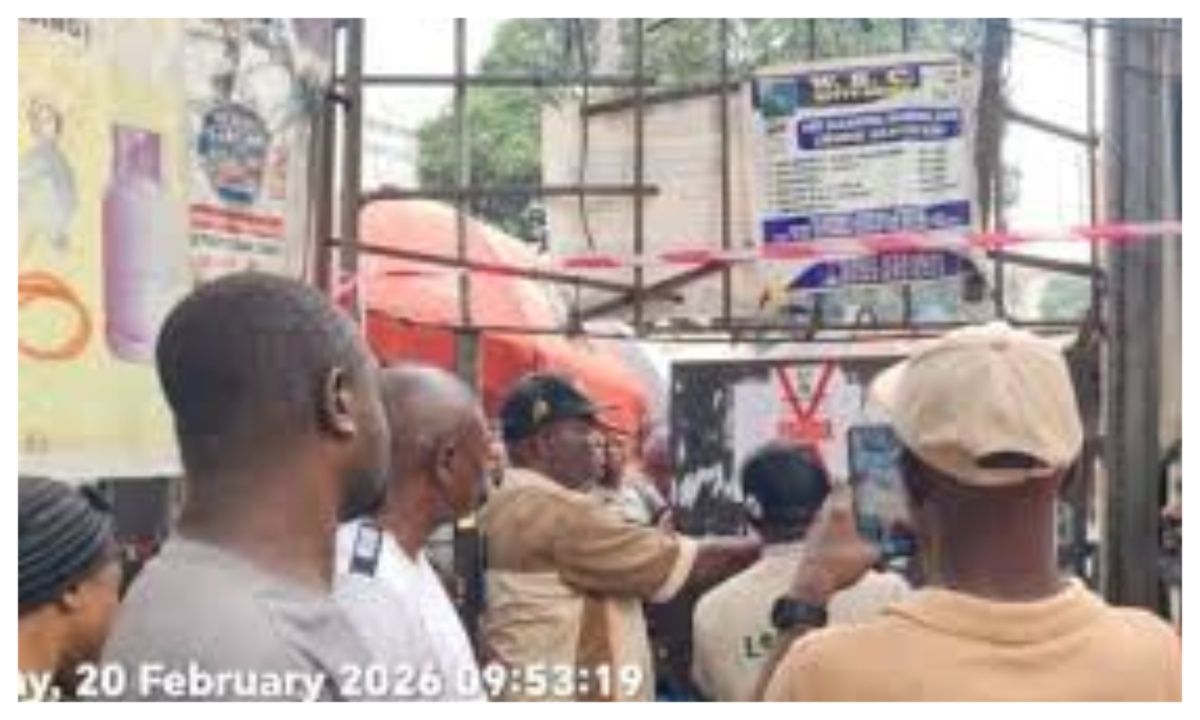
The Lagos State Wastewater Management Office (LSWMO), in collaboration with the Kick Against Indiscipline (KAI) unit, has sealed the old NITEL building located on MacCarthy Street in Obalende, Lagos Island. The action was taken following reports that the building’s occupants were discharging untreated sewage directly into public drainage channels.
In a statement released on Friday, the Commissioner for Environment and Water Resources, Tokunbo Wahab, confirmed that the move was prompted by verified environmental violations. He explained that raw wastewater from the building posed serious health risks to nearby residents and contributed to pollution in the area.
The commissioner noted that the improper disposal of sewage constitutes a serious public health hazard. Raw wastewater contains pathogens that can spread diseases such as cholera, typhoid, and dysentery. Polluted drainage channels can also block water flow, causing flooding and worsening sanitary conditions.
Investigations revealed that the old NITEL building had been occupied by squatters living without authorization. These occupants were reportedly discharging wastewater into public drains without any treatment, violating environmental regulations.
“The old NITEL building is occupied by squatters whose presence could not be properly accounted for, living without any form of authorisation or coordination,” Wahab said. He emphasized that such activities create environmental nuisance and endanger the lives of residents in the surrounding area.
The enforcement exercise reflects the state government’s commitment to maintaining hygiene standards and protecting public health. Wahab reiterated Lagos State’s zero-tolerance policy toward environmental violations.
The sealing of the building was carried out under the supervision of LSWMO and KAI officials. The operation is part of a broader campaign to curb environmental abuse and enforce compliance with sanitation and wastewater management laws in Lagos.
“Lagos enjoins all residents to adopt proper wastewater management and hygiene practices to safeguard public health and protect the environment,” Wahab warned. “Any act of environmental nuisance will attract appropriate sanctions and possible prosecution.”
The commissioner called on residents and building owners to ensure that wastewater is properly treated before disposal. He also urged the public to report any form of environmental violation to the authorities promptly.
Lagos State has faced ongoing challenges related to waste management and environmental pollution. Rapid urbanization, high population density, and unauthorized building occupation have compounded problems in drainage maintenance and sanitation.
The state government has over the years introduced measures to control environmental degradation. KAI, the enforcement arm of the government responsible for curbing indiscipline and environmental abuse, has frequently carried out operations to seal buildings, remove illegal structures, and ensure compliance with sanitation laws.
The Lagos State Wastewater Management Office plays a key role in monitoring sewage disposal and water quality across the state. Its responsibilities include ensuring that residential, commercial, and industrial facilities properly treat wastewater before releasing it into public drainage systems.
Residents around Obalende expressed relief over the sealing of the building, noting that wastewater from the facility had been causing unpleasant odours and health concerns for some time. Some locals described the sewage discharge as a long-standing nuisance that had affected their daily lives.
“The drainage is always blocked, and the smell is unbearable,” said one resident who requested anonymity. “It’s good that the government has stepped in to address the situation before it gets worse.”
The sealing of the old NITEL building is part of a wider effort by Lagos State to enforce environmental laws and discourage illegal activities that threaten public health. Over the past few years, KAI and LSWMO have carried out several operations targeting illegal dumping, blockage of drainage channels, and unapproved construction projects.