
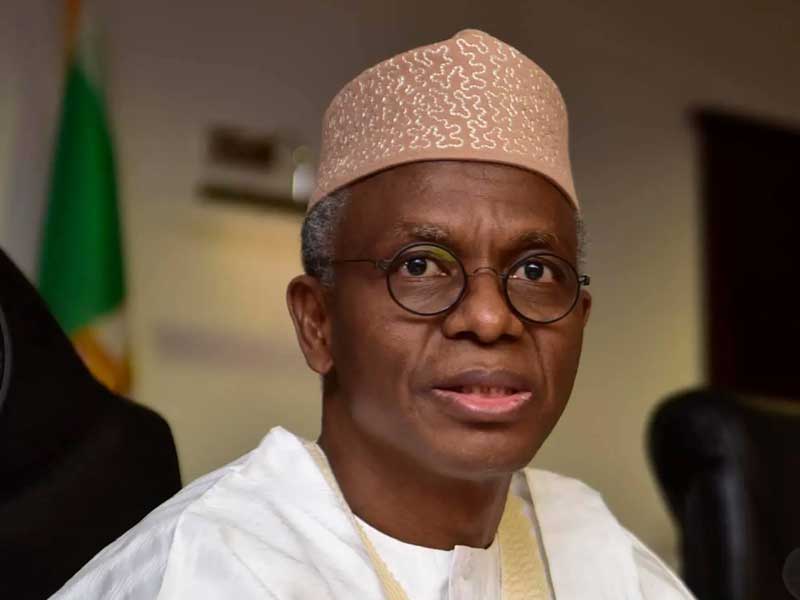
Concerns have been raised over the health and welfare of former Kaduna State Governor, Nasir El-Rufai, following his continued detention by anti-corruption agencies.
His media adviser, Muyiwa Adekeye, in a statement issued on Monday, alleged that the former governor suffered a nosebleed while in custody and has faced restrictions in accessing his family.
According to Adekeye, El-Rufai has been in detention for eight days after honouring an invitation from the Economic and Financial Crimes Commission (EFCC) on February 16, 2026.
Adekeye said El-Rufai voluntarily presented himself at the EFCC office in response to an invitation for questioning.
He explained that the former governor was interrogated and later granted administrative bail. However, he remained in custody as his lawyers sought a variation of the bail conditions.
Administrative bail is usually granted by law enforcement agencies during investigations. It allows a suspect to remain free while meeting certain conditions, such as providing sureties or submitting travel documents.
Adekeye described the continued detention as unjustified, especially since bail had already been granted.
He further alleged that no valid remand order had been presented to justify keeping El-Rufai in custody beyond the period allowed by the Constitution.
Under Nigerian law, a suspect is expected to be charged to court within a reasonable time or released on bail.
The aide also raised concerns about how the former governor has been treated while in detention.
He claimed that on the evening of February 17, one of El-Rufai’s wives was prevented from handing his meal to him directly. Instead, she was reportedly instructed to pass the food through an EFCC official.
Adekeye described this as part of restrictions placed on family access.
More worrying, he said, was an episode of overnight nose-bleeding experienced by the former governor.
According to him, El-Rufai suffered a nosebleed on the night of February 17 while still in EFCC custody.
His legal team reportedly cited the incident in raising concerns about his health and welfare, as well as his access to family members and legal counsel.
As of press time, there was no official statement from the EFCC confirming or denying the allegations regarding his health condition.
Adekeye also revealed that on the night of February 18, El-Rufai was transferred from the EFCC to the Independent Corrupt Practices and Other Related Offences Commission (ICPC).
He claimed that the transfer was carried out without prior notice to El-Rufai or his lawyers.
The ICPC is another federal agency responsible for investigating and prosecuting corruption-related offences in Nigeria.
Since his transfer, Adekeye said El-Rufai’s lawyers have applied for bail from the ICPC but have not received any response.
The situation, according to him, has created uncertainty around the former governor’s legal status.
El-Rufai is expected to appear in court on February 25 in a fundamental rights enforcement suit.
The suit is reportedly filed against the Federal Government, the ICPC, the EFCC and the Department of State Services (DSS).
In the case, the former governor is seeking an order admitting him to bail and asking the court to address what his legal team describes as violations of his constitutional rights.
Fundamental rights enforcement suits are legal actions filed to protect rights guaranteed under the Nigerian Constitution, including the right to personal liberty and fair hearing.
Nasir El-Rufai served as governor of Kaduna State from 2015 to 2023. During his tenure, he was known for controversial reforms, especially in the civil service and education sectors. He also played a prominent role in national politics.
Since leaving office, there have been public discussions about investigations into activities during his time as governor, although details of the current allegations have not been officially disclosed by the anti-corruption agencies.
Nigeria’s anti-corruption agencies, including the EFCC and ICPC, have the mandate to investigate public officials suspected of financial crimes or abuse of office.
In recent years, several former governors and top government officials have faced investigations and court trials over alleged corruption.
However, such cases often generate political debate, with supporters describing them as politically motivated, while critics argue that accountability is necessary to fight corruption.
As of the time of filing this report, neither the EFCC nor the ICPC had issued detailed public statements responding to the specific claims made by El-Rufai’s aide.
There was also no confirmation from the agencies regarding the alleged nosebleed incident or the claim that no remand order had been presented.
The development has sparked mixed reactions among Nigerians.
Some supporters of the former governor have expressed concern about his health and called for due process to be followed.
Others have urged the anti-corruption agencies to be allowed to carry out their investigations without interference.
All eyes are now on the court hearing later this week. The outcome may determine whether El-Rufai will be released on bail or remain in custody as investigations continue.
For now, the allegations raised by his media adviser have brought attention to the conditions of his detention and the broader issue of due process in high-profile investigations.