
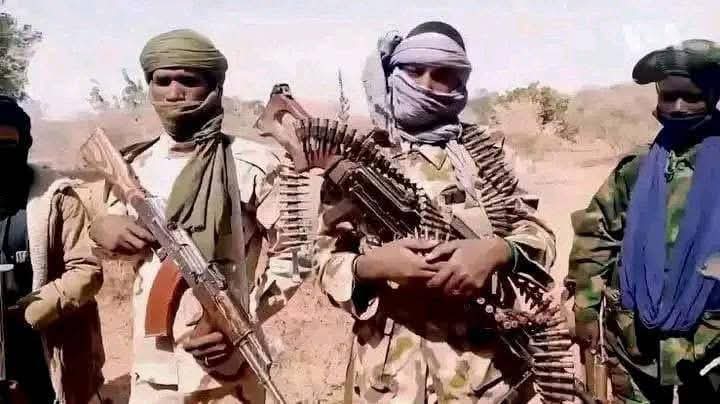
The United States Congress has recommended a series of measures aimed at ending what it described as the persecution of Christians in Nigeria, including sanctions, visa restrictions and stronger security cooperation between both countries.
The recommendations were contained in a report submitted to the White House after months of investigations by American lawmakers into religious violence and insecurity in Nigeria.
According to the report, the United States House Committees on Appropriations and Foreign Affairs called for concrete actions to protect vulnerable communities and dismantle extremist groups operating in parts of the country.
The development has sparked fresh debate about security, religious freedom and Nigeria’s relationship with the United States.
Sanctions, visa restrictions proposed
Among the key recommendations, the US lawmakers urged the American government to impose sanctions and visa bans on individuals and groups allegedly responsible for religious persecution.
They also called for continued visa restrictions against those linked to violence and human rights violations.
The report suggested that the United States should strengthen monitoring of financial networks suspected of supporting terrorism and violence in Nigeria.
The lawmakers further recommended that Washington should use diplomatic and economic pressure to ensure accountability.
They also proposed withholding some US assistance to Nigeria unless measurable progress is made in addressing insecurity and protecting vulnerable communities.
According to the investigators, these steps are necessary to curb extremist violence and restore confidence in Nigeria’s security institutions.
Bilateral security agreement
Another major recommendation was the establishment of a formal US–Nigeria security agreement.
The agreement, according to the lawmakers, would focus on intelligence sharing, protection of vulnerable communities and joint efforts to dismantle terrorist networks.
The report followed two fact-finding visits by a US delegation to Nigeria, during which they visited internally displaced persons camps and met victims of attacks.
The lawmakers also held discussions with Nigerian officials, including National Security Adviser Nuhu Ribadu.
They said the visits helped them better understand the scale of insecurity and the challenges facing affected communities.
Call to repeal Sharia, blasphemy laws
The US Congress also recommended the repeal of Sharia and blasphemy laws in some northern states, arguing that such laws have been used to suppress dissent and target minorities.
The lawmakers further suggested measures to counter extremist influence and improve law enforcement in areas affected by violence.
They also urged efforts to disarm armed groups and disrupt terrorist financing networks.
In addition, the report called for stronger cooperation with international partners such as France, Hungary and the United Kingdom in addressing insecurity in Nigeria.
Nigeria rejects claims of persecution
The Nigerian government has rejected the allegation that it has any policy of religious persecution.
In its reaction, the Federal Government said the report presents an opportunity for deeper engagement with the United States.
Officials insisted that Nigeria’s security challenges are complex and affect both Christians and Muslims.
They stressed that the country remains committed to protecting all citizens regardless of religion.
The government also noted that violent attacks in Nigeria are driven by terrorism, banditry, criminality and communal conflicts rather than religious bias.
Authorities have repeatedly argued that many victims of attacks by Boko Haram and other armed groups are Muslims.
Experts say the conflict in Nigeria has multiple causes, including poverty, land disputes, climate change and weak governance.
Background to the controversy
The US investigation followed the redesignation of Nigeria as a “Country of Particular Concern” under the International Religious Freedom Act.
This classification is used for countries accused of serious violations of religious freedom.
The issue gained global attention after the United States imposed visa restrictions on Nigerians linked to religious violence.
It also came after warnings of possible diplomatic and military responses to the security situation.
The US had earlier conducted airstrikes against Islamic State militants in northwest Nigeria in coordination with Nigerian authorities.
American officials said the operation was aimed at stopping terrorist violence in the region.
However, Nigerian authorities stressed that the military operations were not religiously motivated and were part of broader counter-terrorism efforts.
Security, politics and diplomacy
Analysts say the report could influence Nigeria–US relations in the coming months.
They note that Washington remains a key partner in Nigeria’s fight against terrorism, providing intelligence, military support and humanitarian aid.
At the same time, the recommendations could increase diplomatic pressure on the Nigerian government to improve security and human rights protections.
Observers also warn that the issue could create political and religious tension within Nigeria if not handled carefully.
Religious leaders and civil society groups have called for dialogue, unity and stronger institutions.
They say addressing insecurity requires cooperation across religious and ethnic lines.
The report also highlights the growing global concern about security in Africa’s most populous country.
Nigeria faces multiple threats, including Boko Haram insurgency in the northeast, banditry in the northwest and farmer-herder clashes in central regions.
These conflicts have displaced millions of people and caused humanitarian crises.
Growing international attention
In recent years, international organisations, religious groups and human rights bodies have increased attention on Nigeria’s security challenges.
Some have urged global cooperation to tackle terrorism and protect civilians.
Others have called for balanced analysis, noting that violence affects different communities.
Political analysts say the US Congress report reflects both humanitarian concerns and geopolitical interests.
They note that security in Nigeria has wider implications for regional stability in West Africa and global energy markets.
Implications ahead of 2027
As Nigeria prepares for the 2027 general elections, issues of security, religious tolerance and governance are expected to dominate political debates.
Experts say the government will need to demonstrate progress in tackling insecurity and strengthening institutions.
They also stress the importance of inclusive policies that address root causes of conflict.
For many Nigerians, the report underscores the urgency of finding lasting solutions to insecurity.
The coming months will determine how both countries respond to the recommendations.
For now, the US Congress has made it clear that protecting vulnerable communities and ending violence in Nigeria remains a priority.
Observers say the outcome could shape diplomatic relations, security cooperation and Nigeria’s global image in the years ahead.