
Electricity consumers across Nigeria are set to receive long-awaited refunds amounting to N20.33 billion after the Nigerian Electricity Regulatory Commission (NERC) ordered distribution companies to settle outstanding meter reimbursements.
In a new directive, NERC instructed all electricity distribution companies, popularly known as DisCos, to recover and fully refund the money within 12 months, starting from March 1, 2026.
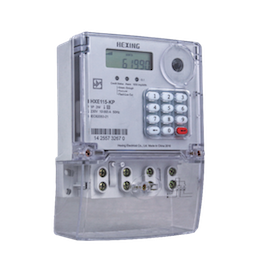
The refund relates to payments made by customers under the Meter Asset Provider (MAP) scheme, a programme introduced to close Nigeria’s long-standing metering gap.
The MAP scheme was introduced in 2018 to address the problem of estimated billing, which had caused years of complaints from electricity users.
Under the programme, customers who could not get meters from their DisCos were allowed to pay approved third-party providers for meters. The understanding was that the cost of the meter would be refunded over time through energy credits on their electricity accounts.
However, many customers have complained that the promised refunds were either delayed or not paid at all.
NERC confirmed that as of December 31, 2025, DisCos still owed customers N20.33 billion for meters purchased under the scheme.
The commission said its February 2026 review showed that compliance with reimbursement rules had been slow, making it necessary to issue a fresh order.
The new directive, Order No: NERC/2026/025, was signed on February 27, 2026, by the Chairman of NERC, Musiliu Oseni, and the Commissioner for Legal, Licensing and Compliance, Dafe Akpeneye.
The order amends an earlier 2023 directive on meter cost reimbursement.
According to NERC, the goal is to stop repeated delays, improve transparency and rebuild public trust in the electricity sector.
Under the new rules, all reimbursements must now be fully automated in customers’ accounts.
This means that once a MAP meter is activated, the total cost must be recorded as a credit in the customer’s account. The refund will then be paid back in monthly instalments over an approved amortisation period.
NERC explained that the system will work differently for prepaid and postpaid customers.
For prepaid customers, DisCos must generate monthly tokens that represent the reimbursement value. These tokens must be issued automatically no later than the fourth day of every month.
The energy value of each token will be based on the customer’s current electricity tariff and spread over a 120-month repayment period.
For postpaid customers, the reimbursement will appear as a separate credit line on their monthly bills. The credited amount will be deducted from the total payable for that month.
To clear the N20.33 billion arrears within one year, DisCos are required to accelerate repayments.
This means prepaid customers will receive two tokens each month during the 12-month recovery period, while postpaid customers will see two credit entries on their bills.
Importantly, NERC stated that DisCos must not use meter reimbursement credits to offset old debts owed by customers.
“The items must be treated separately,” the commission said, making it clear that refunds cannot be used to settle previous unpaid bills.
To ensure compliance, NERC has directed DisCos to submit monthly reports showing the total value of refunds paid through energy credits.
The reports must follow a format approved by the commission.
In addition, each DisCo must create a dedicated email address where customers can send complaints if they have not received their refunds.
Details of these complaints and how they are resolved must also be included in the monthly compliance reports sent to NERC.
The commission said these measures are necessary to strengthen accountability and improve confidence in the power sector.
Nigeria’s electricity sector has faced serious challenges since it was privatised in 2013.
One of the biggest problems has been the shortage of meters, which has forced many consumers to rely on estimated billing.
Estimated billing has often led to disputes, with customers accusing DisCos of overcharging them.
The Federal Government has introduced several metering initiatives over the years, including the MAP scheme and the National Mass Metering Programme, to reduce the gap.
Despite these efforts, millions of customers are still without meters.
Energy experts say that proper metering is essential for fairness, as it ensures customers pay only for the electricity they use.
Consumer groups have welcomed the new order, saying it will bring relief to households and businesses that paid out of pocket for meters.
Many Nigerians are struggling with rising living costs, and electricity tariffs have increased in recent years, especially for customers in higher service bands.
By enforcing the refund, NERC hopes to show that regulators are serious about protecting electricity users.
Industry analysts say the success of the directive will depend on strict monitoring and enforcement.
If DisCos fail to comply fully, it could further damage public trust in the sector.
For now, affected customers are advised to check their accounts from March 2026 to confirm that the credits are being applied.
The coming months will test whether the new automated system works as promised and whether the long-standing issue of delayed meter refunds can finally be resolved.