
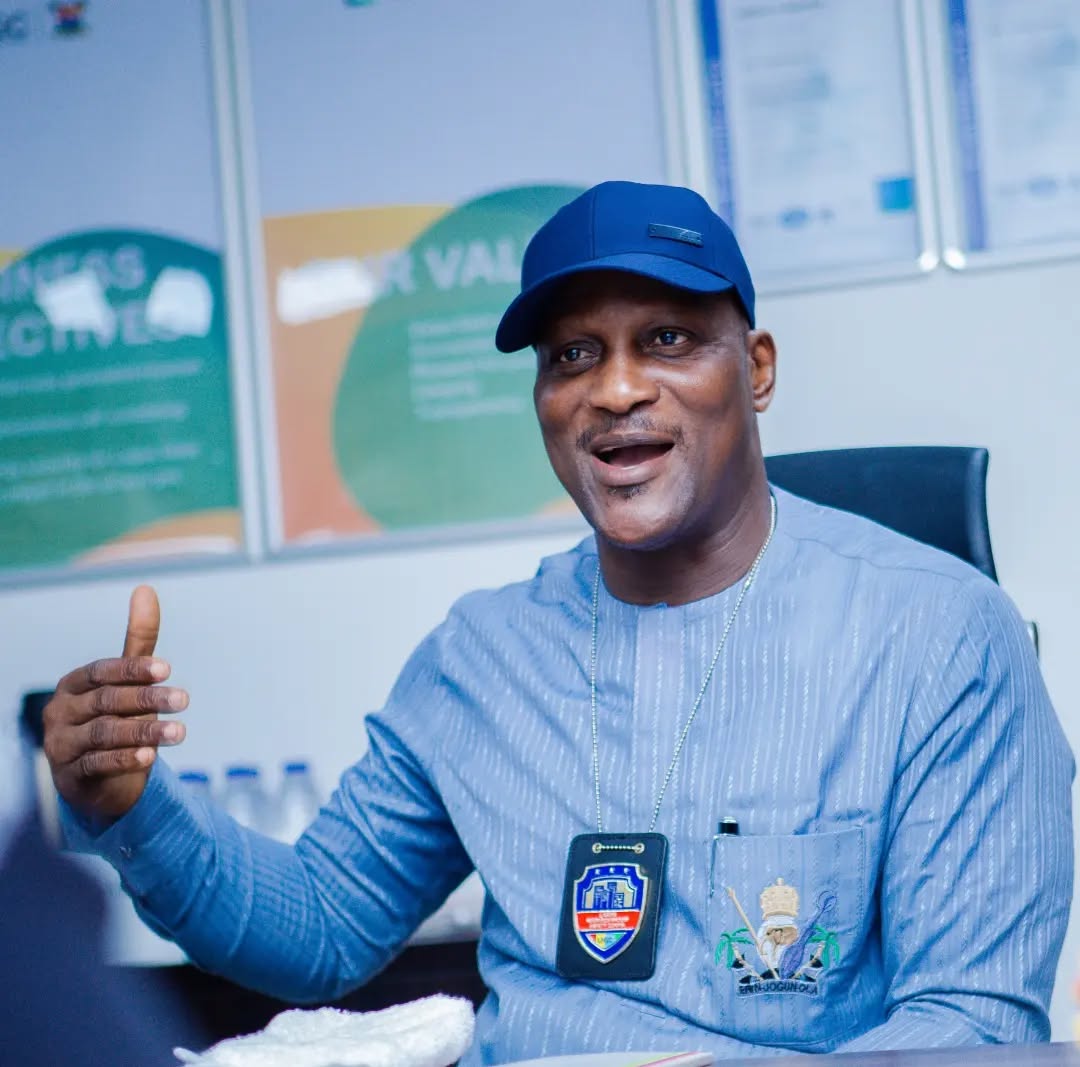
The General Manager of the Lagos State Neighbourhood Safety Agency (LNSA), Ifalade Oyekan, has said that Lagos State is ready for the creation of state police, adding that the state already has a strong security structure that can support the new system.
Speaking with journalists, Oyekan said the existing community-based security framework in Lagos has been designed in a way that can easily transform into a state policing system once the necessary laws are approved.
He explained that the Neighbourhood Safety Agency, which oversees the activities of the Lagos Neighbourhood Safety Corps, has been structured to support intelligence gathering, community engagement and crime prevention across the state.
According to him, the agency has already undergone several reforms in recent years to strengthen its operations and improve its ability to respond to security challenges.
“We are not designed to merely react to incidents,” Oyekan said. “Our Corps officers are trained to anticipate, prevent and reduce security threats before they happen.”
The Lagos Neighbourhood Safety Agency was created by the Lagos State Government to strengthen community policing and support the work of federal security agencies such as the Nigeria Police Force.
The agency operates through the Lagos Neighbourhood Safety Corps, whose officers work within communities to gather information, support law enforcement and help maintain peace and order.
Oyekan said this structure has helped improve communication between residents and security agencies, making it easier to detect and prevent crime.
He noted that the agency’s approach focuses on intelligence gathering, early warning systems and the use of technology to monitor security situations across different parts of the state.
According to him, these features make the agency well suited to serve as a foundation for a future state police system.
He added that the agency’s officers receive training to help them understand local security concerns and work closely with communities to address them.
The idea of state police has been widely discussed in Nigeria in recent years as part of efforts to address security challenges across the country.
At present, policing in Nigeria is controlled by the federal government through the Nigeria Police Force. However, many political leaders, security experts and civil society groups have argued that states should also have their own police forces.
Supporters of state police say it will allow state governments to respond more quickly to local security problems and improve community-based policing.
They also believe that local officers who understand the culture and environment of their communities can help prevent crime more effectively.
However, critics have raised concerns that state police could be abused by politicians if strong legal safeguards are not put in place.
Despite the debate, several state governments have created security outfits and neighbourhood watch groups to support the police and improve local security.
Lagos, Nigeria’s commercial centre and one of the most populated states in the country, has introduced several security initiatives over the years to tackle crime and protect residents.
These initiatives include the Lagos Neighbourhood Safety Corps, the installation of security cameras in some areas, and partnerships with other law enforcement agencies.
Oyekan said these efforts have helped build a security system that can support the creation of a state police structure.
He explained that the agency has continued to upgrade its operations to meet modern security demands.
According to him, the focus is now on using intelligence and technology to identify possible threats before they escalate.
Oyekan was recently reappointed for a second five-year term as General Manager of the Lagos State Neighbourhood Safety Agency by the Governor of Lagos State, Babajide Sanwo-Olu.
He thanked the governor for the confidence shown in him and promised that the agency would continue to strengthen security at the community level.
The agency head said that under Sanwo-Olu’s administration, the Neighbourhood Safety Agency has received support to expand its operations and improve its services.
He also said the agency will continue to develop its officers and modernise its structure so it can respond effectively to security challenges in the state.
According to him, the long-term goal is to build a security institution that is efficient, modern and trusted by residents.
“We will continue to strengthen the grassroots security system and support the vision of a safer Lagos,” Oyekan said.
Oyekan expressed confidence that if Nigeria eventually adopts state police, Lagos will be among the states best prepared for the transition.
He said the existing community security network in the state already provides a strong base for such a development.
He also stressed that cooperation between communities, local security groups and national law enforcement agencies remains important for maintaining peace and stability.