
The University of Lagos (UNILAG) has restored its Students’ Union Government (SUG) after nearly nine years of suspension, marking a major step in bringing back student representation on the campus.
The university announced that new student leaders have been elected for the 2025/2026 academic session as part of the process to revive the union. The development was disclosed in a statement published on the institution’s official website on Friday.
According to the statement, the election was organised by the university management as part of a transitional arrangement to gradually restore full student union activities. The exercise produced a new Students’ Union President and General Secretary who will guide the process of rebuilding the union structure.
The election was coordinated by the Directorate of Student Affairs under the leadership of the Dean of Student Affairs, Professor Johnson Agunsoye.
It took place at the Common Room of Moremi Hall within the university campus.
Unlike a general election involving the entire student body, the officers were selected from among the current faculty presidents in the university. The institution explained that this arrangement was in line with the guidelines set up to ensure a smooth and controlled transition toward the full restoration of the union.
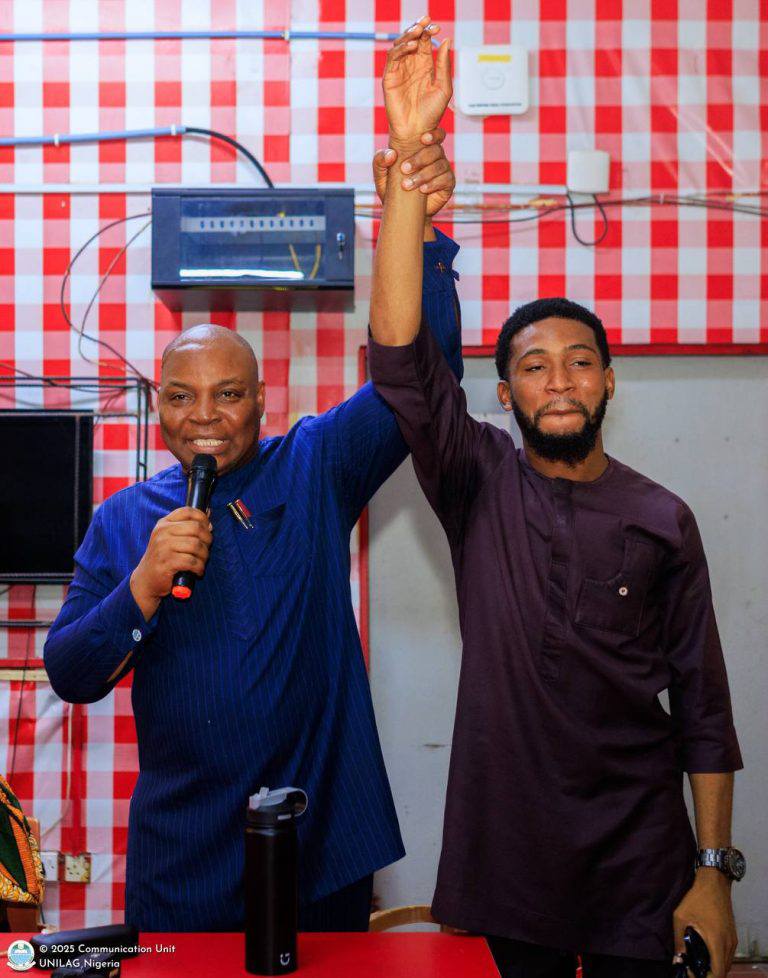
At the end of the voting process, Bolaji Akinpelu from the Faculty of Arts emerged as the Students’ Union President after securing nine votes.
Daniel Solomon from the Faculty of Computing and Informatics was elected as the General Secretary, also with nine votes.
The two officers are expected to play important roles in coordinating the activities of the revived union and preparing the ground for broader student participation in the future.
Speaking after the election, Agunsoye said the process fulfilled a promise made earlier by the Vice-Chancellor, Professor Folasade Ogunsola, to restore the Students’ Union Government.
He explained that bringing back the union was important because it provides a platform for students to express their views and participate in the leadership process within the university community.
According to him, student unionism also helps to prepare young people for leadership roles in society.
“The restoration of the union is intended not only to provide a platform for the student population to express their views, but also to prepare students for leadership responsibilities and encourage them to become solution-driven leaders,” Agunsoye said.
University officials also noted that student participation in governance is an important part of campus life in many universities around the world.
They said the move would strengthen communication between students and the university management while promoting a more inclusive academic environment.
The restoration of the Students’ Union Government comes almost nine years after it was suspended by the university authorities.
On April 24, 2016, the university senate dissolved the union and suspended its constitution indefinitely following a period of student protests and unrest on the campus.
At the time, the protests disrupted academic activities and created tension within the institution.
The university management said the decision was taken to restore order and ensure that academic programmes continued without interruption.
The suspension meant that for several years the university operated without a central student union leadership, although faculty associations and other student bodies continued to exist.
The decision to suspend the union in 2016 generated strong reactions from students and several national student organisations.
One of the groups that openly criticised the decision was the National Association of Nigerian Students (NANS), which organised protests against the rustication of some student leaders involved in demonstrations on campus.
The protests at the time were largely connected to complaints about poor electricity supply and water shortages within the university hostels.
Student activists argued that dissolving the union limited students’ ability to express their concerns and hold the authorities accountable.
They also accused the university management of suppressing student voices by preventing the union from operating.
However, university officials maintained that the decision was necessary to protect the stability of the institution and prevent further disruptions.
Over the years, many students and alumni called for the return of the Students’ Union Government.
Student unionism has historically played an important role in Nigerian universities, providing a structured platform through which students engage with school authorities on issues such as welfare, accommodation, tuition policies, and academic conditions.
In many institutions, student unions also organise cultural events, debates, and leadership training programmes.
Recognising this role, the UNILAG management began discussions in recent years about restoring the union under a more structured framework.
In 2024, Vice-Chancellor Ogunsola assured student leaders and other stakeholders that the university was working toward reinstating the Students’ Union Government.
She explained that student governance was an important element in building a vibrant academic environment.
According to her, giving students a voice in university affairs can help improve communication and strengthen the sense of community on campus.
The election of the new president and general secretary is seen as a major milestone in the long process of restoring student representation at the university.
For many students, the development signals the return of an important institution that has historically shaped student life at UNILAG.
Student unions in Nigeria have often served as training grounds for future political and civic leaders.
Several prominent figures in Nigerian politics and public life began their leadership journeys in campus unions.
With the revival of the Students’ Union Government, many members of the university community hope the new leadership will promote dialogue, protect student interests, and work closely with the university management to maintain peace and progress on campus.
As UNILAG begins this new phase, attention will focus on how the restored union will operate and how it will balance student advocacy with the need to maintain stability within one of Nigeria’s most prominent universities.