
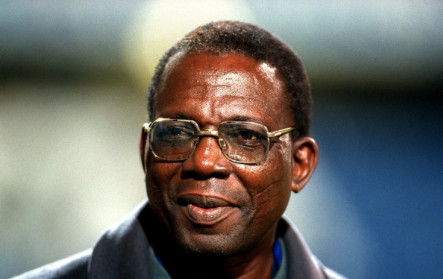
Nigeria’s football community has been thrown into mourning following the death of former Super Eagles coach Festus Adegboye Onigbinde, who passed away at the age of 88.
The family of the respected football figure announced his death in a statement released on Monday. The statement was signed by Mrs. Bolade Adesuyi on behalf of the family.
According to the statement, Onigbinde, who was also a traditional chief and community leader, lived a fulfilled life dedicated to football, family and service to the nation.
“With great gratitude to God for a life well spent, we announce the passing of this great man: a Modakeke High Chief, the first indigenous Nigerian Super Eagles football coach, father, husband, grandfather, great-grandfather, brother and friend – High Chief Festus Adegboye Onigbinde,” the family said.
The family described him as a man who made significant contributions to Nigerian football and national development.
“We thank God for the fulfilled life and your contributions to the Nigerian nation and the world as an unequalled football coach,” the statement continued.
The family also prayed for the peaceful rest of his soul, thanking friends and well-wishers who have supported them during the difficult moment.
Onigbinde’s death marks the end of an era for Nigerian football, especially for those who followed the development of the national team during the early years of modern football in the country.
Onigbinde made history as the first indigenous Nigerian coach to handle the national team. At the time he was appointed, the team was still known as the Nigeria national football team, which had previously been called the Green Eagles.
Before Nigerian coaches began to take charge of the national team, many foreign coaches were often appointed to lead the squad.
His appointment was therefore seen as a major step in giving Nigerian coaches the opportunity to manage the national team.
Onigbinde first managed the national side between 1983 and 1984, during a period when Nigeria was working to establish itself as one of the strongest football nations in Africa.
Football has long been the most popular sport in Nigeria, drawing strong support from millions of fans across the country.
One of the major achievements during Onigbinde’s early time with the national team came during the 1984 Africa Cup of Nations.
Under his leadership, Nigeria reached the final of the tournament, which was hosted in Ivory Coast.
The team performed strongly throughout the competition and eventually won the silver medal after finishing as runners-up.
Nigeria lost the final match to Cameroon national football team, but the team’s performance was widely praised.
Many football followers believed the result showed that Nigeria had the potential to compete with the best teams in Africa.
The tournament also helped raise the profile of Nigerian football at a time when the country was investing more in sports development.
Years after his first stint with the national team, Onigbinde was again called upon to serve Nigeria in football management.
He later returned to manage the Super Eagles and led the team to qualify for the 2002 FIFA World Cup held in South Korea and Japan.
The 2002 tournament was co-hosted by South Korea and Japan, making it the first FIFA World Cup to be hosted by two countries.
Nigeria’s qualification for the tournament under Onigbinde’s leadership was seen as an important achievement, especially considering the strong competition from other African teams during the qualifiers.
At the World Cup, Nigeria faced some of the best football nations in the world.
Although the team did not progress far in the tournament, many football observers noted that the experience helped younger players gain valuable exposure on the global stage.
Beyond his role with the national team, Onigbinde was known for his deep involvement in football development in Nigeria.
He worked with various football institutions and contributed to discussions on how to improve the game in the country.
Many younger coaches and football administrators saw him as a mentor who shared his knowledge and experience with others.
Over the years, he remained active in football conversations and often spoke about the need for better planning and grassroots development in Nigerian sports.
His influence was felt not only in professional football but also in local communities where he encouraged young people to participate in sports.
Apart from football, Onigbinde also held a respected traditional title in his hometown.
He served as a high chief in Modakeke, where he was known as a community leader.
Residents of the town often described him as a respected elder who supported community development and youth activities.
His leadership role in Modakeke showed that his influence extended beyond football into cultural and social life.
Following the announcement of his death, tributes are expected from members of the Nigerian football community, former players, administrators and fans.
The Nigeria Football Federation and other sports organisations are also expected to honour his contributions to the development of football in the country.
Many Nigerians remember him as one of the early figures who helped shape the direction of the national team.
For decades, the Super Eagles have remained one of the most recognised football teams in Africa, winning several continental titles and qualifying for multiple World Cups.
Onigbinde’s life story reflects a long journey of dedication to sports and national service.
From managing Nigeria’s national team to mentoring younger football professionals and serving his community as a traditional chief, he remained a respected figure throughout his life.
Family members described him as a loving father, grandfather and great-grandfather who valued family and faith.
As news of his death spreads across Nigeria and the football world, many people are remembering him for the impact he made both on and off the pitch.
Details of funeral arrangements are expected to be announced by the family in the coming days.
.