
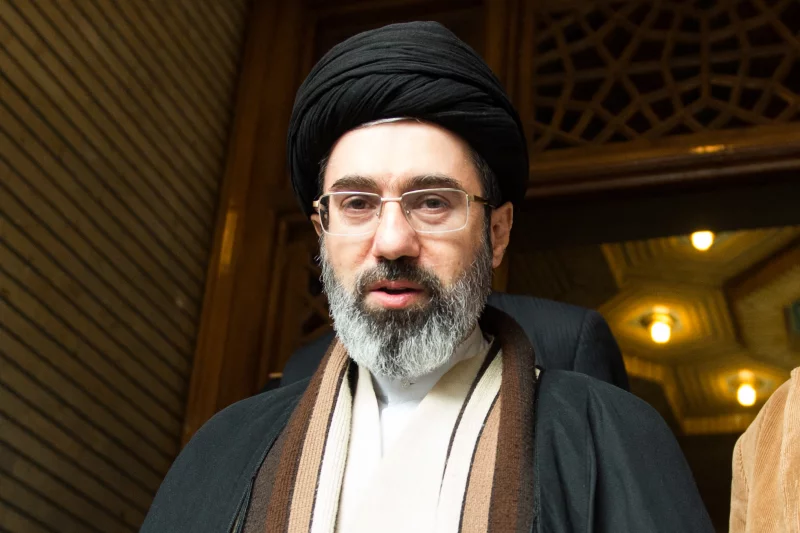
Iran’s new Supreme Leader, Mojtaba Khamenei, has delivered his first public statement since taking over leadership of the country following the death of his father, Ali Khamenei.
The statement was broadcast on Thursday by Press TV, Iran’s English-language state television channel.
In the address, Mojtaba Khamenei called for national unity and promised that Iran would continue to confront its enemies as the ongoing conflict in the Middle East deepens.
The new leader warned that attacks on American military bases in the region could continue and also said Iran would not back down from seeking revenge for those killed in the strikes that targeted the country’s leadership.
Mojtaba Khamenei assumed the role of supreme leader after his father, Ali Khamenei, was reportedly killed during military strikes carried out by the United States and Israel at the beginning of the current conflict.
According to reports from Iranian state media, several members of the Khamenei family also died in the attacks.
The killings marked one of the most dramatic developments in the long-running tensions between Iran and its regional and international rivals.
Iran has long accused the United States and Israel of attempting to weaken its government and influence in the Middle East.
The latest attacks and the change in leadership have further increased fears that the conflict could spread across the region.
In his first message as supreme leader, Mojtaba Khamenei called on Iranians to remain united during what he described as a difficult period for the country.
He said Iran was facing pressure and attacks but insisted that the country would remain strong.
The new leader praised Iran’s military forces for what he said was their role in defending the country.
“I would like to thank the brave fighters who are doing a great job at a time when our country is under pressure and under attack,” he said in the statement.
He also pledged that Iran would continue to resist foreign pressure and defend its interests.
Iran’s military, which includes the regular armed forces and the powerful Islamic Revolutionary Guard Corps, plays a central role in the country’s defence and regional strategy.
One of the strongest parts of the new leader’s message was directed at American military bases in the Middle East.
Mojtaba Khamenei said all US bases in the region should be closed immediately.
He warned that if they remain open, they could be targeted in attacks.
The United States maintains several military bases across the Middle East, including facilities in countries such as Iraq, Qatar, Bahrain and Kuwait.
These bases are used for military operations, intelligence gathering and regional security missions.
Iran has often criticised the presence of American troops in the region and has accused Washington of trying to dominate Middle Eastern politics.
In his statement, Mojtaba Khamenei said Iran would not hesitate to respond to attacks against it.
“We will not refrain from avenging the blood of the martyrs,” he said.
The Iranian leader also spoke about the Strait of Hormuz, one of the world’s most important shipping routes for oil.
The Strait of Hormuz connects the Persian Gulf to global waters and is used by many oil-producing countries to transport crude oil to international markets.
A large portion of the world’s oil supply passes through the narrow waterway each day.
Mojtaba Khamenei said the strait would remain closed as part of Iran’s strategy to pressure its enemies.
Any disruption to shipping in the strait can have major effects on global oil prices and international trade.
For decades, tensions in the region have raised concerns about possible disruptions to shipping through the waterway.
In his message, the Iranian leader also referred to armed groups allied with Iran in the region.
He said groups in Yemen and Iraq were ready to support Iran’s struggle.
Iran has long been linked to several armed groups across the Middle East that share its political and military goals.
These alliances form part of what analysts often describe as Iran’s network of regional partners.
The groups have played roles in conflicts in countries such as Yemen, Iraq, Syria and Lebanon.
According to Mojtaba Khamenei, some of these groups have already indicated their willingness to assist Iran during the current crisis.
Another major point in the statement was Iran’s demand for compensation from its enemies.
The new leader said Iran would seek payment for the damage caused by attacks on the country.
If compensation is refused, he warned that Iran may target assets belonging to its opponents.
“We will obtain compensation from the enemy,” he said.
“If they refuse, we will take from their assets to the extent we deem appropriate.”
He added that if this was not possible, Iran could destroy an equivalent amount of property belonging to its enemies.
The latest developments come as tensions continue to rise across the Middle East.
The region has long experienced political and military rivalries involving Iran, Israel, the United States and several Arab countries.
Conflicts in countries such as Syria, Iraq and Yemen have also contributed to instability.
The Supreme Leader is the most powerful political and religious authority in Iran.
The position controls key state institutions, including the military and major parts of the government.
Because of this influence, any change in leadership often has major political consequences both inside Iran and across the region.
International observers are closely watching how the new leader will manage the crisis.
There are fears that the ongoing conflict could spread further and draw in more countries.
The closure of the Strait of Hormuz alone could have serious economic effects around the world, especially on oil markets.
Many countries rely heavily on oil shipments that pass through the waterway.
As tensions grow, global leaders have called for calm and urged all sides to avoid actions that could escalate the situation.