
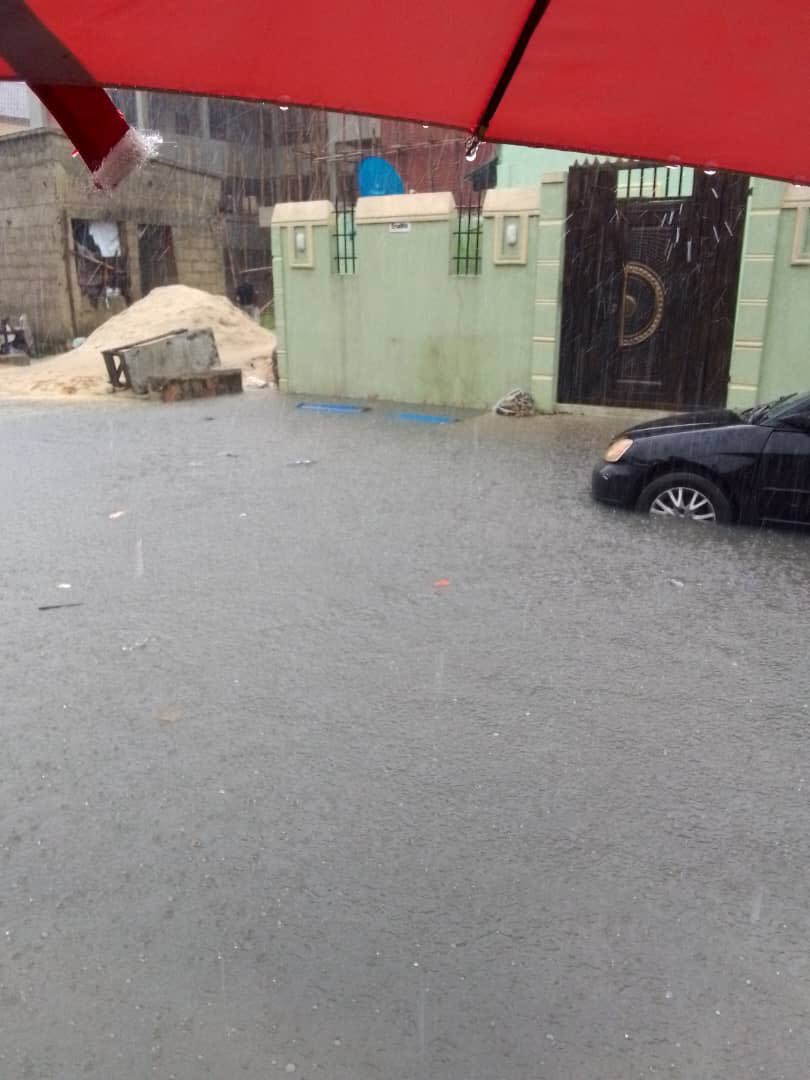
The Lagos State Government has warned residents to prepare for heavy rainfall and possible flash flooding as the 2026 rainy season approaches.
The state Commissioner for Environment and Water Resources, Tokunbo Wahab, gave the warning on Friday during a press briefing in Alausa, Ikeja. The briefing focused on the Seasonal Climate Prediction and its possible social and economic effects on the state.
According to Wahab, the weather outlook released by the Nigerian Meteorological Agency shows that Lagos is likely to experience above-normal rainfall this year, which could lead to flooding in some communities.
Wahab explained that the Nigerian Meteorological Agency released its 2026 Seasonal Climate Prediction on February 10. The forecast outlines expected rainfall patterns, temperature levels, and other weather conditions across Nigeria.
He said the annual briefing organised by the Lagos State Government is meant to inform residents and help them prepare for possible weather events that could affect daily life and economic activities.
According to the commissioner, the forecast shows that the rainy season in Lagos may begin earlier than usual and last longer than normal.
“The prediction indicates an early to normal onset of the rainy season, a normal to late cessation, and normal to above-normal rainfall,” Wahab said.
He added that temperatures between March and May are expected to be above normal in many parts of the state.
The commissioner also noted that the year began with a weak phase of La Niña in January. This climate condition is known to influence rainfall patterns in different parts of the world.
He said a neutral phase of the El Niño–Southern Oscillation is expected to continue during the first six to eight months of the year.
These conditions, he explained, suggest that Lagos may experience an early start to the rainy season, a longer rainy period, and a delayed end to rainfall.
According to Wahab, the rainy season is expected to begin as early as the last week of March and may end in the first week of December.
He said the average rainfall expected across the state in 2026 could range between 1,650 millimetres and 3,030 millimetres.
In the Ikeja Division, rainfall is expected to begin around March 31 and end around December 2, with an annual rainfall amount of about 1,932 millimetres.
For the Badagry Division, rainfall may start around March 28 and end around December 3, with an estimated annual rainfall of about 2,010 millimetres.
In Ikorodu Division, rainfall is expected to begin on March 31 and end on December 2, with an annual amount of about 1,935 millimetres.
The Lagos Island Division is projected to experience rainfall from March 30 to December 2, with an annual rainfall amount of around 1,968 millimetres.
Epe Division may see rainfall from March 29 to December 3, with an estimated annual rainfall amount of about 1,984 millimetres.
Wahab said that when all the divisions are considered, the average rainfall expected across the state’s 20 local government areas is about 1,965 millimetres.
The commissioner warned that heavy rainfall could cause flooding in some parts of the state.
He said strong winds that often occur at the beginning and end of the rainy season may also pose risks to lives and property.
“Lagos State is expected to experience above-normal rainfall. Sometimes, the high rainfall amounts could lead to flooding in parts of the state,” Wahab said.
He added that strong winds may damage structures and disrupt daily activities.
According to him, severe weather conditions could also affect transportation and business operations.
“Commercial activities may be disrupted. Flight delays and possible revenue losses may also occur during heavy storms,” he said.
To prepare for the rainy season, Wahab said the Lagos State Government has strengthened its monitoring systems.
He explained that the state operates its own network of weather stations and river gauge stations to track rainfall levels and monitor water levels in rivers.
These systems help authorities detect possible flood risks early and respond quickly.
The ministry is also working closely with the Nigerian Meteorological Agency to ensure accurate weather information is available to residents.
Wahab said the Seasonal Climate Prediction exercise has become an important tool for farmers, businesses, planners, and government agencies.
Weather forecasts help them plan their activities and reduce losses caused by extreme weather conditions.
The commissioner assured residents that the government has already started several flood control measures.
He said the Ministry of Environment and Water Resources has continued its year-round drainage maintenance programme.
The state government has also intensified efforts to improve waste management, which plays a major role in preventing flooding.
Blocked drainage systems caused by refuse and construction materials are one of the major causes of flooding in Lagos.
Wahab said the government would continue to enforce environmental laws to prevent illegal dumping of waste and construction on drainage channels.
The state government is also working with the Ogun-Oshun River Basin Development Authority to monitor the release of water from the Oyan Dam.
The dam, located in neighbouring Ogun State, sometimes releases water that flows into the Ogun River.
When large volumes of water are released, downstream communities in Lagos may experience flooding.
Wahab said the state is closely monitoring low-lying communities that could be affected by rising river levels.
These communities include Agiliti, Agboyi, Itowolo and Ajegunle.
The commissioner also said several government agencies have been placed on alert to respond quickly to emergencies.
The Lagos State Signage and Advertisement Agency has been directed to ensure that billboards and telecommunications masts comply with safety regulations.
This is to prevent them from collapsing during periods of strong winds.
Emergency response teams and traffic management authorities have also been put on standby to handle incidents that may occur during thunderstorms and heavy rainfall.
Wahab explained that Lagos sometimes experiences temporary flooding because rising lagoon levels prevent stormwater from draining quickly.
When tides are high, drainage channels may not discharge water into the lagoon immediately, leading to temporary flooding until water levels drop.
The government has also strengthened its Flood Early Warning Systems to provide timely information to residents.
Wahab said awareness campaigns would be increased, especially in coastal and low-lying areas where flooding is more common.
Residents living in such areas may be advised to move to safer locations when necessary.
Communities along flood plains and drainage channels have been urged to remain alert.
These include areas such as Owode, Iwaya, Makoko, Badia, Ijora, Isaalu, Pota and Shibiri.
Residents in these areas may need to relocate to higher ground if flooding becomes severe.
The commissioner urged residents to support the government’s flood prevention efforts.
He warned against dumping refuse in drains, blocking drainage channels with building materials, or constructing structures on drainage paths.
Wahab also advised motorists to drive carefully during the rainy season to reduce the risk of accidents on wet roads.
Residents were encouraged to report cases of drainage blockage and illegal waste disposal to the Ministry of Environment.
He added that drainage engineers have been deployed across the state’s 57 local government areas and local council development areas to monitor drainage systems.
Finally, the commissioner called on residents to regularly clear drains around their homes.
He said keeping drainage channels free from waste would help ensure the smooth flow of stormwater and reduce the risk of flooding during the coming rainy season.