
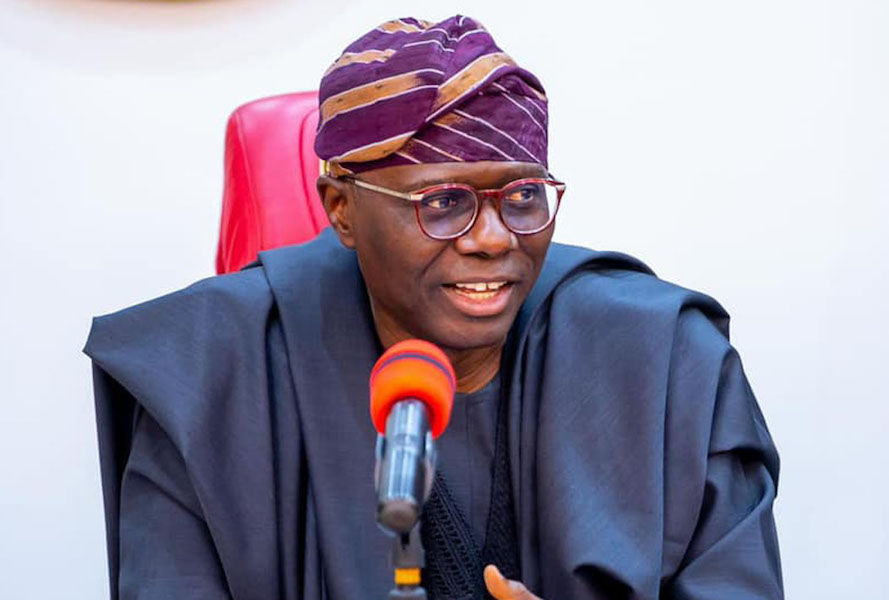
The Governor of Babajide Sanwo-Olu has announced that the newly launched Lagos Education Access Fund will support the enrolment of about 50,000 out-of-school children into formal education across the state.
The governor made the announcement during the unveiling of the initiative at Lagos House Marina. According to a statement released by the Director of Public Affairs at the Lagos State Universal Basic Education Board, Abe Adunola, the programme aims to strengthen access to quality education and improve learning outcomes in public schools.
Sanwo-Olu said the initiative forms part of the state government’s efforts to ensure that every child in Lagos has access to free and quality basic education.
The governor explained that the programme is backed by a $25 million outcomes-based education fund designed to reach about 200,000 children in different communities across the state.
According to him, the project will support the enrolment of up to 50,000 children between the ages of six and 14 who are currently out of school. It will also help improve foundational literacy and numeracy skills for about 150,000 pupils already attending public schools.
Nigeria has one of the largest populations of out-of-school children in the world. Reports from the United Nations Educational, Scientific and Cultural Organization and other global bodies have repeatedly highlighted the need for urgent interventions to address the problem.
Although Lagos is one of Nigeria’s most economically active states, the challenge of children dropping out of school or never enrolling remains in several low-income communities. Factors such as poverty, family responsibilities, migration, and lack of awareness about the importance of education often contribute to the situation.
By launching the Lagos Education Access Fund, the state government hopes to tackle the issue by focusing on both access to education and improvement in learning outcomes.
Sanwo-Olu described education as a powerful tool for social mobility and economic growth. He said providing quality education for children is essential for building a productive workforce and a stronger society.
The governor noted that the new initiative builds on progress already made under Project Zero, a programme launched in 2021 to identify and reintegrate out-of-school children into the education system.
Through the project, thousands of children who were previously outside the classroom have returned to school.
“Through this intervention, more than 36,000 children have already been returned to classrooms across the state,” the governor said.
Officials say the Lagos Education Access Fund will expand these efforts and ensure that more children benefit from formal education.
The initiative is also linked to the government’s THEMES+ development agenda, which focuses on transportation, health, education, economic growth, environment, and security. Under the education pillar of the agenda, the state government aims to strengthen human capital development and promote a knowledge-driven society.
According to Sanwo-Olu, investing in education is one of the most effective ways to reduce poverty and create opportunities for young people.
Beyond enrolling children in school, the programme also seeks to involve parents and guardians in supporting their children’s education.
The governor revealed that more than 360 parents and guardians have already been trained in various vocational and livelihood skills. These include fashion designing, catering, soap making, and hairdressing.
The training programmes are designed to help parents earn income and become better able to support their children’s schooling.
Officials say empowering families economically can help reduce the risk of children dropping out of school.
Community participation is also expected to play an important role in the success of the initiative. Local leaders, teachers, and community groups are expected to help identify children who are not in school and encourage families to enrol them.
The Lagos Education Access Fund is being implemented with support from several development partners.
Among them is the Education Outcomes Fund, an international organisation that promotes results-based financing in education programmes.
Speaking at the event, the Chief Executive Officer of the organisation, Amel Karboul, explained that the initiative uses an innovative funding model.
Unlike traditional programmes that focus on spending money on inputs such as books or teachers’ salaries, the new approach pays for measurable results.
Karboul said funding will be tied to outcomes such as children enrolling in school, staying in school, and successfully completing their education.
“The innovation lies in shifting from traditional funding methods that pay for inputs to a model that pays for verified results,” she said.
According to her, the programme will use data-driven technology and monitoring systems to track progress and ensure accountability.
This approach, she noted, will help ensure that children not only attend school but also receive quality education that improves their reading and mathematics skills.
Another major partner supporting the initiative is the Children’s Investment Fund Foundation.
During the event, a director at the organisation, Eunice Ogolo, announced that the foundation would contribute $10 million to support the programme.
Ogolo said there is an urgent need to address the issue of children who remain outside the school system.
“When children are not in school or are not learning effectively, their future potential becomes limited,” she said.
She commended the Lagos State Government for adopting results-based strategies aimed at improving learning outcomes.
The foundation, she added, remains committed to supporting efforts that ensure children gain basic literacy and numeracy skills.
The Commissioner for Basic and Secondary Education, Jamiu Alli-Balogun, also spoke at the unveiling ceremony.
He described the Lagos Education Access Fund as a major step toward strengthening the state’s education system.
According to him, the initiative will expand access to quality learning opportunities and help more children build the skills they need for the future.
Education stakeholders believe the programme could make a significant impact if it is properly implemented and sustained.
With a growing population and increasing demand for education services, Lagos faces constant pressure to expand and improve its school system.
However, government officials say initiatives like the Lagos Education Access Fund will help bridge the gap by bringing more children into school while improving the quality of learning.
For thousands of children who currently remain outside the classroom, the programme could provide a new opportunity to start or continue their education.