
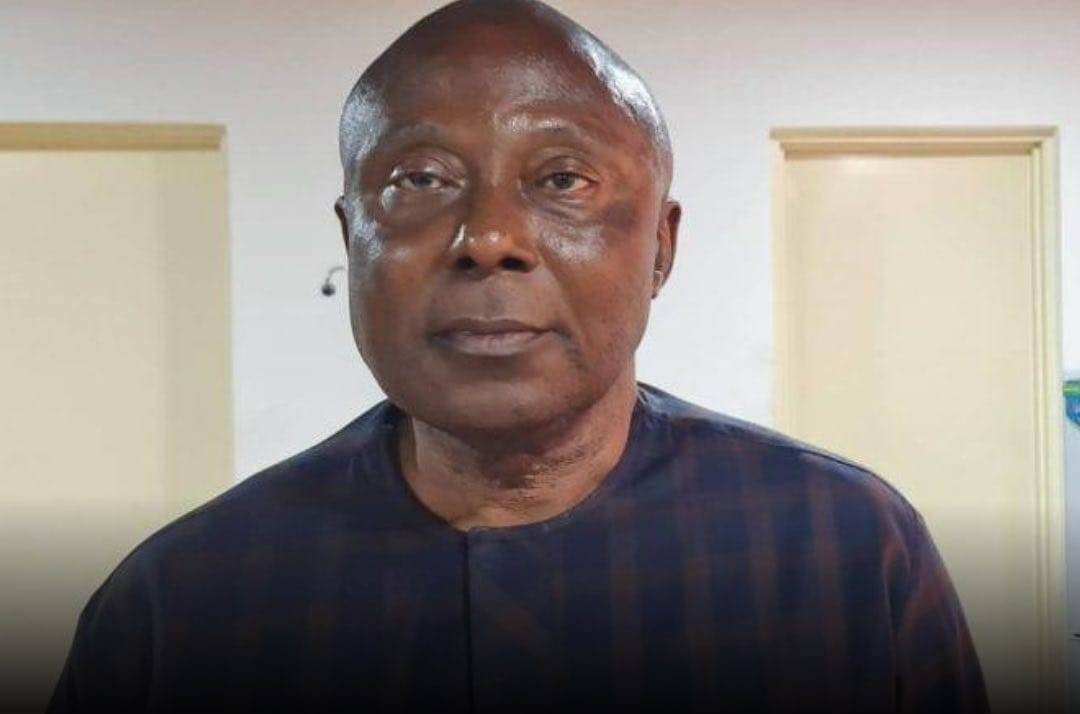
A former Acting Accountant-General of the Federation, Anamekwe Nwabuoku, has been sentenced to 72 years in prison by a Federal High Court in Abuja over charges of money laundering involving N868.4 million.
The judgment was delivered on Monday by Justice James Omotosho of the Federal High Court, who ruled that the prosecution had successfully proven its case against the former government official.
Nwabuoku was prosecuted by the Economic and Financial Crimes Commission (EFCC) on a nine-count amended charge bordering on money laundering and fraud.
According to the court, the offences were committed between 2019 and 2021 while Nwabuoku served as Director of Finance and Accounts in the Ministry of Defence, one of Nigeria’s key government institutions responsible for managing the country’s military affairs.
The EFCC told the court that Nwabuoku worked with several companies to move and conceal funds suspected to be proceeds of illegal activities. The companies named in the case include Temeeo Synergy Concept Limited, Turge Global Investment Limited, Laptev Bridge Limited, and Arafura Transnational Afro Limited.
The anti-graft agency said the transactions violated provisions of the Money Laundering (Prohibition) Act, 2011, as amended. Specifically, the offences contravened Section 18 of the Act and are punishable under Section 15(3), which deals with the concealment and conversion of illegal funds.
During the trial, the prosecution presented evidence to show how the funds were allegedly moved through different channels to hide their origin. The court held that the evidence was strong enough to establish that the money was not legitimately earned.
Justice Omotosho, in his ruling, found Nwabuoku guilty on the charges and handed down a cumulative sentence of 72 years in prison. The sentence reflects the seriousness of the offences and the court’s position on financial crimes involving public funds.
Earlier in the trial, Nwabuoku had filed a no-case submission, arguing that the EFCC had not presented enough evidence to warrant his defence. However, the court dismissed the application in November 2025, ruling that the case had merit and that he had questions to answer.
Before his conviction, Nwabuoku had been granted bail in the sum of N500 million, with two sureties required to provide the same amount. Despite the bail conditions, the trial continued until the final judgment was delivered.
Nwabuoku’s case has drawn public attention because of his brief tenure as Acting Accountant-General of the Federation. He was appointed to the position on May 20, 2022, by former President Muhammadu Buhari.
His appointment came after the suspension of the then Accountant-General, Ahmed Idris, who was being investigated over an alleged N80 billion fraud.
However, Nwabuoku’s time in office was short-lived. He was removed from the position in July 2022, just a few weeks after his appointment, following the emergence of investigations by the EFCC into his own activities.
The case highlights ongoing efforts by Nigerian authorities to tackle corruption and financial crimes, especially among public officials entrusted with managing government funds.
Over the years, the EFCC has intensified its operations, targeting high-profile individuals in both the public and private sectors. The commission has secured several convictions, although challenges such as delays in the judicial process and appeals have sometimes slowed progress.
Corruption has long been a major concern in Nigeria, affecting public trust and development. Cases involving large sums of money, particularly in sensitive sectors like defence, often attract widespread attention due to their impact on national security and public welfare.
The Ministry of Defence, where Nwabuoku served as a top finance official, plays a critical role in funding military operations and ensuring the welfare of personnel. Any misuse of funds in the ministry can have serious consequences for national security.
As of the time of this report, it is not clear whether Nwabuoku will appeal the judgment. In many similar cases, convicted persons often challenge court decisions at higher courts.
The EFCC has welcomed the judgment, describing it as a victory in the fight against corruption. The agency has repeatedly stated its commitment to ensuring that those who misuse public funds are brought to justice.
For many Nigerians, the case is another reminder of the need for accountability in public office. It also raises questions about the systems in place to prevent financial crimes within government institutions.