
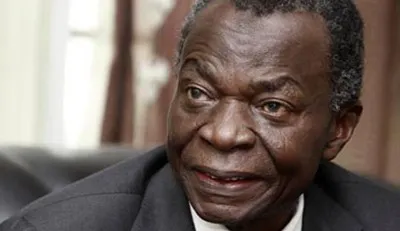
The Obidient Movement has strongly criticized former President of the Court of Appeal, Justice Ayo Salami, over his recent comments questioning the eligibility of Peter Obi to contest the 2023 presidential election.
In a statement released on Wednesday in Abuja, the National Coordinator of the Obidient Movement Worldwide, Yunusa Tanko, said Obi’s candidacy was valid and had already been affirmed through due legal process. He added that the former Labour Party candidate would not be distracted by what he described as attempts to “rewrite history.”
The reaction follows remarks made by Salami on Tuesday in Ilorin, Kwara State, where the retired jurist argued that Obi should not have been allowed to contest the 2023 election under the platform of the Labour Party Nigeria. Salami made the comments during a public event organised by the Wole Soyinka Centre for Investigative Journalism.
Tanko, who also served as a spokesperson during Obi’s presidential campaign, said all legal questions surrounding Obi’s candidacy had been resolved before and after the election. According to him, the courts, including Nigeria’s highest court, had already ruled on the matter and did not disqualify Obi on the basis of party membership.
“As a movement built on truth, justice, and the rule of law, we must set the record straight,” Tanko said. “The issue of Peter Obi’s qualification was fully tested in court, and no judgment disqualified him.”
He explained that under Nigerian law, political party membership is considered an internal affair. He noted that the Labour Party accepted Obi into its fold, granted him a waiver, and duly submitted his name to the Independent National Electoral Commission (INEC) as its presidential candidate.
“No external body or individual has the right to decide who a political party can accept as a member,” Tanko added.
The controversy highlights lingering tensions from the 2023 general elections, which saw Obi emerge as a major political force, especially among young voters and urban populations. Running under the Labour Party, a platform that had not previously won a presidential election, Obi’s campaign attracted widespread support and gave rise to the Obidient Movement, a group of supporters advocating for political change and accountability.
Despite finishing third in the official results, Obi and his supporters challenged the outcome of the election in court. However, the judiciary ultimately upheld the declared results, bringing an end to the legal disputes.
Tanko questioned the timing of Salami’s recent comments, noting that they came long after the elections had been concluded and all court processes exhausted.
“It is surprising that such statements are being made now,” he said. “We must ask what the motive is behind raising issues that have already been settled.”
He argued that instead of revisiting past political contests, attention should be focused on improving Nigeria’s judicial system. Tanko pointed out that Salami himself had earlier raised concerns about declining standards within the judiciary.
During his remarks in Ilorin, Salami had expressed worry over what he described as “inadequacy and incompetence” among some judges. He said these issues were affecting the quality of judgments and weakening public confidence in the justice system.
Tanko said such systemic issues should be the priority rather than what he described as an attempt to question Obi’s eligibility after the fact.
“Instead of focusing on a settled matter, we should be talking about reforms that will strengthen the judiciary and ensure justice for all Nigerians,” he said.
The Obidient Movement also used the opportunity to defend Obi’s record in public office. Tanko highlighted his time as governor of Anambra State, where he served from 2006 to 2014. According to him, Obi left significant financial reserves for the state and maintained a reputation free from major corruption allegations.
“He has no record of forgery or criminal misconduct,” Tanko said. “His leadership style and track record are part of why millions of Nigerians supported him in 2023.”
Obi’s supporters often point to his background in business and governance as evidence of his competence, while critics have questioned aspects of his political journey, including his movement between parties over the years. Before joining the Labour Party shortly before the 2023 election, Obi had been a member of the Peoples Democratic Party (PDP), where he contested the party’s presidential primary but later withdrew.
Tanko dismissed claims that Obi’s participation in the PDP primary affected his eligibility to run under another party, insisting that the facts had been misrepresented.
“Peter Obi did not participate in the PDP primaries in a way that would disqualify him,” he said. “It is unfortunate that incorrect information is being circulated.”
The debate over Obi’s candidacy reflects broader discussions about Nigeria’s electoral laws and political practices. Issues such as party defections, candidate eligibility, and internal party processes have repeatedly sparked legal battles, especially during election cycles.
For many supporters of the Obidient Movement, however, the focus remains on the future. Tanko said the group would continue to push for what it calls a “New Nigeria,” built on accountability, transparency, and good governance.
“Peter Obi remains a symbol of hope for millions,” he said. “We will not be distracted by opinions that have no legal weight. Our goal is to build a country where competence and integrity are valued.”
As the debate continues, Salami’s remarks have added a new layer to ongoing conversations about the role of the judiciary in Nigeria’s democracy. While some see his comments as a reflection of deeper institutional concerns, others view them as reopening issues that have already been settled by the courts.