
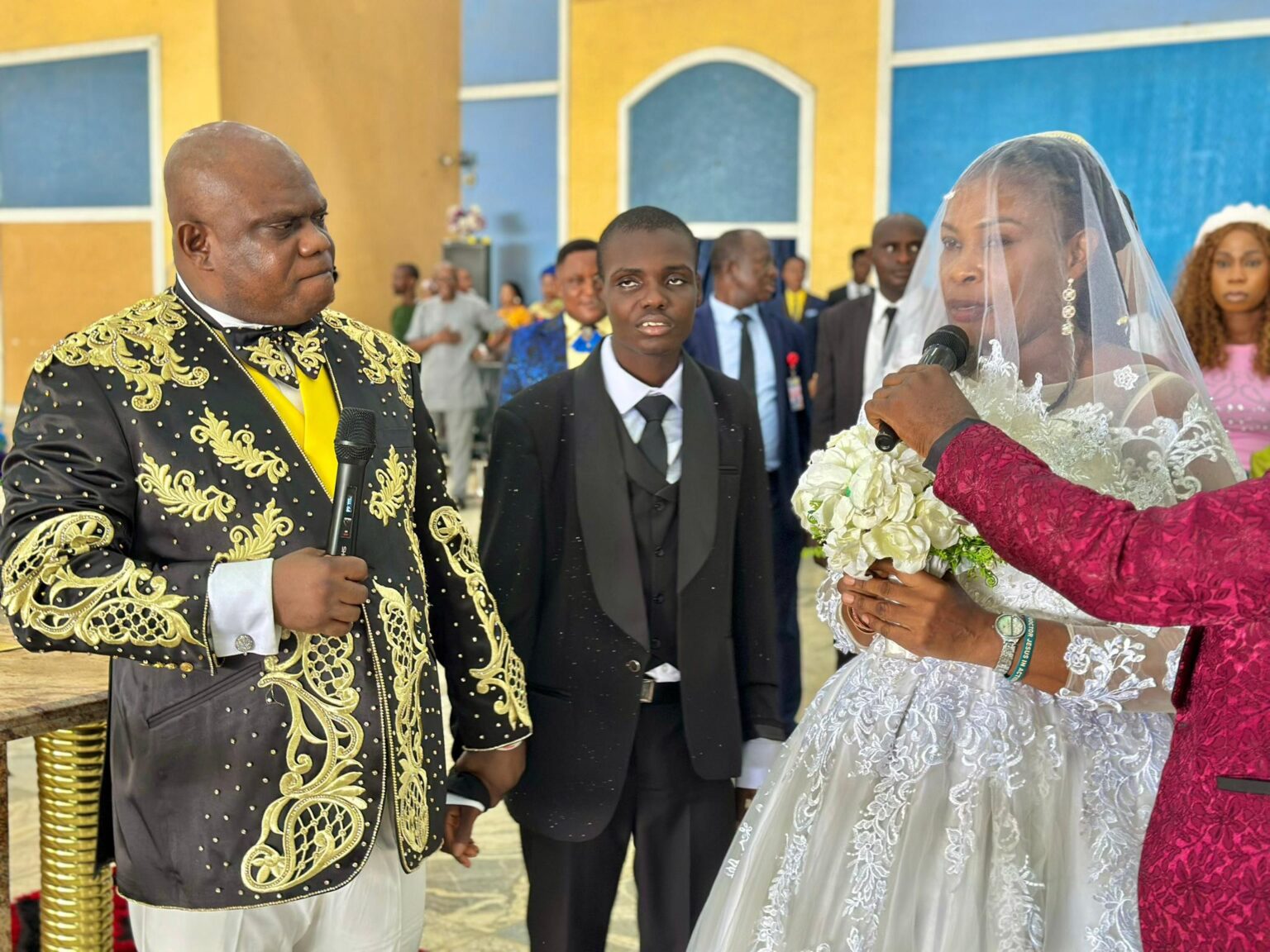
The founder of Omega Power Ministries, Chibuzor Chinyere, has officiated the marriage of a young autistic man, known as Aboy Chibuzor, to an older single woman, days after a public outcry over his initial attempt to find a wife for the man.
The wedding took place on Sunday, March 29, 2026, at the church, bringing to a close a controversy that had drawn widespread reactions on social media and among the public.
Aboy, who is described as non-verbal and in need of daily assistance, has been under the care of the church for years. According to Apostle Chinyere, the young man was abandoned as a child at the church gate and has since been raised with support from the ministry.
The pastor explained that Aboy requires full-time care, including feeding, bathing, and help with other daily activities. He said the decision to arrange a marriage for him was aimed at ensuring long-term companionship and support.
However, the idea quickly sparked criticism when a video surfaced online showing the cleric asking for a woman to marry the man. Many Nigerians reacted strongly, describing the move as inappropriate and raising concerns about the dignity of women and the rights of persons living with disabilities.
Critics argued that marriage should be based on mutual understanding and consent, and questioned whether the arrangement met those standards. Some also expressed worry about the responsibilities involved in caring for a person with special needs, especially within the context of marriage.
Following the backlash, Apostle Chinyere issued an apology, stating that he did not intend to disrespect or degrade women.
“I can never degrade any woman,” he said, while acknowledging the concerns raised by the public.
Despite the criticism, the pastor went ahead with the wedding and later shared photos and updates on social media, expressing confidence in the union and hope for the future of the couple.
As part of the support package announced for the couple, the cleric said he would provide ₦10 million, a house, and an overseas vacation. He also promised an additional ₦20 million after 10 years, provided the groom is still alive. According to him, members of the church also contributed financially, with donations of ₦1 million and ₦200,000 from individuals.
Chinyere also claimed that there had already been signs of improvement in Aboy’s condition, stating that the young man had started feeding himself without assistance. He expressed belief that further progress would be made.
“And I believe before six months God will heal and he will begin to speak. There is nothing God cannot do,” he said.
The development has continued to generate mixed reactions across Nigeria. While some supporters have praised the pastor for caring for a vulnerable individual and trying to provide him with a stable life, others remain critical of the approach.
Advocates for persons with disabilities say the situation highlights the need for better understanding of conditions such as Autism Spectrum Disorder. Autism is a developmental condition that affects communication, behaviour, and social interaction. Individuals with autism may have different levels of ability, with some requiring lifelong support.
In Nigeria, awareness and support systems for people living with disabilities are still developing. While laws such as the Discrimination Against Persons with Disabilities (Prohibition) Act exist, implementation remains a challenge, and many families rely on religious and community organisations for support.
Churches and religious leaders often play a major role in providing care, shelter, and assistance to vulnerable individuals. In this case, Omega Power Ministries has been known for its outreach programmes, including support for orphans and people in need.
However, the incident has also raised broader questions about the role of religious institutions in making personal decisions for individuals under their care. Some observers argue that while providing support is commendable, decisions like marriage should involve careful consideration of the well-being and autonomy of all parties involved.
Others see the situation as a reflection of the gaps in Nigeria’s social welfare system, where limited government support leaves private organisations and individuals to take on responsibilities that might otherwise be handled by formal institutions.
For now, the couple’s future remains uncertain, with many Nigerians watching closely to see how the arrangement will unfold. While the pastor has expressed strong confidence and optimism, public opinion remains divided.
As conversations continue, the incident has opened up important discussions about disability rights, social responsibility, and the need for clear guidelines when dealing with sensitive issues involving vulnerable individuals.