
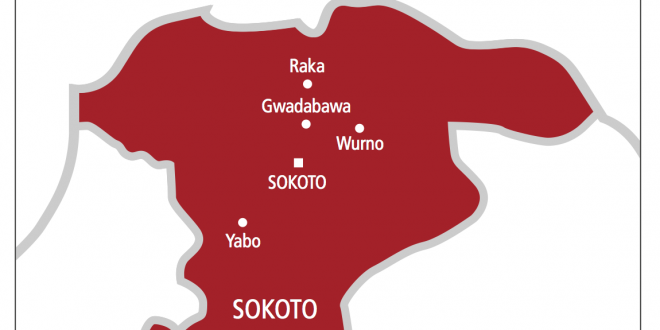
Suspected bandits have abducted nine residents and injured two others during a late-night attack on Chacho community in Wurno Local Government Area of Sokoto State.
The attack, which took place around 11 pm on Wednesday, has once again highlighted the growing insecurity in parts of north-west Nigeria, where armed groups continue to target rural communities.
According to a local source, the gunmen entered the village through a route linked to the Sabon Birni forest, an area widely believed to serve as a hideout for bandits operating in the region.
Residents said the attackers stormed the community under the cover of darkness, catching many people off guard. At the time of the attack, several villagers were said to be sleeping outside their homes due to the hot weather, a common practice in many northern communities.
The source explained that panic broke out when someone raised an alarm about the presence of gunmen in the village.
“We were sleeping outside when we heard someone shouting that bandits had come,” the resident said. “We quickly ran for our lives.”
He added that as people fled in different directions, gunshots rang out from another part of the village, creating confusion and fear among residents.
“Our house is at the centre of the community, so we could hear the gunfire clearly,” he said.
During the raid, the attackers abducted seven women and two elderly men, bringing the total number of kidnapped victims to nine. Two other residents sustained injuries while trying to escape and are currently receiving treatment at a nearby medical facility.
Incidents like this have become increasingly common in parts of Sokoto State and neighbouring areas, where bandit groups carry out attacks, kidnappings, and raids on villages. These groups often target rural communities where security presence is limited.
Many residents have linked the rising cases of banditry to the absence of security personnel in vulnerable areas. According to locals, communities like Chacho are often left to defend themselves, making them easy targets for armed groups.
“We don’t have enough security here,” the source said. “That is why these attacks keep happening.”
The spokesperson for the Sokoto State Police Command, Ahmad Rufai, confirmed the incident, although details of ongoing security operations were not immediately made public.
The North-West region of Nigeria, including Sokoto State, has faced increasing threats from bandit groups over the past decade. These groups operate from forest areas and often carry out attacks on villages, highways, and farms.
The Sabon Birni forest, mentioned by residents, is one of several forested areas in the region that have been identified as hideouts for criminal groups. From these locations, bandits plan and launch attacks on nearby communities.
In recent years, both federal and state governments have taken steps to address the problem, including deploying military forces, increasing police presence, and carrying out joint security operations. However, the vast terrain and limited resources have made it difficult to fully control the situation.
Local leaders and community members have repeatedly called for more security personnel and better protection. They have also urged authorities to improve intelligence gathering and respond more quickly to threats.
The impact of banditry goes beyond immediate violence. Many communities have been forced to abandon their homes, while farmers are unable to work on their land due to fear of attacks. This has affected food production and livelihoods in the region.
In Chacho community, residents are still trying to recover from the shock of the latest attack. Families of the kidnapped victims are said to be in distress, as they wait for news about their loved ones.
Kidnapping for ransom has become a common tactic used by bandits, with victims often held in remote locations until payments are made. This has placed a heavy financial and emotional burden on affected families.
Human rights groups and security analysts have warned that without stronger action, the situation could worsen. They have called for a combination of military action, community engagement, and social programmes to address the root causes of the crisis.
These causes include poverty, unemployment, and lack of education, which some experts believe contribute to the rise of criminal groups.
Despite these challenges, authorities have continued to promise improved security measures. Residents, however, say they need to see real changes on the ground.
For many people in rural communities like Chacho, daily life is now shaped by fear and uncertainty. Night-time, once a period of rest, has become a time of danger, with the risk of attacks always present.
For now, the people of Chacho remain on edge, as they await both the return of the kidnapped victims and stronger protection from authorities.