
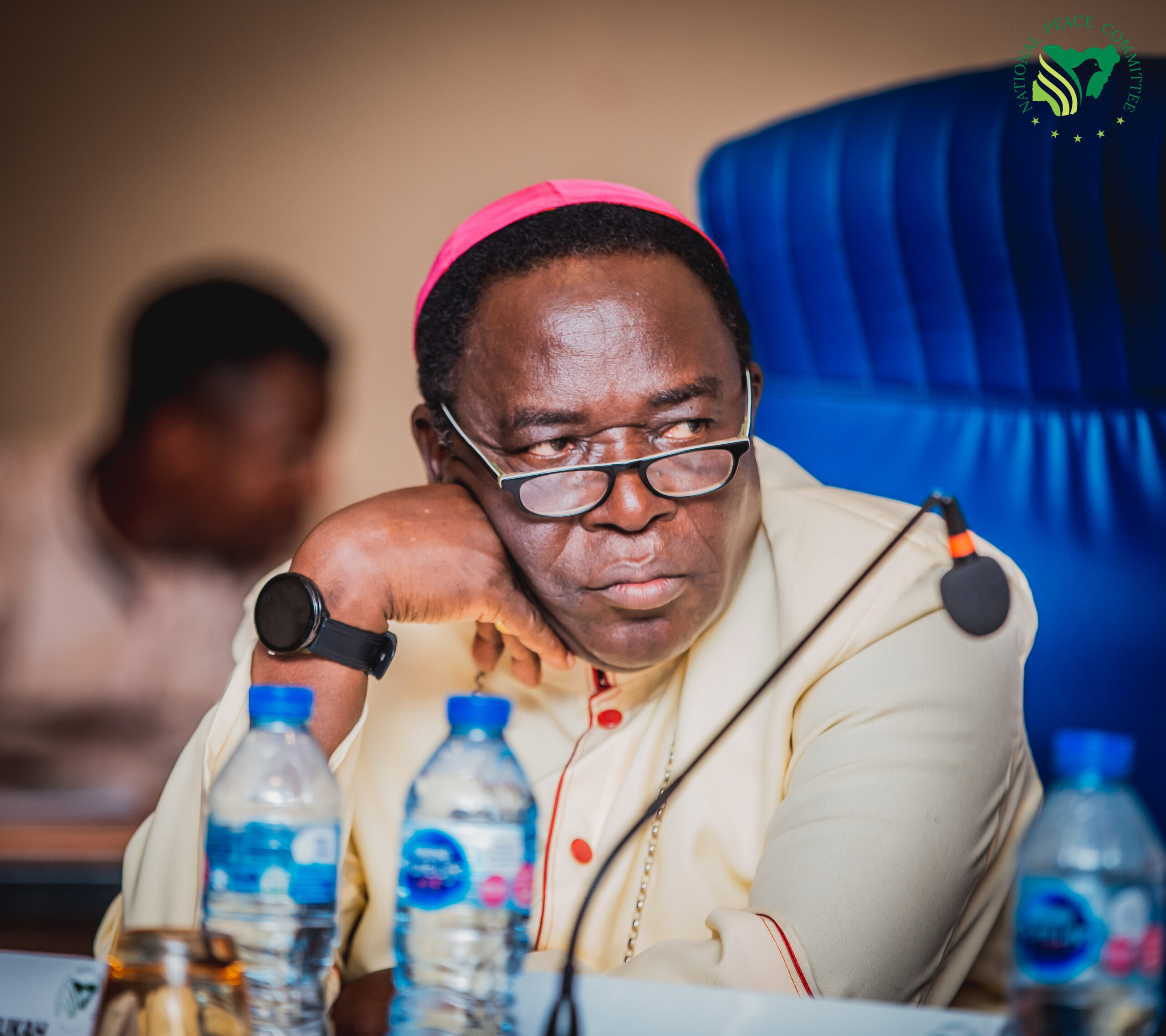
The Catholic Bishop of Sokoto Diocese, Matthew Kukah, has raised serious concerns over the state of the nation, warning that Nigeria is heading towards deeper crisis if urgent steps are not taken to address insecurity, economic hardship, and governance challenges.
In his 2026 Easter message released on Sunday, titled Faith and Hope in Times of Turbulence, the outspoken cleric described Nigeria as a country caught in “endless turbulence,” struggling under the weight of violence, poverty, and what he called leadership failure.
Kukah, who has consistently spoken on national issues, said the situation in the country has worsened over the years, leaving many citizens frustrated and uncertain about the future.
“Turbulence is Nigeria’s surname,” he declared, using strong words to describe what he sees as a long-standing pattern of instability.
According to him, much of the country’s current challenges are not only caused by external factors but are also driven by internal failures, especially among the political class.
He accused the nation’s elites of contributing to the crisis through poor leadership and lack of accountability, saying their actions have deepened the suffering of ordinary Nigerians.
The bishop painted a troubling picture of insecurity across the country, noting that violence has led to the deaths of thousands and displaced millions from their homes. He said many communities have been destroyed, leaving behind a humanitarian crisis that continues to grow.
“After over 20 years and well over 20,000 corpses, the grim harvester still roams freely across the country,” he said.
Kukah’s remarks come at a time when Nigeria continues to battle different forms of insecurity, including banditry in the North-West, insurgency in the North-East, and communal clashes in parts of the Middle Belt.
Over the past two decades, groups such as Boko Haram and its splinter factions have carried out attacks in several parts of the country, particularly in the North-East, leading to widespread destruction and loss of lives.
In the North-West and parts of North-Central Nigeria, armed groups commonly referred to as bandits have also carried out frequent attacks on rural communities, kidnapping residents and demanding ransom payments.
Kukah warned that the continued insecurity has weakened public trust in government institutions, including the military, which is tasked with protecting lives and property.
He said many citizens, out of frustration and fear, are now taking desperate measures, including collaborating with criminal groups in order to survive.
“Years of fatigue have lured ordinary citizens into the treacherous embrace of bandits,” he said.
According to him, some individuals now act as informants for these groups, sharing information that puts their own communities at risk.
He described this development as dangerous, warning that it could further weaken the social fabric of the country and make it harder to restore peace.
Beyond insecurity, Kukah also spoke about the economic challenges facing Nigerians, particularly the rising cost of living and high unemployment rates.
He said many young people are losing hope due to lack of opportunities, adding that unemployment has continued to limit their chances of building a better future.
“The Nigerian landscape is still riddled with unredeemed promissory notes,” he said, referring to campaign promises made by political leaders that have not been fulfilled.
“Young people are watching their dreams fade away due to lack of jobs and opportunities,” he added.
Nigeria, Africa’s most populous country, has in recent years faced economic difficulties linked to inflation, currency instability, and rising fuel and food prices. These challenges have placed additional pressure on households, especially in low-income communities.
Kukah criticised what he described as short-term solutions adopted by the government, such as the distribution of food items to vulnerable citizens. While acknowledging that such measures may provide temporary relief, he argued that they do not address the root causes of poverty and hunger.
“Merely distributing food is an admission of the failure of our nation to develop robust and aggressive agricultural plans capable of ending hunger,” he said.
He called for long-term strategies that would improve food production, create jobs, and strengthen the economy.
Despite his strong criticism, Kukah urged Nigerians not to lose hope. He encouraged citizens, especially Christians, to remain steadfast in their faith and continue to believe in the possibility of a better future.
“We may be struck down, but we cannot be destroyed,” he said, offering a message of resilience during difficult times.
He also stressed the importance of balancing the right to self-defence with the need to promote peace and unity in the country.
In recent years, debates around self-defence have grown as communities seek ways to protect themselves in the face of repeated attacks. However, experts have warned that the proliferation of weapons among civilians could lead to further violence if not properly managed.
Kukah urged Nigerians to play active roles in rebuilding the nation, rather than placing all the blame on political leaders.
“It is a great mistake for us to ignore what role each and every one of us can play,” he said.
“Let us not surrender to despair, as we could become guilty bystanders.”
His message highlights a growing call for collective responsibility, where citizens, communities, and leaders work together to address the country’s challenges.
Drawing on religious imagery, Kukah expressed hope that Nigeria can overcome its current difficulties through unity, faith, and determined action.
He compared the nation to a boat facing a violent storm but expressed confidence that it can still be saved.
“The boat of our nation is threatening to sink, yet even in his sleep, he is awake to command the storm to be still,” he said.
He concluded his message with a call for both prayer and practical action, urging Nigerians to work towards rebuilding the country while maintaining faith.
“We pray but must also work hard, believing that the walls created by war and division will ultimately fall,” he added.
Kukah’s Easter message is likely to spark renewed debate about the direction of the country, especially at a time when many Nigerians are calling for urgent reforms in security, governance, and the economy.
As the nation continues to face multiple challenges, his words serve as both a warning and a call to action for leaders and citizens alike.