
The Federal Government has reassured Nigerians and the international community that the country remains safe, following a decision by the United States Department of State to withdraw non-emergency staff and their families from its embassy in Abuja.
The move by the United States has raised fresh concerns about Nigeria’s security situation, especially after the American government warned its citizens to reconsider travelling to the country.
However, Nigerian authorities have dismissed fears of a widespread security breakdown, insisting that the situation remains under control.
The US government, in a statement released on Wednesday, said it had authorised the departure of non-essential personnel from the US Embassy Abuja due to what it described as a “deteriorating security situation.”
The embassy also suspended visa appointments in Abuja, advising applicants to check their emails for updates on rescheduled dates. However, visa services at the US Consulate in Lagos were not affected and continue as scheduled.
In addition, emergency services for American citizens are still available in Abuja, though on a limited basis and mostly by appointment.
The decision was followed by an updated travel advisory issued by the US authorities on April 8, 2026. The advisory placed Nigeria at “Level 3: Reconsider Travel,” warning Americans about risks linked to crime, terrorism, kidnapping and civil unrest.
More serious warnings were issued for several states, which were placed under “Level 4: Do Not Travel,” the highest risk category.
These states include parts of northern and central Nigeria such as Borno, Yobe, Niger, Plateau and Taraba, where security challenges linked to insurgency and armed groups have persisted over the years.
Other states listed include Kaduna, Kano, Katsina, Sokoto and Zamfara, where cases of banditry, kidnapping and communal clashes have been reported.
In the southern and south-eastern regions, states such as Abia, Anambra, Bayelsa, Delta, Enugu, Imo and Rivers were also flagged, with the exception of Port Harcourt in Rivers State.
Altogether, about 23 out of Nigeria’s 36 states were affected by different levels of travel restrictions in the US advisory.
According to the statement, “The security situation in these states is unstable and unpredictable due to civil unrest, inter-communal violence, and armed crime, including kidnapping and roadside banditry.”
The US also warned that violent crimes such as armed robbery and carjacking are common in some areas, adding that American citizens are often seen as wealthy and may be targeted.
It further cautioned that terrorist attacks remain a risk in public places such as markets, shopping centres, hotels, places of worship and large gatherings.
The advisory also raised concerns about healthcare services in Nigeria, noting that medical facilities may not meet international standards in some locations.
As part of its guidance, the US encouraged its citizens in Nigeria to enrol in safety programmes, avoid crowded places and take personal security measures, including emergency planning.
Despite these warnings, the Nigerian government has strongly pushed back against the impression that the country is unsafe.
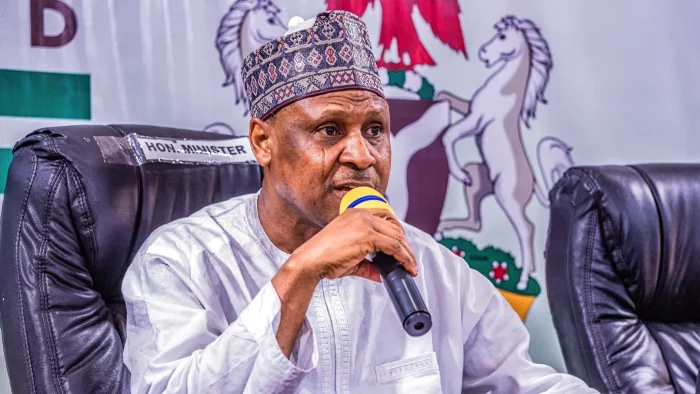
In a statement issued on Thursday, the Minister of Information and National Orientation, Mohammed Idris, said the US advisory does not reflect the true situation across the country.
According to him, the decision by the US government was based on its internal procedures and should not be seen as evidence of a general collapse of security in Nigeria.
“While we acknowledge isolated security challenges in some areas, there is no general breakdown of law and order,” Idris said. “The vast majority of the country remains stable.”
He explained that Nigerian security agencies are actively working to tackle threats across different regions. These efforts include military operations, intelligence gathering and cooperation among various security bodies.
Idris said these actions have already produced results, including the disruption of criminal networks and a reduction in the activities of armed groups in some areas.
“Our security agencies remain actively engaged in protecting lives and property, and the results are increasingly evident,” he added.
Nigeria has faced several security challenges in recent years, including insurgency in the North-East, banditry in the North-West, communal clashes in the Middle Belt and separatist tensions in parts of the South-East.
Kidnapping for ransom has also become a major concern across many states, affecting both urban and rural areas.
Despite these challenges, the Federal Government maintains that significant progress has been made in improving security, especially through coordinated efforts among the armed forces, police and intelligence agencies.
The government also stressed that Nigeria remains open for business, investment and tourism.
Idris noted that many parts of the country continue to function normally, with economic activities, social life and public services running without major disruption.
“We continue to welcome visitors and investors,” he said, adding that Nigeria remains a key destination in Africa.
He also called on foreign governments to engage more closely with Nigerian authorities before issuing advisories that may affect the country’s image.
“We encourage our international partners to seek accurate and current information through proper channels,” he said.
The Federal Government reaffirmed its commitment to ensuring the safety of both citizens and foreigners, promising to sustain ongoing efforts to improve security nationwide.
Meanwhile, the changes in US embassy operations mean that routine services in Abuja will remain limited for now. The US Consulate General Lagos has taken on a bigger role in handling both routine and emergency services.
American citizens who are unable to make travel arrangements have been advised to contact the Lagos consulate for assistance.
The development has sparked mixed reactions among Nigerians. While some see the US advisory as a reflection of real security concerns, others believe it may create unnecessary panic and affect Nigeria’s international reputation.
They also note that such advisories do not necessarily mean a country is unsafe in its entirety, but rather highlight specific areas of concern.
For many Nigerians, the key issue remains how to address ongoing security challenges and ensure lasting peace across all regions.
As debates continue, the Federal Government’s message remains clear: Nigeria is safe, and efforts to improve security are ongoing.
Whether this assurance will calm fears or change international perception remains to be seen.