
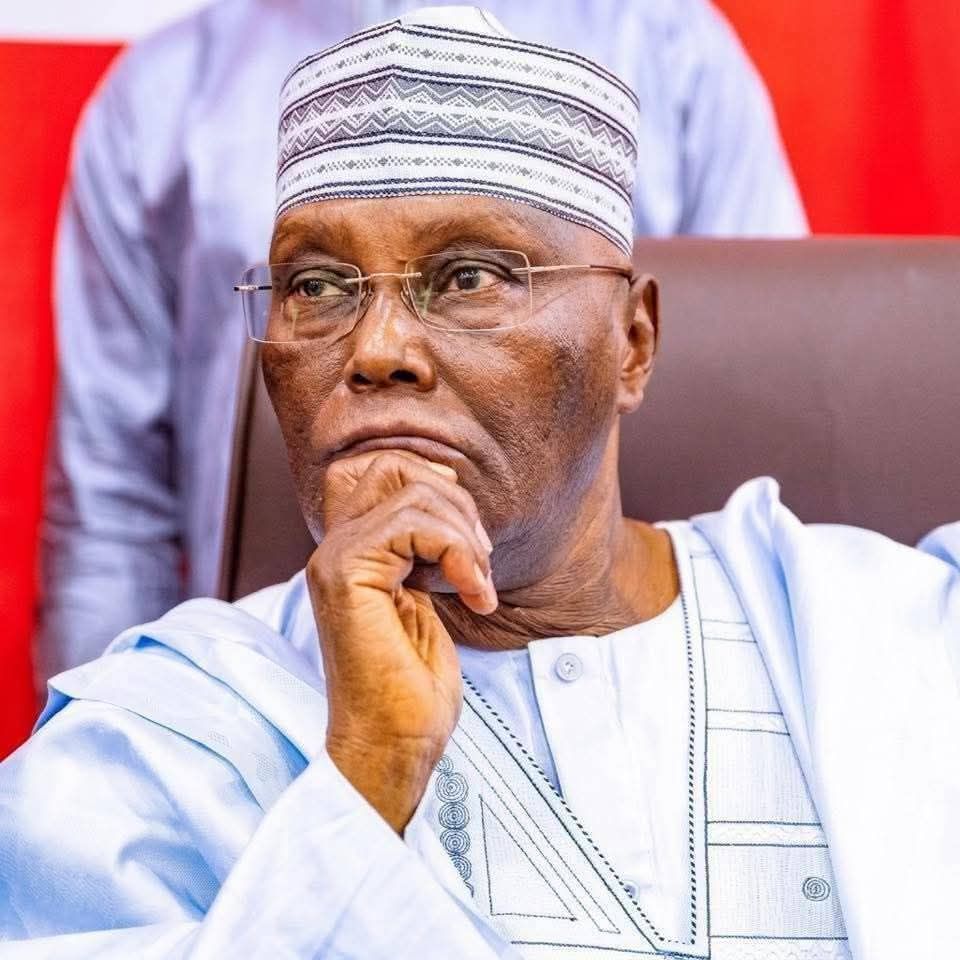
A fresh political crisis has hit the African Democratic Congress (ADC) in Adamawa State following the suspension of former Vice President Atiku Abubakar, former Secretary to the Government of the Federation Babachir Lawal, and several others over alleged anti-party activities.
The announcement was made by a factional chairman of the party in the state, Muhammad Raji Sulaiman Zumo, who said the decision was taken to discipline members accused of working against the party’s interests.
Zumo, in a statement, said the affected members engaged in actions that undermined the unity and progress of the ADC in Adamawa. He added that the party leadership in the state would not tolerate any form of disloyalty.
“Those who are working against the party cannot remain within our ranks,” he said, stressing that the suspension takes immediate effect.
The move has further exposed internal divisions within the ADC in Adamawa, a state known for its strong political influence in the North-East. The party has been dealing with factional disputes, with different groups laying claim to leadership positions at both state and national levels.
Atiku Abubakar, a major political figure in Nigeria, has contested for president multiple times and remains one of the most influential politicians from Adamawa State. His involvement in any political dispute often draws national attention.
Babachir Lawal, on the other hand, served as Secretary to the Government of the Federation under former President Muhammadu Buhari before his removal in 2017. He has remained active in political discussions and alliances, especially in the North.
Although details of the alleged anti-party activities were not fully disclosed, sources within the party suggest that disagreements over strategy, alliances, and leadership control may have led to the decision.
In recent years, smaller parties like the ADC have tried to position themselves as alternatives to the two dominant parties, the All Progressives Congress (APC) and the Peoples Democratic Party (PDP). However, internal crises have sometimes weakened their ability to compete effectively.
The situation in Adamawa reflects a broader challenge within Nigerian politics, where factional leadership struggles can disrupt party activities at the grassroots level.
There has been no immediate response from Atiku Abubakar or Babachir Lawal regarding the suspension. It is also unclear whether they recognise the authority of the factional chairman who announced the decision.
Supporters of Atiku Abubakar have in the past dismissed similar moves by rival factions, describing them as politically motivated and lacking legitimacy.
For many Nigerians, the development is another example of the instability within political parties, particularly at the state level. It also raises questions about internal democracy and the ability of parties to manage disagreements without resorting to disciplinary measures.
As the situation unfolds, attention will likely shift to the national leadership of the ADC and whether it will intervene to resolve the crisis in Adamawa.
The outcome of this dispute could have implications not only for the party’s future in the state but also for its standing at the national level.
For now, the suspension of Atiku Abubakar, Babachir Lawal, and others marks a new chapter in the ongoing political tensions within the ADC in Adamawa State, with many watching closely to see how the crisis will be resolved.