
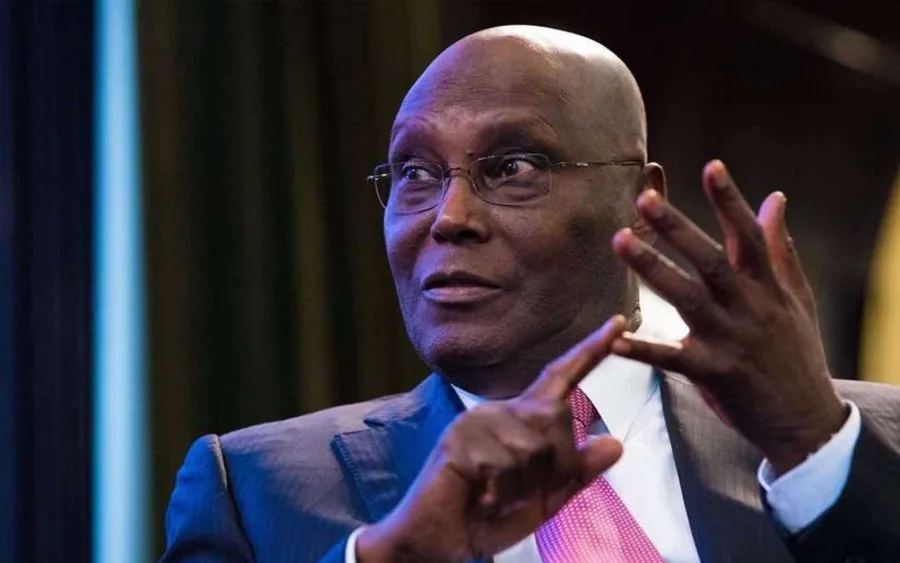
Former Vice President Atiku Abubakar has strongly criticised President Bola Ahmed Tinubu over Nigeria’s economic direction, saying the cost of living under the current reforms has become unbearable for ordinary citizens.
Atiku, in a statement issued on Friday by his Senior Special Assistant on Public Communication, Phrank Shaibu, said the government’s policies have brought hardship rather than relief to Nigerians. He also accused the President of distorting the history of Nigeria’s economic reforms and failing to understand the impact of past policies.
The statement represents one of the strongest criticisms yet from the opposition camp as debate continues over the effects of ongoing economic changes, including subsidy removal, exchange rate adjustments, and privatisation policies.
Atiku said Nigerians are facing deep economic suffering, with rising inflation and shrinking purchasing power affecting daily life across the country.
“Across the country, families are skipping meals, businesses are shutting their doors, and hardworking citizens are watching their incomes evaporate under the weight of relentless inflation and a collapsing purchasing power,” the statement said.
He added that insecurity remains a major concern, worsening the struggles of citizens already facing economic pressure.
“The cost of living has become unbearable, insecurity continues to stalk communities, and hope is steadily giving way to despair,” he said.
According to him, what the government has described as reform has instead translated into “hardship without relief,” with policies that continue to make life more difficult for Nigerians.
Atiku argued that no amount of government explanation or political messaging can hide the realities faced by ordinary people.
“This is the true state of the nation, and no amount of rhetoric can mask the pain etched into the lives of ordinary Nigerians,” the statement added.
The former Vice President also responded to recent comments credited to President Tinubu, describing them as a “reckless tirade” that shows what he called a pattern of hypocrisy and “historical amnesia.”
He accused the President of misrepresenting Nigeria’s reform history, particularly in relation to privatisation and economic restructuring.
According to Atiku, the current administration’s criticism of past policies does not align with documented facts about earlier reform efforts.
Atiku used the statement to defend his record in office, particularly his role in Nigeria’s privatisation programme while serving as Vice President.
He said he had long supported the idea of privatising state-owned enterprises, including the Nigerian National Petroleum Corporation (NNPC) and refining assets, to improve efficiency and attract private investment.
He argued that such ideas were resisted by some political actors in the past but are now being carried out in different forms by the present administration.
The statement also claimed that current reforms in the oil sector lack transparency, accusing the government of carrying out what it called “privatisation without accountability.”
According to him, there are unanswered questions about valuation processes and who benefits from recent economic decisions.
“This is not reform; it is privatisation without accountability,” the statement said.
Atiku also highlighted what he described as successful outcomes of the privatisation programme during his time in government.
He listed several companies as examples of state-owned enterprises that were revived through private sector participation. These include Oando Plc (formerly Unipetrol), Conoil Plc, African Petroleum (now Ardova Plc), Indorama Eleme Petrochemicals, Benue Cement Company, and Transcorp Hilton Abuja.
He said these organisations were once struggling public assets but became more productive after being handed over to private investors.
According to him, these cases demonstrate that well-structured reforms can lead to job creation, improved efficiency, and stronger economic performance when properly implemented.
The statement also contained sharp criticism of President Tinubu’s understanding of Nigeria’s reform history.
It suggested that the President had not engaged properly with official records and written accounts of past economic policies.
Atiku referenced public documents and a book titled The Accidental Public Servant by former minister Nasir El-Rufai, which documented privatisation efforts during previous administrations.
He argued that such records clearly show that earlier reforms were planned, structured, and aimed at improving efficiency in the public sector.
The statement also made controversial remarks about the President’s educational background, questioning his understanding of documented history and reform policies.
It accused him of failing to properly engage with available records on Nigeria’s economic development.
Atiku’s remarks also carried a strong political tone, reflecting ongoing rivalry between him and President Tinubu, both of whom have contested presidential elections in the past.
The exchange highlights continuing disagreements over Nigeria’s economic direction, especially at a time when citizens are facing rising costs of food, transportation, and basic services.
Since assuming office, the Tinubu administration has introduced major economic reforms, including the removal of fuel subsidy and changes to foreign exchange policies.
While the government says these measures are necessary to stabilise the economy in the long term, critics argue that they have caused immediate hardship for millions of Nigerians.
Inflation has remained high, and the cost of essential goods and services continues to put pressure on households across the country.
Across Nigeria, many citizens have expressed concern about rising living costs. Food prices, transport fares, and rent have all increased significantly in recent months.
Small businesses have also reported difficulties in staying afloat due to higher operating costs and reduced consumer spending.
These challenges have added to growing public debate over whether current reforms are achieving their intended goals.
Atiku’s latest comments are expected to add more heat to Nigeria’s already tense political and economic debate.
While the government continues to defend its reform agenda as necessary for long-term growth, opposition figures insist that immediate relief is needed for struggling Nigerians.
As both sides exchange criticism, the reality on the ground remains a key concern for citizens, many of whom say they are waiting to see real improvement in their daily lives.