
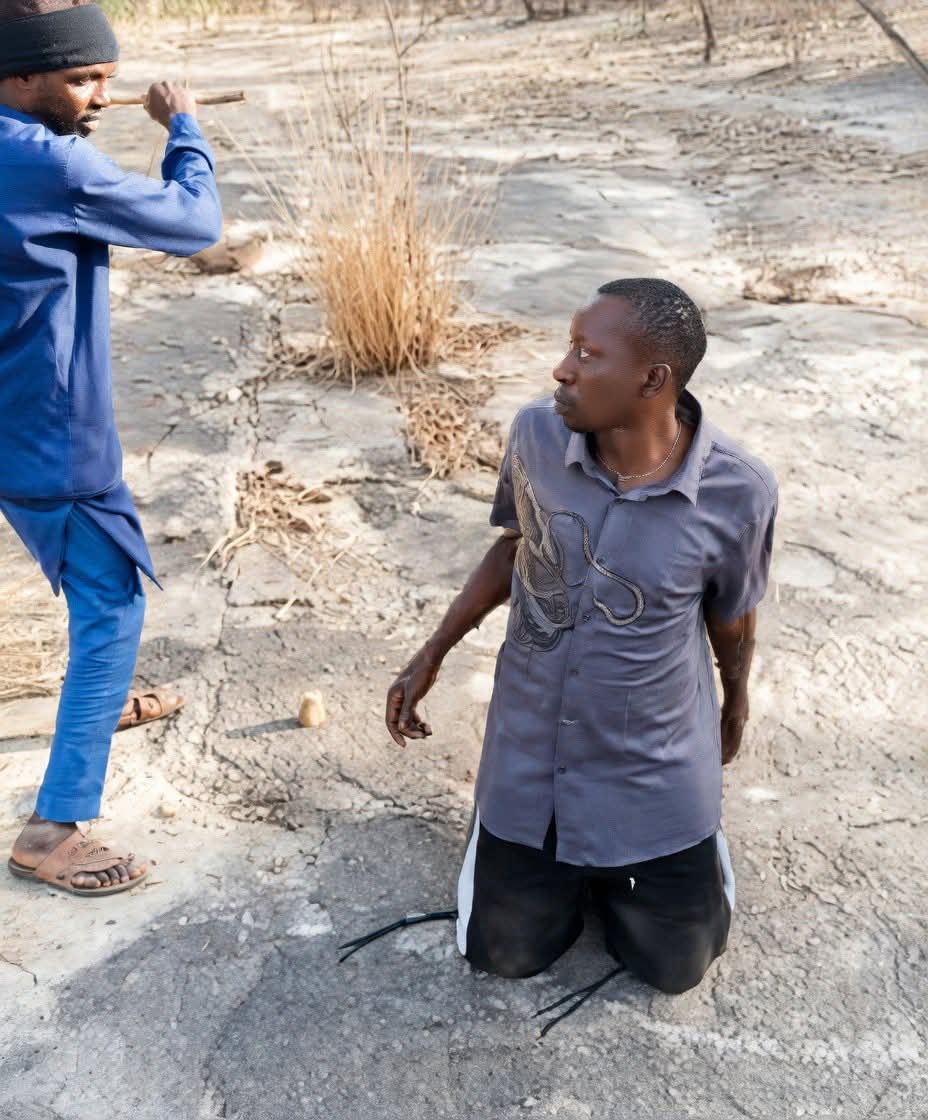
A graduate of the University of Jos, John Arum, has regained his freedom after being abducted by suspected terrorists along the Jos-Kaduna highway.
The news of his release has brought relief to his family, friends, and many Nigerians who had followed his ordeal closely after disturbing videos of his captivity surfaced online.
In a video clip currently circulating on social media, Arum was seen surrounded by family members shortly after his release. In the footage, he expressed gratitude to God for sparing his life and helping him return home safely.
His release comes days after a shocking video showed him being physically assaulted by his captors. The footage had sparked widespread outrage across the country, with many Nigerians expressing anger over the worsening security situation, especially on major highways.
Arum was reportedly kidnapped while travelling along the Jos-Kaduna road, a route that has become notorious for attacks by armed groups in recent years. The road links Plateau State to Kaduna State and is frequently used by travellers, students, and business people.
Over time, the highway has gained a reputation as a danger zone due to repeated cases of kidnapping, robbery, and violent attacks. Despite efforts by security agencies, incidents continue to occur, raising concerns about the safety of commuters.
The video of Arum’s assault quickly went viral, drawing attention from across the country. Many Nigerians took to social media to condemn the act and call on the government to take stronger action to protect citizens.
Some users also expressed fear about the growing boldness of criminal groups, who now record and share videos of their victims to create panic and pressure authorities.
Following the release of the initial video, rumours began to spread that Arum had been killed by his captors. The reports caused further anxiety among his loved ones and the wider public.
However, a few days later, the abductors released another video to counter the rumours, confirming that he was still alive. This provided some hope, although concerns remained about his safety and the conditions he was being held under.
His eventual release on April 20 brought an end to days of uncertainty. While details surrounding how he regained freedom remain unclear, such cases often involve negotiations or payment of ransom, although authorities usually do not confirm such arrangements.
Kidnapping for ransom has become a major security challenge in Nigeria, affecting different parts of the country. Victims range from students and travellers to farmers and even high-profile individuals.
The Federal Government and security agencies have repeatedly pledged to tackle insecurity, with measures including increased patrols, deployment of troops, and intelligence gathering. However, many Nigerians feel that more needs to be done to achieve lasting results.
In recent years, several universities have also raised concerns about the safety of their students, particularly those travelling between states. Incidents involving students have drawn strong reactions from the public and placed pressure on authorities to improve security.
Arum’s case is one of many that highlight the risks faced by ordinary Nigerians. His safe return is being celebrated, but it also serves as a reminder of the challenges that still exist.
Family members and friends have expressed joy over his release, describing it as a miracle. In the video shared online, there were scenes of relief and thanksgiving, as loved ones gathered to welcome him back.
For many Nigerians, the incident has once again brought attention to the urgent need for improved security across the country. Calls have continued for better protection on highways, as well as stronger action against criminal networks.
There are also calls for community involvement, with local residents encouraged to share information that could help prevent attacks and identify suspects.
As Arum begins to recover from his experience, attention is expected to shift to ensuring that victims of kidnapping receive proper support. Experts say survivors often need medical care, counselling, and assistance to rebuild their lives.
His story, while ending on a positive note, reflects a wider issue that continues to affect many families across Nigeria.
For now, his safe return offers a moment of relief and hope, even as the country continues to grapple with the challenge of insecurity.