
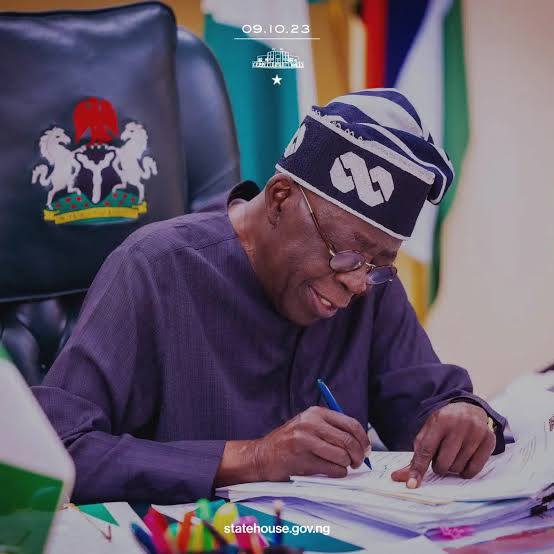
President Bola Tinubu has approved new appointments and reappointments in key education agencies, in what the Federal Government describes as part of ongoing efforts to strengthen Nigeria’s education system and improve institutional performance.
The changes affect major bodies such as the National Examinations Council (NECO), the National Board for Technical Education (NBTE), and the National Library of Nigeria. The move is seen as part of broader reforms in the education sector aimed at improving standards, governance, and service delivery.
The announcement was made in Abuja on Wednesday through a statement issued by the President’s Special Adviser on Information and Strategy, Bayo Onanuga.
According to the statement, President Tinubu appointed Professor Modupe Adelabu as the new chairperson of the governing board of the National Examinations Council (NECO). The President also retained Professor Ibrahim Wushishi as the registrar of the examination body.
NECO is one of Nigeria’s major examination bodies responsible for conducting senior secondary school examinations across the country. It plays a key role in determining the academic future of millions of students every year.
Professor Adelabu is a retired professor of educational administration at the Obafemi Awolowo University. She is also a former Deputy Governor of Ekiti State, a position she held between 2013 and 2014.
She previously served as chairperson of the National Board for Technical Education between 2018 and 2021, giving her experience in managing education institutions at the national level.
In another appointment, President Tinubu named Professor Babatunde Salako as the new chairman of the governing board of the National Board for Technical Education (NBTE). The NBTE is responsible for regulating technical and vocational education in Nigeria, including polytechnics and technical colleges.
Salako is described as a respected researcher with many years of experience in higher education, institutional management, and national policy development. His appointment is expected to strengthen technical education in Nigeria, an area many experts say is important for job creation and industrial development.
Technical education has remained a key focus in Nigeria’s education reforms, as the government seeks to reduce unemployment by equipping young people with practical and vocational skills.
The President also approved the appointment of Mr Bongfa Binfa as the new rector of the Federal Polytechnic N’yak-Shendam. Binfa replaces the pioneer rector, Mukaila Zakari Ya’u, whose tenure ended on March 16, 2026.
According to the statement, Binfa’s appointment followed a competitive recruitment process that was advertised in national newspapers in September 2025. He is expected to serve a single five-year term.
Binfa holds a PhD in Mechanical Engineering from the Universiti Teknologi Malaysia. Before his appointment, he served as Deputy Rector (Academic) at the Federal Polytechnic of Oil and Gas, Bonny, and also lectured at the Federal Polytechnic Idah.
His background in engineering and academic administration is expected to support the development of technical education in the institution.
In addition, President Tinubu renewed the tenure of Dr Chinwe Veronica Anunobi as Director and Chief Executive of the National Library of Nigeria for another five-year term.
The National Library plays an important role in preserving Nigeria’s written heritage, promoting literacy, and supporting research and education across the country.
According to the Presidency, the renewal of Anunobi’s appointment is aimed at ensuring continuity in ongoing reforms within the institution. It is also expected to support the completion of the National Library Headquarters project and the implementation of the 2025–2030 Strategic Plan.
President Tinubu had earlier, on April 10, reappointed Dr Idris M. Bugaje as Executive Secretary of the NBTE for a second and final five-year term, further strengthening leadership within the technical education sector.
The Presidency explained that the latest appointments are part of efforts to ensure stability and continuity in key education agencies. It added that experienced professionals were selected to drive reforms and improve service delivery.
Education remains one of the priority sectors of the Tinubu administration, which has repeatedly called for reforms to address challenges such as poor infrastructure, outdated curricula, and skill gaps among graduates.
Nigeria’s education system has faced long-standing issues, including funding constraints, strikes in tertiary institutions, and gaps between academic training and job market needs. In response, government reforms have focused on improving governance, strengthening institutions, and expanding technical and vocational education.
NECO, in particular, plays a critical role in Nigeria’s education system, as its examinations are required for entry into higher institutions. Any reforms in the body are expected to directly affect millions of students across the country.
Similarly, NBTE’s role in regulating technical education is seen as vital for producing skilled workers needed in sectors such as manufacturing, construction, and technology.