
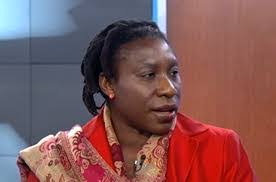
A fresh controversy has emerged within the Ogun State chapter of the All Progressives Congress (APC) following allegations by Iyabo Obasanjo that some of her supporters were physically assaulted during the process that produced the party’s consensus governorship candidate for the 2027 general election.
The dispute comes at a time when political parties across Nigeria are beginning early preparations for the next election cycle, with internal unity seen as key to electoral success. However, recent events in Ogun APC suggest growing tension among party stakeholders despite attempts to present a united front.
On April 13, 2026, Ogun State governor, Dapo Abiodun, announced Solomon Adeola, the senator representing Ogun West, as the party’s preferred governorship candidate. The announcement was made during a caucus meeting held in Abeokuta, the state capital.
According to Abiodun, the decision followed wide consultations among party leaders and stakeholders. He explained that adopting a consensus candidate would help reduce internal conflicts and strengthen the party ahead of the 2027 elections. The governor also said the move was aimed at ensuring continuity in governance and preserving party unity.
Consensus arrangements are not new in Nigerian politics. They are often used by parties to avoid expensive and divisive primary elections. However, such arrangements have sometimes sparked complaints of exclusion, lack of transparency, and imposition of candidates.
In her reaction, Obasanjo, who is also the daughter of former president Olusegun Obasanjo, said she initially supported the idea of a consensus candidate. She explained that her support was based on the belief that it would reduce tension within the party and position the APC for victory in 2027.
She noted that she had actively consulted with party members across the state and had built significant grassroots support before the consensus decision was announced.
“Throughout my consultations ahead of the Ogun State governorship primaries, I consistently advocated for consensus as a strategic pathway to reduce tension, prevent internal divisions, and position our party for electoral success in 2027,” she said.
Following the announcement of Adeola as the preferred candidate, Obasanjo said she respected the party’s decision. She added that she immediately congratulated him and suspended her governorship ambition in line with her earlier promise to abide by the outcome.
However, despite her acceptance of the result, she expressed concern over how the process was handled, especially during the caucus meeting where the decision was made.
According to her, some actions before and during the meeting did not reflect the fairness and inclusiveness expected in a consensus arrangement.
“On the day of the meeting, some of my supporters were denied entry and regrettably, two were physically assaulted by a party functionary,” she alleged.
She described the incident as unacceptable, noting that it goes against the values of discipline and mutual respect that the APC claims to uphold.
Obasanjo also criticised what she described as a lack of recognition for other aspirants who were present at the meeting. She said that despite their efforts and consultations across the state, they were not acknowledged during the proceedings.
“Other candidates across the state, including myself and Mr Tunde Lemo, who were present in the hall, were not acknowledged, despite our extensive consultations and the strong grassroots momentum we generated,” she said.
Her comments highlight a recurring issue in Nigerian party politics, where aspirants who step down for consensus candidates often feel sidelined or undervalued. Political analysts say such feelings can lead to internal divisions if not properly managed.
Despite her grievances, Obasanjo reaffirmed her loyalty to the APC. She made it clear that she has no intention of leaving the party and will continue to support its leadership and candidates.
“My loyalty to the APC remains unwavering. I am not defecting and I will continue to support the success of our party, including the candidacy of Senator Adeola,” she stated.
She also pledged support for the administration of President Bola Tinubu, aligning herself with the broader goals of the party at the national level.
At the same time, she called on party leaders to adopt a more inclusive approach in future decisions. According to her, true unity cannot be achieved by consensus alone, but by ensuring that all stakeholders feel respected and involved.
“True unity is not achieved by consensus alone, but through recognition, respect and collective engagement,” she said.
She urged the leadership of the APC at all levels to ensure that the contributions of all aspirants are acknowledged and that everyone is carried along in decision-making processes.
The controversy surrounding the Ogun APC consensus process has been further intensified by a separate incident involving Gbenga Daniel, the senator representing Ogun East and a former governor of the state.
Daniel recently alleged that he was barred from attending an APC caucus meeting held in Ijebu Ode. A video that circulated widely on social media showed his convoy being denied access to the venue, identified as Adeola Odutola Hall.
In the video, Daniel was seen addressing his supporters from a bus outside the venue, expressing dissatisfaction with the situation. He reportedly stated that any decisions taken at the meeting would be invalid, given his exclusion.
This development has raised further concerns about internal democracy within the Ogun APC. Observers say that repeated complaints of exclusion could weaken the party’s unity if not addressed quickly.
Political parties in Nigeria often face challenges in balancing the interests of different factions, especially in states with strong political figures and diverse support bases. Ogun State, in particular, has a history of intense political competition, making unity within parties even more important.
As the 2027 elections approach, the APC in Ogun will need to manage these internal issues carefully. While the adoption of a consensus candidate may help avoid open conflict, the process must be seen as fair and inclusive to maintain the confidence of party members.
For now, Obasanjo says she remains committed to working with the party and contributing to its success in future elections. However, her remarks serve as a reminder that unity within political parties requires more than agreements at the top—it also depends on how those decisions are carried out on the ground.