
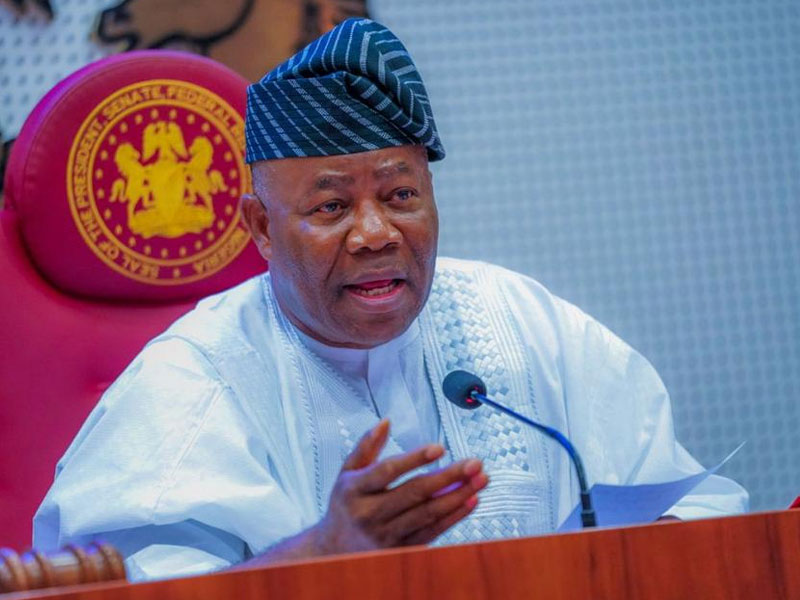
Nigeria’s Senate President, Godswill Akpabio, has sparked fresh national debate after saying that Nigeria does not have enough money to meet its growing needs, and that borrowing may remain necessary to fund infrastructure and government operations.
Akpabio made the comments while speaking on the country’s economic situation, where he highlighted the challenges facing public finances amid rising demands for development and limited government revenue.
According to him, the current financial reality of the country makes it difficult for the government to fully fund major projects without external or internal borrowing.
He explained that borrowing is often a necessary tool used by governments around the world to finance infrastructure such as roads, railways, power projects, and other development needs that require large amounts of money.
His remarks have since triggered widespread debate across Nigeria, with citizens, analysts, and economists divided over whether continued borrowing is a sustainable path for the country.
Nigeria, Africa’s most populous nation, has faced long-standing economic challenges, including low revenue generation, high spending needs, and increasing debt levels. Over the years, successive governments have relied on borrowing to bridge budget gaps and fund development projects.
However, concerns about the country’s debt profile have continued to grow. Critics argue that while borrowing can support development, it becomes risky when it is not matched with strong economic growth, improved productivity, and transparent management of funds.
Some economists warn that excessive borrowing could place a heavy burden on future generations if the funds are not properly invested in productive sectors of the economy.
International financial institutions such as the World Bank and the International Monetary Fund have also repeatedly advised Nigeria to strengthen its revenue base and carry out structural reforms.
These institutions have encouraged the government to improve tax collection, reduce wasteful spending, and diversify the economy away from heavy dependence on oil revenue.
They argue that stronger fiscal discipline is necessary to ensure long-term economic stability, especially at a time when global economic conditions remain uncertain.
Akpabio’s comments come at a time when many Nigerians are already struggling with high inflation, rising food prices, fuel costs, and a general increase in the cost of living. These economic pressures have made public discussions about government spending and borrowing more sensitive.
For many households, daily expenses have increased significantly, leading to concerns about whether government policies are translating into real improvements in living standards.
Some citizens say they are worried that continued borrowing without visible impact could worsen economic hardship. Others, however, believe that borrowing is necessary if it is used to build infrastructure that can support long-term growth.
Infrastructure remains one of Nigeria’s biggest development challenges. Poor road networks, unstable electricity supply, and inadequate public transportation systems have continued to slow economic activity and affect business operations across the country.
Supporters of borrowing argue that without major investment in infrastructure, it will be difficult for Nigeria to attract foreign investment or create enough jobs for its growing population.
They say that when loans are properly managed and invested in productive sectors, they can generate returns that help the country repay its debts over time.
However, critics insist that Nigeria’s problem is not just lack of money, but also how available funds are managed. They point to cases of waste, corruption, and poorly executed projects as reasons why borrowing has not always translated into development.
Public reaction to Akpabio’s statement has been mixed. While some Nigerians agree that borrowing is unavoidable, others are calling for stronger accountability measures to ensure that borrowed funds are used effectively.
There are also growing calls for the government to focus more on increasing internal revenue through taxation, industrial growth, and better management of natural resources.
Nigeria’s economy is heavily dependent on oil, but fluctuations in global oil prices often affect government income. This has made borrowing a frequent option to cover budget deficits.
Over the years, Nigeria’s debt levels have continued to rise, sparking debate about sustainability. While government officials argue that debt is still within manageable limits, critics remain cautious about long-term implications.
Akpabio’s remarks have therefore added to ongoing national conversations about how best to balance development needs with financial responsibility.
As the debate continues, many Nigerians are looking to the government for clearer policies on borrowing, spending, and economic planning. There are expectations that any borrowed funds should be tied to visible projects that improve infrastructure and create jobs.
For now, the issue of borrowing remains a central topic in Nigeria’s economic discussions, with both supporters and critics agreeing on one point: the need for better management of public resources to ensure that development goals are achieved without placing undue burden on future generations.