
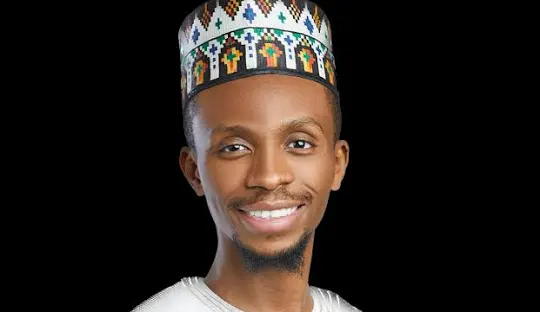
A member of the House of Representatives, Mohammed Bello El-Rufai, has sparked widespread reactions after declaring his intention to run for the presidency in a social media post that was later deleted.
The lawmaker, who represents Kaduna North Federal Constituency, made the statement on his verified account on X, where he posted in Hausa language.
In the post, he wrote: “A’a Takwara na. Ni ban butulci. Zan iya Presidency?” which translates to, “I will run for the Presidency. I am not joking. Can I contest for the Presidency?”
The message quickly attracted attention online, with many Nigerians reacting within minutes. However, the post was later deleted, adding to the controversy surrounding the announcement.
As of the time of filing this report, the lawmaker has not issued any official statement to explain the reason for deleting the tweet or to clarify whether he truly intends to contest in the future.
Following the post, many Nigerians, especially on social media, criticised the lawmaker and questioned his readiness to aspire to the country’s highest political office.
Some critics pointed to his current role as a first-term member of the House of Representatives, arguing that he may not yet have enough experience to handle the responsibilities of the presidency.
Others raised concerns about his performance as a lawmaker, asking whether he has achieved enough in Kaduna North to justify such ambition.
The criticism reflects a wider trend in Nigerian politics, where citizens often demand accountability and measurable performance from elected officials before they seek higher office.
In recent years, social media platforms have become important spaces for political discussions, where citizens freely express their opinions about leaders and public policies.
The strong reaction to Bello El-Rufai’s post shows how quickly political statements can generate debate and scrutiny in the digital age.
Apart from questions about his political ambition, some critics also focused on Bello El-Rufai’s social media behaviour.
Several users noted that he has, in the past, posted controversial opinions online and later deleted them. This pattern has led some observers to question his consistency and communication style.
While supporters argue that deleting posts can simply reflect a change of mind or effort to avoid misunderstanding, critics see it as a sign of poor judgment or lack of careful communication.
In Nigeria’s political space, public statements made on social media are often treated as serious positions, especially when they come from elected officials.
As a result, even brief or informal posts can carry significant weight and attract national attention.
Mohammed Bello El-Rufai is the son of former Kaduna State Governor, Nasir El-Rufai, a prominent figure in Nigerian politics.
His father served as governor of Kaduna State from 2015 to 2023 and was known for his strong views on governance and national issues.
Bello El-Rufai entered elective politics in 2023 when he was elected into the House of Representatives under the platform of the All Progressives Congress (APC).
Since then, he has been known for his outspoken nature, often sharing his opinions on political and social matters.
His style has attracted both supporters and critics, with some praising his boldness and others questioning his approach to public communication.
In Nigeria, the presidency is the highest political office, and those who aspire to it are usually expected to have significant experience in governance, leadership, and public service.
Presidential elections are held every four years, with the next major election expected in 2027.
While it is not unusual for politicians to express interest in contesting for higher office, such declarations are often made through formal channels and supported by clear political strategies.
In this case, Bello El-Rufai’s statement appears informal and has not been followed by any official announcement or campaign structure.
As reactions continue to trail the deleted post, Bello El-Rufai has remained silent on the matter.
There has been no clarification on whether the tweet was a serious declaration, a casual remark, or a statement taken out of context.
This silence has left room for speculation, with some observers suggesting that the deletion may have been influenced by the negative reactions that followed the post.
Others believe it could have been an attempt to avoid unnecessary controversy.
The incident highlights the growing expectations Nigerians have for their leaders, especially in an era where information spreads quickly.
Many citizens now demand clear plans, proven performance, and responsible communication from public officials.
As Nigeria continues to face economic and social challenges, voters are increasingly focused on leadership quality and accountability.
For aspiring leaders, this means that public statements—whether made in formal speeches or on social media—are closely watched and often judged against real-life performance.
For now, it remains unclear whether Bello El-Rufai will pursue a presidential ambition in the future.
His deleted post has, however, sparked conversations about leadership, experience, and the role of young politicians in Nigeria.
As the country gradually moves toward the next election cycle, more political figures are expected to signal their ambitions.