
Fresh political tension has emerged within Nigeria’s opposition space following claims by the African Democratic Congress (ADC) that former presidential candidate Peter Obi showed little interest in the party’s policies and was mainly focused on securing its presidential ticket ahead of the 2027 general elections.
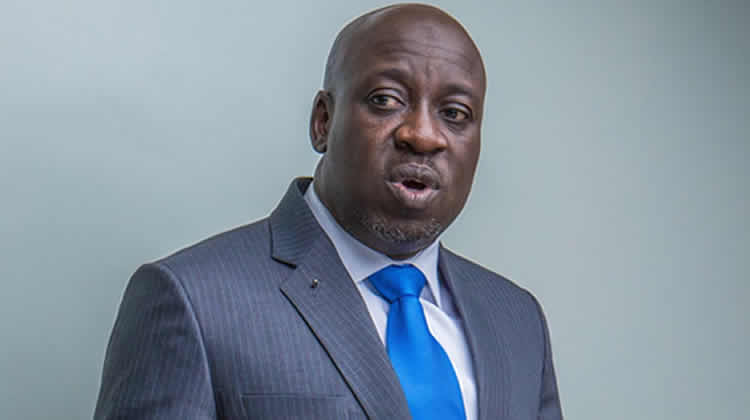
The allegation was made by the ADC National Publicity Secretary, Bolaji Abdullahi, during an interview on Prime Time, a program on Arise News, on Monday. His remarks came barely 24 hours after Obi and former Kano State governor Rabiu Kwankwaso announced their exit from the party.
Abdullahi, while reacting to the development, described the departure of the two prominent politicians as a “setback” for the party but insisted it was not enough to derail ADC’s plans to build a strong opposition platform ahead of 2027.
However, he was critical of Obi’s conduct during his short stay in the party, accusing him of failing to engage with the ADC’s policy direction despite efforts by party members to develop a clear manifesto.
According to him, the party had spent months working on detailed policy positions covering key national issues such as fuel subsidy, security, and economic reforms, but Obi did not participate in those discussions.
“You may invite His Excellency Peter Obi and ask him, what is the ADC position on fuel subsidy? What is the ADC’s framework on security? He doesn’t know, because he has never been interested,” Abdullahi said during the interview.
He added that some politicians see political parties merely as vehicles to contest elections rather than institutions built on ideas and policies.
“They are just waiting for the tickets to be handed to them,” he said.
Abdullahi further explained that members of the ADC fall into three main groups. The first group, he said, consists of politicians who use the party simply as a platform to contest elections. The second group includes those who are committed to ending what they describe as poor governance under the ruling All Progressives Congress (APC). The third group, according to him, are members who genuinely want to build a strong political party based on clear policies and long-term vision.
Although he did not directly label Obi, Abdullahi’s comments suggested that the former Anambra State governor belonged to the first category.
“If you say you want to contest election, and you believe in changing the country, you should know what your party stands for,” he said.
The criticism comes at a time when Nigeria’s opposition parties are struggling to unite ahead of the 2027 general elections. Since the 2023 elections, there have been several attempts to form a broad coalition capable of challenging the dominance of the APC at the federal level.
Obi and Kwankwaso had joined the ADC in March 2026 as part of such efforts to build a united opposition front. Their entry into the party was seen by many political observers as a major boost, given their strong support bases across different regions of the country.
Obi, who was the presidential candidate of the Labour Party in the 2023 election, enjoyed widespread support among young voters and urban residents, while Kwankwaso, leader of the Kwankwasiyya movement, maintained significant influence in Kano and parts of northern Nigeria.
However, their stay in the ADC was short-lived. Both men announced their resignation from the party on Sunday, citing internal crises, ongoing court cases, and what they described as deliberate attempts to frustrate their participation in the party’s activities.
Shortly after leaving the ADC, the two politicians moved to the Nigeria Democratic Congress, where they called for an end to what they termed “litigation-driven politics” in Nigeria.
Their exit has raised questions about the stability of opposition alliances and the chances of forming a united front ahead of 2027.
Despite the development, Abdullahi expressed confidence that the ADC would recover and remain a strong force in the coming elections.
“No, no, no, absolutely. Maybe it is a setback, but it is a temporary setback. We are recalibrating, and we are going to come back stronger,” he said.
He also addressed concerns that former Vice President Atiku Abubakar might automatically emerge as the party’s leading presidential aspirant following the exit of Obi and Kwankwaso.
Abdullahi rejected the idea, stressing that the ADC would not serve the interest of any single individual.
“This party is not going to be an SPV for anybody,” he said, using a term that suggests a platform created solely to support one person’s ambition.
He added that other notable figures, including former Minister of Transportation Rotimi Amaechi, are also being considered as potential contenders for the party’s presidential ticket.
Political analysts say the ongoing developments highlight the challenges facing opposition parties in Nigeria, where personal ambition, internal disagreements, and legal battles often weaken collective efforts.
In recent years, party defections and shifting alliances have become common in Nigerian politics, especially as elections approach. Politicians frequently move between parties in search of better opportunities, a trend that critics say undermines ideology and policy-based politics.
For many Nigerians, key issues such as rising cost of living, insecurity, unemployment, and economic instability remain top priorities. Observers argue that political parties must focus more on clear policy solutions rather than internal struggles if they hope to win public trust.
The ADC’s emphasis on policy development, as highlighted by Abdullahi, appears to be part of an effort to distinguish the party from others and present itself as a serious alternative to the ruling APC.
However, the departure of high-profile figures like Obi and Kwankwaso may affect the party’s ability to attract widespread support in the short term.
As preparations for the 2027 elections gradually gather pace, the ability of opposition parties to resolve internal differences and present a united front will likely play a key role in shaping the outcome.
For now, the political landscape remains fluid, with alliances forming and breaking as key players position themselves for the next electoral contest. Nigerians will be watching closely to see whether the opposition can overcome its divisions or whether the ruling party will continue to benefit from a fragmented political field.