
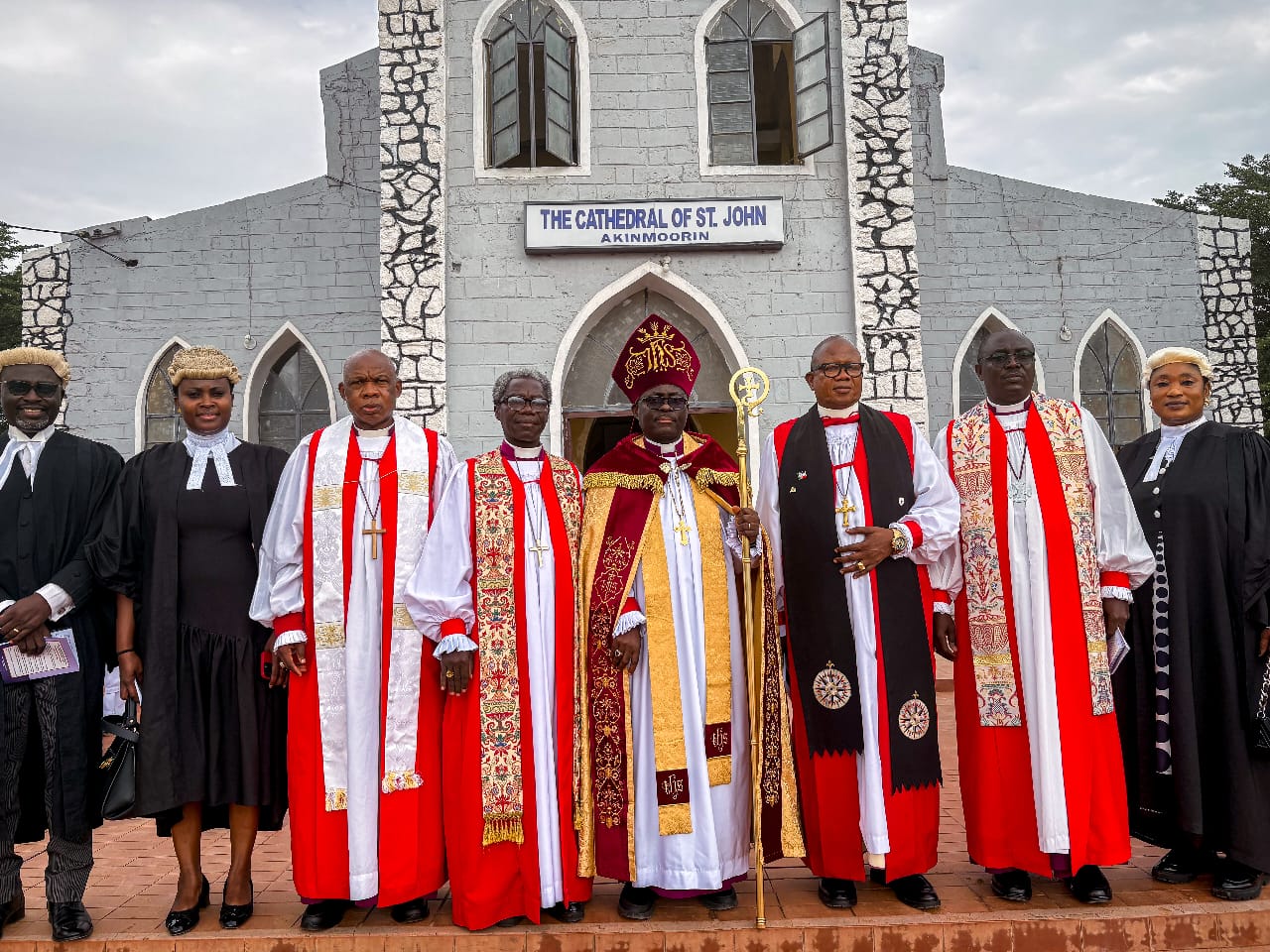
The Anglican Bishop of the Missionary Diocese of Oyo South, Olufemi Familoni, has called on President Bola Tinubu to take urgent steps to reduce the economic hardship facing Nigerians and strengthen security across the country.
Familoni made the appeal during his presidential charge at the first statutory Synod of the diocese held on Friday at the Cathedral Church of St. John, Akinmoorin, Oyo State. The synod had the theme “A Renewed Mind.”
In a statement released on Sunday, the bishop said Nigeria’s current economic situation remains a serious concern, especially for low-income earners, civil servants and small business owners.
He noted that ongoing economic reforms by the Federal Government have had mixed effects, but many ordinary citizens are feeling the negative impact more strongly.
According to him, rising transport costs, inflation and general increase in the prices of goods and services have made life more difficult for many households.
“The effect of the reform policies has been particularly felt among low-income earners, civil servants, and small business owners, many of whom struggle to meet their basic needs,” Familoni said.
He added that the situation has worsened poverty levels and increased pressure on families across the country.
The bishop therefore urged the Federal Government to introduce stronger social protection programmes to help vulnerable citizens cope with the current economic realities.
He recommended targeted interventions such as subsidies for essential services, support for small and medium-scale enterprises, and direct assistance to low-income groups.
“Targeted interventions, such as subsidies for essential services, support for small and medium-scale enterprises, and direct assistance to vulnerable groups, are necessary to alleviate the burden on citizens,” he said.
Familoni also stressed the need for the government to focus more on local production as a way of reducing dependence on imports and strengthening the economy.
He said sectors such as agriculture, manufacturing and small-scale industries should be given priority because they have the capacity to create jobs and reduce unemployment.
“Encouraging agriculture, manufacturing, and small-scale industries will not only create employment but also stabilise the economy,” he added.
The bishop further advised the government to ensure transparency and accountability in the management of national resources, insisting that economic policies must directly improve the lives of citizens.
He said Nigerians should be able to feel the impact of government programmes in real terms, not just on paper.
On education, Familoni commended recent efforts by the government to resolve industrial disputes in universities and improve stability in the sector.
However, he called for full implementation of agreements reached with education unions and urged authorities to expand vocational and technical education.
According to him, practical skills training will help reduce unemployment among young people and prepare them for self-reliance.
On the health sector, the bishop expressed concern over the continued migration of doctors and other health professionals out of Nigeria.
He warned that the trend is weakening the country’s healthcare system and reducing access to quality medical care.
“The increasing migration of our highly trained and experienced medical professionals to other countries has significantly weakened our healthcare system,” he said.
He called for urgent steps to improve working conditions, welfare and incentives for medical workers to discourage further migration.
Speaking on insecurity, Familoni urged the government to adopt a more decisive and structured approach to tackling security challenges across the country.
He recommended a combination of intelligence gathering, military operations and community-based strategies to address rising cases of violence, kidnapping and other crimes.
The bishop also commended recent security appointments but urged those in charge to deliver visible and measurable results.
In addition, he called for urgent attention to the power sector, describing stable electricity as a key driver of economic growth, job creation and youth empowerment.
He suggested that the sector should be treated with a sense of urgency, given its importance to businesses, industries and households across the country.
“Stable electricity is the backbone of economic activity and youth empowerment,” he said.
Familoni also commented on governance in Oyo State, where he acknowledged ongoing development efforts by Governor Seyi Makinde.
While praising the state government’s projects, he advised that development should be spread more evenly across all parts of the state, not concentrated in Ibadan alone.
He said balanced development would help reduce regional inequality and improve living standards in rural communities.
The synod, which brought together clergy and church members from across the diocese, ended on Sunday, May 10, 2026, with a thanksgiving service.
During the closing ceremony, Bishop Familoni also instituted three Canon stalls in honour of senior clergy members and church fathers who have contributed significantly to the growth of the diocese.
The event was attended by church leaders, members of the Anglican Communion, and other invited guests from within and outside Oyo State.
The synod’s discussions focused largely on national issues, with strong emphasis on economic hardship, insecurity, education, health and governance, reflecting growing concerns among religious leaders about the state of the nation.
Familoni’s message adds to a growing list of calls from religious leaders across Nigeria urging the Federal Government to take urgent steps to ease the burden on citizens amid ongoing reforms.