
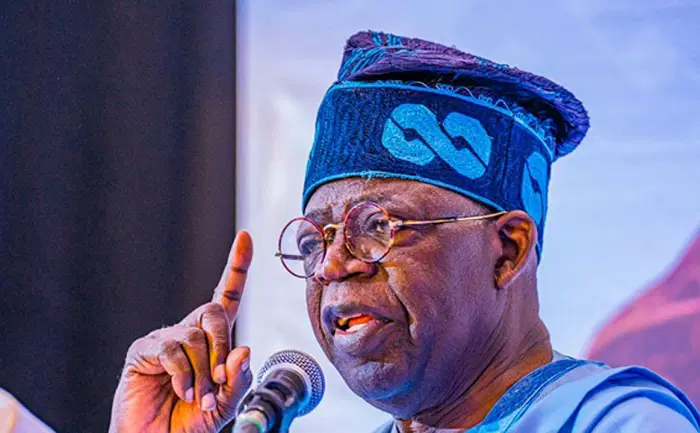
President Bola Tinubu has called for the urgent delivery of attack helicopters to support Nigeria’s fight against terrorism and insecurity, saying the country needs stronger air power to confront violent groups operating in different parts of the nation.
Tinubu made the call during a meeting with a delegation from European aircraft manufacturer, Airbus, on the sidelines of the Africa CEO Forum held in Kigali.
According to a statement issued on Saturday by the President’s Special Adviser on Information and Strategy, Bayo Onanuga, the President specifically requested the speedy delivery of three Apache attack helicopters already ordered by Nigeria.
Tinubu said the helicopters are urgently needed to strengthen military operations against terrorists, bandits and other criminal groups threatening peace and stability across the country.
“Nigeria needs attack helicopters urgently that can be used to confront and overwhelm terrorists. That is my priority now,” the President said during the meeting.
The President stressed that improving Nigeria’s security capacity remains one of the top priorities of his administration, especially as security agencies continue operations against insurgents in the North-East, bandits in the North-West, and criminal gangs involved in kidnapping and attacks in other parts of the country.
Over the years, Nigeria has spent billions of naira on military equipment and air power in a bid to tackle rising insecurity. The Nigerian Air Force has increasingly relied on combat aircraft, helicopters and surveillance systems in operations against Boko Haram insurgents, Islamic State West Africa Province fighters, armed bandits and oil thieves.
The Apache helicopter requested by Nigeria is regarded globally as one of the most effective combat helicopters used in military operations. The aircraft is designed for attack missions, reconnaissance and close air support for troops during combat operations.
Tinubu’s request comes at a time when security agencies are intensifying efforts to restore peace in several troubled areas across the country. In recent months, military authorities have reported renewed offensives against terrorists and criminal groups in states including Borno, Zamfara, Kaduna, Niger and Katsina.
Beyond security discussions, the President also used the meeting to push for deeper aviation cooperation between Nigeria and Airbus.
Tinubu expressed support for Airbus’ proposal to establish aircraft maintenance and hangar facilities in Nigeria. He said such investments would help strengthen the country’s aviation industry, reduce maintenance costs for local operators and position Nigeria as a major aviation hub in Africa.
Nigeria has for many years struggled with limited aircraft maintenance facilities, forcing many airlines to take their planes abroad for heavy maintenance checks. Industry players have repeatedly complained that this increases operational costs and contributes to high airfares.
Tinubu said his administration is ready to work closely with global aviation companies to modernise the sector and improve access to aircraft for domestic operators.
He also expressed interest in cooperation involving aircraft financing, leasing models and technical partnerships that could support the growth of Nigerian airlines.
The President noted that aviation remains important to economic growth, regional connectivity and trade under the African Continental Free Trade Area.
Officials of Airbus, led by Thierry Cloutet, Head of Regional Business Growth for Africa and the Middle East, reportedly welcomed the Nigerian government’s interest in stronger collaboration.
Cloutet praised ongoing economic reforms under Tinubu’s administration and said Airbus was willing to expand its relationship with Nigeria through what he described as a “360-degree engagement.”
According to him, the partnership would cover both commercial and military aviation.
The Airbus delegation also expressed readiness to support human capital development and training for Nigerian aviation professionals.
The company further discussed possible collaboration in satellite technology, Earth observation systems, sustainability projects and operational hubs.
Nigeria remains one of Africa’s largest aviation markets due to its large population and strategic position on the continent. However, the sector continues to face challenges including high operating costs, foreign exchange pressures, inadequate infrastructure and limited access to aircraft financing.
Successive governments have tried to address some of these issues through policy reforms and partnerships with international aviation firms.
Tinubu’s administration has also shown increasing interest in defence modernization since assuming office in May 2023. The government has continued procurement of military hardware and surveillance equipment aimed at improving the operational capacity of the armed forces.
In recent years, Nigeria has acquired fighter jets, helicopters and unmanned aerial vehicles from different countries as part of efforts to strengthen the military.
The meeting in Kigali is one of several engagements by Tinubu with global investors and industry leaders during the Africa CEO Forum, where discussions focused on investment, economic growth, infrastructure and partnerships across the continent.
Government officials believe stronger partnerships with international companies such as Airbus could help Nigeria achieve both security and economic goals in the coming years.