
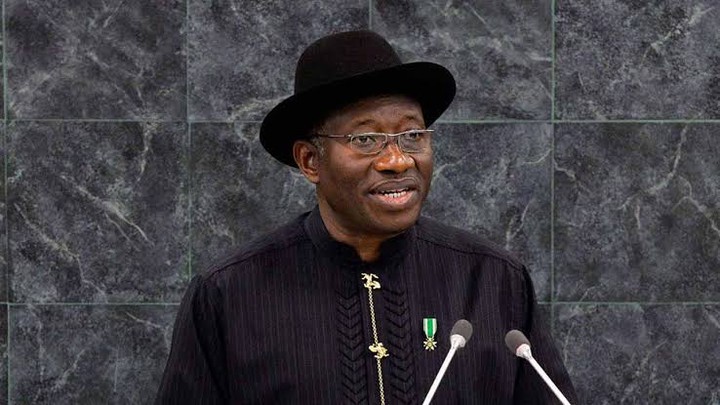
Former President Goodluck Jonathan has raised fresh concerns over the worsening insecurity in Nigeria, warning that the country is gradually becoming used to violence, killings and destruction of communities.
Jonathan said it was dangerous for Nigerians to begin treating tragic incidents as normal events, stressing that the growing culture of violence was weakening the nation’s humanity and moral foundation.
The former president spoke on Saturday during the 13th Synod of the Anglican Diocese of Abuja held at St James Anglican Church.
Addressing church leaders and worshippers at the event, Jonathan said the increasing rate of insecurity across the country should worry every Nigerian, adding that the nation must not lose its conscience in the face of repeated bloodshed.
“What is even more painful is how society sometimes appears to normalise these tragedies as though they are ordinary occurrences,” he said.
“In times past, such incidents would shake the conscience of the nation. Today, people are killed, communities are destroyed, and life seems to continue as though nothing has happened. This ought not to be so.”
Jonathan’s comments come at a time when Nigeria continues to battle different forms of insecurity, including terrorism, banditry, kidnapping, communal clashes and attacks by armed groups in several parts of the country.
In recent years, thousands of Nigerians have been displaced from their homes due to violence, especially in parts of the North-East, North-West and North-Central regions. Security agencies have also faced growing pressure to contain criminal activities spreading across rural communities and highways.
There have been repeated attacks on villages, abductions of students, killings of farmers and assaults on security personnel in different states. The situation has led to public concern over safety and national stability.
Jonathan said beyond the physical destruction caused by insecurity, the country was also facing a serious moral crisis.
According to him, violence, disregard for human life and the steady decline of societal values are becoming major threats to national unity and progress.
“When we look around today, particularly at the challenges confronting our country, it is easy to become discouraged. Violence, insecurity and the loss of human values have become deeply troubling realities,” he added.
The former president urged Nigerians to return to strong moral principles and values that promote peace, compassion and respect for life.
He also challenged political leaders and public office holders to demonstrate honesty, courage and integrity in handling the country’s many problems.
Jonathan stressed that Nigeria can only move forward when leaders govern with sincerity and place national interest above personal ambition.
Religious leaders, civil society groups and traditional rulers have repeatedly called on the government at all levels to take stronger action against criminal groups and improve the welfare of citizens.
The former president also spoke on the role of the Church in national development, urging religious institutions not to remain silent in difficult times.
According to him, the Church has a responsibility to guide society morally and continue speaking against injustice and wrongdoing.
“The Church must continue to stand as the conscience of society, speaking truth, defending what is right and guiding people towards better values,” Jonathan said.
He encouraged religious leaders to continue preaching unity, justice and peaceful coexistence among Nigerians, regardless of ethnic or religious differences.
Jonathan further noted that faith-based organisations remain important in shaping the character of society and promoting hope during periods of hardship.
Nigeria has witnessed increasing economic and social challenges in recent years, with many citizens struggling with rising living costs, unemployment and insecurity.
Despite the challenges, Jonathan urged Nigerians not to lose hope in the future of the nation.
He called on citizens to continue working together for peace, justice and national development, saying unity and collective responsibility are necessary for progress.
The former president said Nigerians must resist the temptation to accept violence as part of everyday life, warning that such an attitude could further weaken the country’s social fabric.
During his presidency, Nigeria also faced serious security threats, especially from the Boko Haram insurgency in the North-East. However, Jonathan has remained active in peace-building and conflict resolution efforts across Africa through international engagements and mediation roles.
Many Nigerians have continued to look to former leaders for guidance and intervention on national matters, especially during periods of crisis.
Saturday’s event in Abuja brought together Anglican bishops, clergy members and lay faithful from different parts of the Federal Capital Territory and beyond.
The annual synod serves as a gathering for reflection, worship and discussions on issues affecting both the Church and society.
Jonathan’s message formed one of the major highlights of the gathering as he urged Nigerians to rebuild the country’s moral foundation and reject all forms of violence and hatred.
He maintained that no nation can develop in an atmosphere where human life is no longer valued or protected.
The former president said restoring peace and trust in society would require commitment from leaders, religious institutions and ordinary citizens alike.
He appealed to Nigerians to continue supporting one another and promoting unity despite the country’s current difficulties.
According to him, the future of Nigeria depends on the willingness of citizens and leaders to choose peace, justice and compassion over division and violence.