
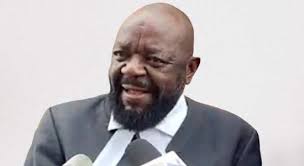
Aloy Ejimakor, one of the lead lawyers representing the convicted leader of the Indigenous People of Biafra (IPOB), Nnamdi Kanu, has said the Igbo people will never forget or move on from what he described as the injustices they suffered after the Nigerian Civil War unless those wrongs are addressed.
Ejimakor made the remarks in a post shared on his X account on Saturday, where he argued that many people wrongly assume that the South-East has put behind it the painful experiences that followed the end of the war in 1970.
According to him, the confiscation of properties belonging to many Igbo people and the controversial £20 compensation policy remain unresolved issues that continue to shape the feelings of many people in the region.
“It seems to me that some people believe that Ndigbo have moved on from the humiliation and injustice of confiscating their properties and handing them a mere £20 at the end of the Civil War,” he wrote.
“Well, hear this: Ndigbo will NEVER move on until these injustices, plus more, are redressed.”
Although Ejimakor did not explain what he meant by the “plus more” grievances, his comments have once again brought attention to long-standing debates over post-war reconciliation, historical injustices and the relationship between the South-East and the Nigerian state.
The Nigerian Civil War, also known as the Biafran War, lasted from July 1967 to January 1970. The conflict began after the former Eastern Region declared itself the independent Republic of Biafra under the leadership of the late Chukwuemeka Odumegwu Ojukwu.
The war claimed the lives of hundreds of thousands of people, with many estimates suggesting that civilians, particularly children, died from hunger and disease caused by the blockade imposed during the conflict.
When the war ended in January 1970, the then Head of State, General Yakubu Gowon, announced a policy of “No Victor, No Vanquished” and promised reconciliation, rehabilitation and reconstruction.
The declaration was intended to heal divisions and reintegrate people from the former Biafra into the Nigerian federation.
However, many Igbo people have argued that some of the policies implemented after the war contradicted that message of reconciliation.
One of the most controversial was the £20 compensation policy.
Under the arrangement, many people from the former Eastern Region who had money in Nigerian banks before the war reportedly received a flat payment of £20, regardless of the amount they had in their accounts before hostilities began.
For example, individuals who had savings running into hundreds or thousands of pounds before the conflict were reportedly given only £20 to restart their lives after the war.
Critics of the policy have described it as unfair and punitive, arguing that it wiped out family savings and prevented many Igbo businessmen and professionals from recovering economically after the conflict.
For decades, the issue has remained a painful subject within the South-East, with calls from different groups for an official apology, compensation or acknowledgement of the hardships suffered by those affected.
Another major grievance frequently raised involves the abandoned property policy implemented in parts of the country after the war.
Under that arrangement, properties owned by some Igbo people in certain states were declared abandoned and transferred to other individuals.
Many affected families have continued to challenge the legitimacy of those actions and demand redress.
Successive governments have largely maintained that national reconciliation efforts after the war were undertaken in good faith and that Nigeria must focus on unity and development.
Nevertheless, demands for recognition of historical injustices have persisted, especially among groups and individuals who believe the wounds of the civil war have not fully healed.
Ejimakor’s comments come at a time when conversations about equity, inclusion and national cohesion are again gaining prominence in Nigeria’s political space.
His remarks are also significant because of his close association with Nnamdi Kanu, the leader of IPOB.
Kanu has consistently argued that the South-East has suffered political marginalization and injustice since the end of the civil war.
Those claims have formed part of the broader grievances advanced by IPOB in its agitation for self-determination.
The Federal Government, however, has repeatedly rejected allegations of systemic discrimination against the South-East and insists that all regions of the country are treated fairly under the law.
Authorities have also maintained that IPOB’s separatist campaign threatens Nigeria’s unity and national security.
Kanu, who was recently convicted on terrorism-related charges brought against him by the Federal Government, remains one of the country’s most controversial political figures.
His prosecution has continued to generate strong reactions from supporters and critics alike.
While younger generations may know the events only through stories and history books, many families in the South-East continue to recount personal experiences of loss, displacement and economic hardship linked to the conflict and its aftermath.
More than 50 years after the guns fell silent, the debate over the £20 compensation policy and other post-war measures remains unresolved.