
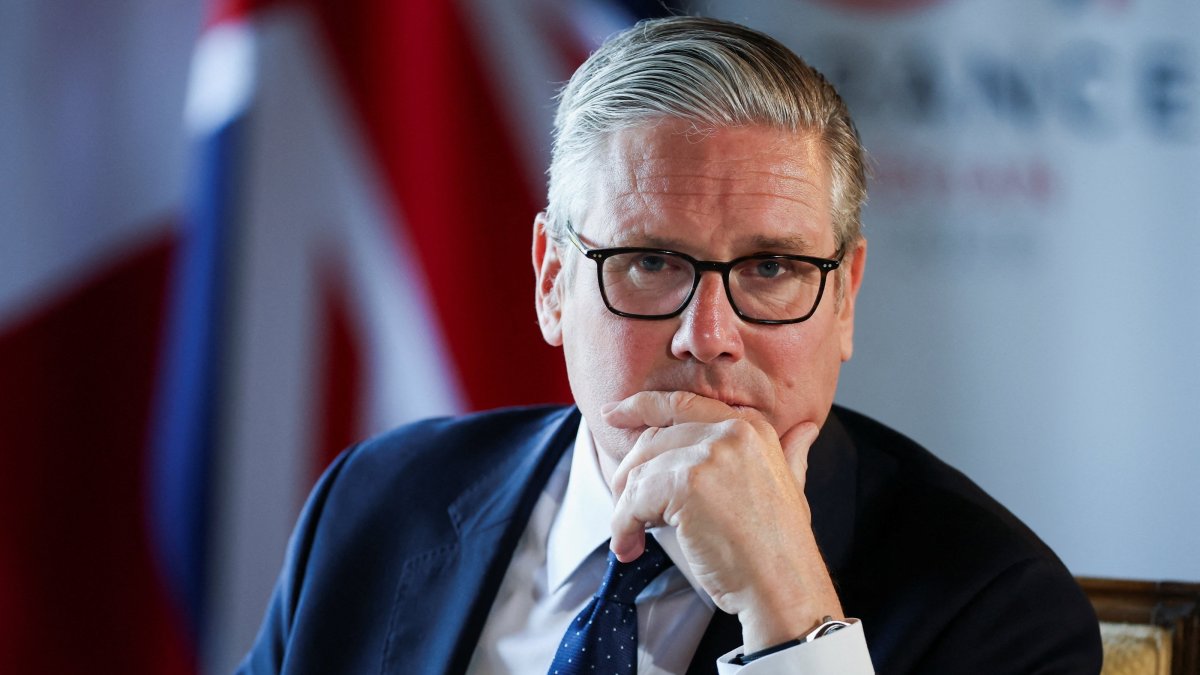
The United Kingdom Prime Minister, Keir Starmer, has resigned from office as Prime Minister and leader of the Labour Party following mounting pressure within his party over its political direction.
Starmer announced his decision on Monday in a statement delivered outside 10 Downing Street, the official residence of British prime ministers. He said his years in office had been guided by a desire to serve the country and make decisions that he believed were in the national interest.
“Every decision I have made has been about putting the country I love first,” Starmer said as he formally confirmed his departure.
The resignation marks a dramatic development in British politics and sets the stage for a leadership contest within the ruling Labour Party at a crucial period for the government.
Starmer disclosed that he had informed King Charles III of his decision to step down from office. Under the United Kingdom’s constitutional system, the monarch is officially notified whenever a prime minister resigns.
He also directed the Labour Party’s National Executive Committee to immediately begin the process of selecting a new leader. According to him, nominations for the leadership race will open on July 9, while the entire transition process is expected to be concluded before Parliament resumes in September.
Despite announcing his resignation, Starmer said he would remain in office temporarily to ensure a smooth transfer of power to his successor.
“I will stay on for a short period to oversee an orderly handover and ensure continuity in government,” he said.
His resignation follows increasing discontent within the Labour Party, with many members and supporters expressing concerns about the party’s leadership and political fortunes.
The pressure intensified after Labour suffered political setbacks that exposed divisions within the party. The situation worsened following a major by-election victory by Andy Burnham in North West England. Burnham’s success strengthened calls from some sections of the party for a change in leadership before lawmakers return from their parliamentary break.
The leadership contest that follows is expected to attract significant public attention, as senior Labour figures position themselves to take over the reins of government.
Starmer’s exit represents a remarkable turn in a political career that saw him rise from a legal background to occupy the highest office in British politics.
Before entering frontline politics, Starmer built a distinguished career as a human rights lawyer and prosecutor. He served as Director of Public Prosecutions between 2008 and 2013, overseeing major criminal prosecutions in England and Wales.
He entered Parliament in 2015 as a Labour lawmaker and steadily climbed through the party ranks. In 2020, he emerged as leader of the Labour Party after succeeding Jeremy Corbyn.
As opposition leader, Starmer sought to rebuild Labour’s image and broaden its appeal to voters following disappointing election performances. He projected himself as a moderate politician focused on competence, economic stability and restoring trust in government.
His efforts eventually paid off when Labour returned to power, ending years of Conservative rule in Britain.
However, his time as Prime Minister was not without challenges. He faced pressure over economic management, public services, immigration and growing expectations from different factions within the Labour Party.
Critics within the party accused the leadership of failing to inspire supporters and drifting away from Labour’s traditional values. Others argued that Starmer’s cautious political approach was necessary to maintain public confidence and electoral support.
His resignation now leaves the Labour Party with the difficult task of choosing a successor capable of uniting its various wings while preparing the government for the next phase of its agenda.
For now, Starmer’s immediate priority will be ensuring stability during the transition period.
The announcement has already triggered intense political discussions across Britain, with opposition parties, Labour members and the wider public closely watching developments.
As the race to replace him begins, attention will focus on who can command the confidence of both the party and the British electorate.
With Parliament expected to resume in September, the Labour Party faces a limited timeframe to conclude the leadership process and present a united front.
Starmer’s departure closes an important chapter in British politics and opens another, one that could redefine the future of the governing party and the leadership of the United Kingdom.