
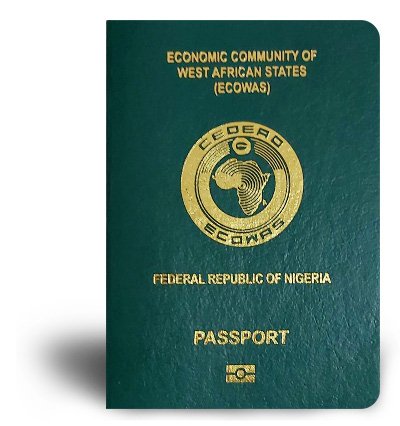
A United Kingdom-based Nigerian lawyer, Baron Chymaker, has announced that he has formally begun the process of renouncing his Nigerian citizenship.
Chymaker disclosed this in a post on his X account on Thursday, saying his legal representative in Nigeria had completed the necessary documentation and submitted his application to the Office of the Secretary to the Government of the Federation (SGF).
According to him, all the required fees have also been paid and he is now waiting for the Federal Government to process and approve his application.
“I have today received a confirmation from my lawyer in Nigeria that my application to renounce my Nigerian citizenship has been submitted to the SGF and all fees paid as appropriate. I cannot wait for the approval,” he wrote.
His announcement quickly attracted attention on social media, where many Nigerians reacted with mixed opinions. While some described the decision as a personal choice, others questioned why a Nigerian would decide to give up the country’s citizenship.
Chymaker is widely known on X for his commentaries on international law, legal practice in both Nigeria and the United Kingdom, constitutional matters and cryptocurrency.
Over the years, he has built a large online following by sharing his views on legal issues and governance. He frequently compares the Nigerian legal system with those of other countries and often calls for reforms to improve the administration of justice.
One of the areas he has repeatedly criticised is the application of the doctrine of judicial precedent, commonly known by its Latin name, stare decisis.
Judicial precedent requires lower courts to follow decisions already made by higher courts in similar cases. The principle is widely used in common law countries, including Nigeria and the United Kingdom, to promote consistency in court decisions.
However, Chymaker has argued that the doctrine is sometimes applied too rigidly in Nigeria. He has claimed that strict reliance on previous court decisions can lead to outcomes that may not always serve justice.
In previous comments on social media, he linked his criticism to some election tribunal judgments, arguing that judges should have greater flexibility when deciding cases instead of relying heavily on earlier rulings.
His views have generated debate within legal circles. While some lawyers agree that the legal system needs reforms, others insist that judicial precedent remains an important part of ensuring stability and certainty in the law.
Apart from commenting on the judiciary, Chymaker has also encouraged Nigerian-trained lawyers to improve their qualifications by pursuing advanced legal education and professional training.
He has repeatedly advised lawyers to consider practising in countries with more developed legal systems if opportunities are available, arguing that such exposure can broaden their experience and career prospects.
Those comments have also divided opinion, with some legal practitioners agreeing that international experience is valuable, while others maintain that Nigeria offers opportunities for lawyers to contribute to reforms within the country.
Although Chymaker announced that he has applied to renounce his Nigerian citizenship, he did not explain the reasons behind his decision.
He also did not state whether he intends to rely solely on his British citizenship after the process is completed.
Under Nigeria’s Constitution, a citizen of full age who wishes to renounce Nigerian citizenship may do so by making a formal declaration in the prescribed manner.
The application is submitted to the Federal Government through the Office of the Secretary to the Government of the Federation. However, the process is not completed immediately after submission.
For the renunciation to become legally effective, the declaration must be registered by the President, provided the conditions set out in the Constitution have been met.
Nigeria also recognises dual citizenship for citizens by birth. This means many Nigerians who become citizens of countries such as the United Kingdom, the United States or Canada are allowed to retain their Nigerian citizenship.
As a result, formal renunciation of Nigerian citizenship is relatively uncommon, as many Nigerians in the diaspora choose to keep both nationalities.
Chymaker’s announcement has once again drawn attention to discussions about migration, dual citizenship and the growing number of Nigerians living and working abroad.
The Nigerian diaspora contributes significantly to the country’s economy through billions of dollars in annual remittances, while many professionals continue to maintain family, business and professional ties with Nigeria despite living overseas.
The Federal Government has not issued any statement regarding Chymaker’s application.
Until the constitutional process is completed and the declaration is formally registered, he remains a Nigerian citizen under the law.
His application is expected to follow the normal constitutional procedure before a final decision is made by the appropriate authorities.
Whether approved or not, Chymaker’s decision has sparked fresh conversations about citizenship, national identity and the choices available to Nigerians living abroad, especially professionals who have built successful careers outside the country.