
The Presidency on Monday criticised Oyo State Governor Seyi Makinde over his call for a United Nations-backed investigation into the abduction of pupils and teachers in Oriire Local Government Area of the state, describing the request as unnecessary and politically motivated.
The disagreement came shortly after the governor formally received the 45 pupils and teachers who regained their freedom after spending 56 days in captivity.
The victims, made up of 39 pupils and six teachers, were abducted on May 15, 2026, when armed bandits attacked three schools in the Yawota and Ahoro Esienle communities of Oriire Local Government Area.
The abduction shocked residents of Oyo State and attracted national attention, with parents, civil society groups and religious leaders repeatedly calling for the victims’ safe return.
Following weeks of security operations, the pupils and teachers were rescued and formally handed over to the Oyo State Government by the Federal Government on Monday.
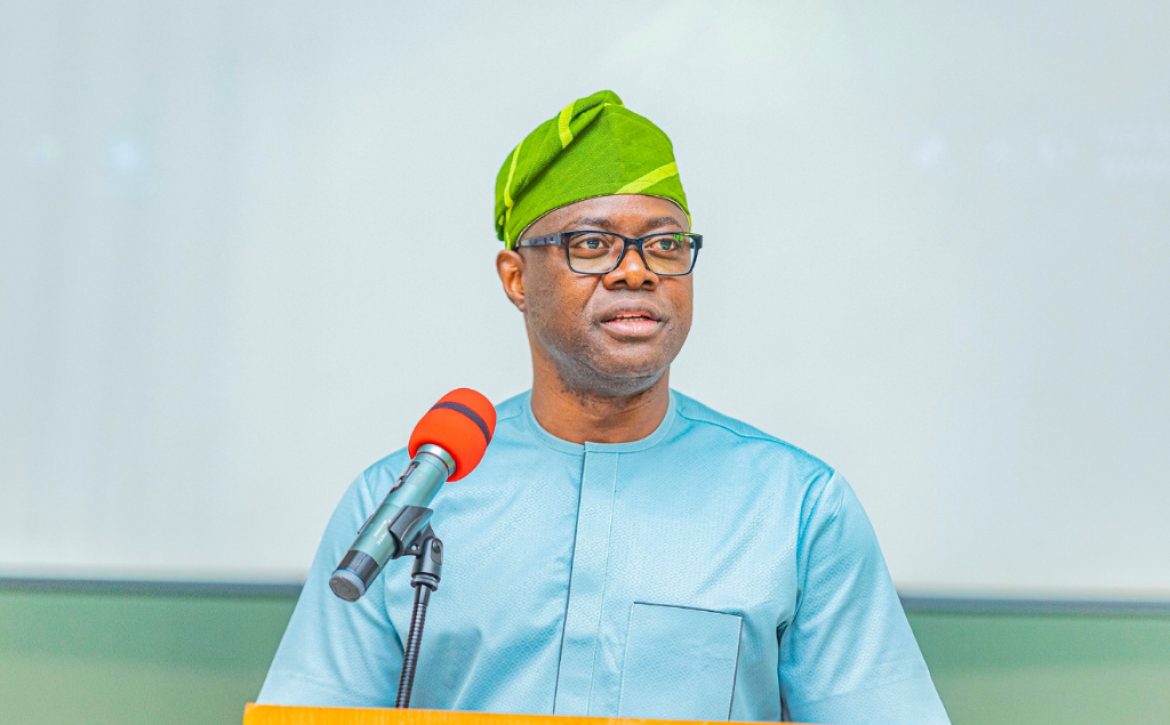
Speaking during the reception for the victims at the Oyo State Secretariat in Ibadan, Governor Makinde announced that the state government would take full responsibility for their welfare, rehabilitation, medical care and continued education.
He also called for an independent international investigation into the circumstances surrounding the abduction and the rescue operation.
According to the governor, the incident was serious enough to deserve scrutiny beyond Nigeria’s domestic institutions.
“The circumstances surrounding this incident are sufficiently grave and unusual to warrant independent scrutiny beyond our domestic institutions,” Makinde said.
“I therefore, with a full sense of responsibility as the Executive Governor of Oyo State, call on the appropriate international human rights and accountability mechanisms, including those within the United Nations system, to closely examine the facts surrounding this abduction and the circumstances of its resolution.”
Makinde stressed that his request was not intended to undermine Nigeria’s security institutions or question the efforts of security agencies.
Instead, he said the objective was to ensure accountability and strengthen public confidence in government institutions.
“Such scrutiny is not intended to undermine our institutions. Rather, it is intended to reinforce public confidence that the truth will be established and that every person found to bear responsibility, regardless of office, influence or affiliation, will be held accountable,” he said.
The governor also reminded the Federal Government that the Nigerian Constitution places responsibility for national security on the Federal Government and the security agencies under its control.
According to him, Nigerians deserve a full explanation of how the schoolchildren and teachers were abducted, what happened during their captivity and whether there were failures or acts of negligence that made the attack possible.
“The Nigerian people deserve a full and transparent account of what happened, who was responsible, whether there were institutional failures, negligence or collusion at any level, and what measures must now be taken to ensure that no community is ever subjected to such an ordeal again,” Makinde stated.
He rejected suggestions that his call for an international investigation was politically motivated.
“This is not about politics. It is about justice for the victims, reassurance for our people, and restoring public confidence that every Nigerian child can go to school without fear,” he added.
However, the Presidency swiftly disagreed with the governor’s position.
Reacting to Makinde’s remarks, the Special Adviser to the President on Information and Strategy, Bayo Onanuga, said there was no need for a United Nations investigation because Nigerian security agencies had already provided explanations regarding the rescue operation.
According to Onanuga, the governor’s demand suggested a lack of confidence in the country’s security institutions at a time when security agencies had successfully secured the release of the victims.
He also described the request as politically motivated, insisting that the Federal Government remained committed to investigating security incidents through established national institutions.
The Presidency maintained that Nigeria possesses capable security agencies and institutions that can handle investigations into incidents of terrorism, kidnapping and other criminal activities without international intervention.
The exchange highlights fresh differences between the Federal Government and the Oyo State Government over the handling of one of the state’s most high-profile security incidents in recent years.
Meanwhile, emotions ran high across Oyo State as the rescued pupils and teachers began reuniting with their families after nearly two months in captivity.
After the formal handover ceremony in Ibadan, the victims were taken to the Ladoke Akintola University of Technology (LAUTECH) Teaching Hospital in Ogbomoso for comprehensive medical examinations, treatment and psychological evaluation.
Their arrival at the hospital sparked another round of celebrations as residents, relatives and well-wishers gathered to welcome them home.
Many parents expressed gratitude to God and the security agencies for securing the release of the children and teachers, while also calling for improved security around schools to prevent similar attacks.
The state government has assured the victims that they will receive medical care, counselling and educational support to help them recover from the physical and emotional effects of their 56-day ordeal.
The attack has also renewed concerns about the security of schools across Nigeria.
In recent years, several states have experienced attacks on schools by armed groups, leading to mass abductions of pupils and students. The incidents have forced governments at different levels to introduce measures aimed at improving school safety, including the Safe Schools Initiative and increased deployment of security personnel to vulnerable areas.
The abduction in Oriire Local Government Area has become one of the most significant school kidnapping cases in the South-West in recent years, drawing widespread public attention and prompting renewed calls for stronger collaboration between federal and state authorities on intelligence gathering, rapid response and the protection of schools.