
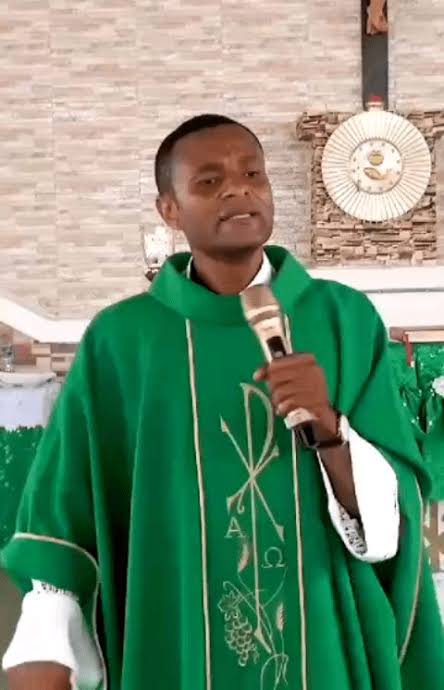
A Catholic priest of the Abuja Archdiocese, Rev. Fr. John Chinenye Oluoma, popularly known as Fada Oluoma, has criticised presidential media aides Daniel Bwala and Bayo Onanuga over their response to comments made by Cardinal John Onaiyekan on Nigeria’s economic situation, accusing them of resorting to personal attacks instead of presenting facts.
Oluoma made the remarks in a Facebook post on Sunday while reacting to the controversy that followed an interview granted by Cardinal Onaiyekan on Arise Television, where the respected cleric spoke about the economic hardship facing many Nigerians.
The priest said the cardinal merely expressed the reality of the suffering being experienced by millions of citizens and questioned why the President’s media team chose to attack him instead of responding with evidence to support the government’s claims that the economy is improving.
According to Oluoma, the controversy began when one of President Bola Tinubu’s media aides accused Cardinal Onaiyekan of bias and unethical conduct after the interview. He described the response as unnecessary and said it only worsened the situation.
He particularly criticised Daniel Bwala, saying the presidential spokesman took the criticism of the former Archbishop of Abuja too far.
“The first problem is with the president’s media aide who escalated this by accusing the Cardinal of bias and unethical behavior. That’s totally unnecessary and provocative. Then characters like Daniel Bwala took the campaign of calumny against the Cardinal to insane level,” Oluoma wrote.
He questioned why presidential media aides often respond aggressively whenever government policies are criticised.
“I don’t know why media aides to presidents in this country think their job is to behave like attack dogs,” he said.
The priest also mentioned Bayo Onanuga, Special Adviser to the President on Information and Strategy, saying he expected the government’s communication team to respond with facts instead of attacking the person making the criticism.
“I expected Bayo Onanuga and his cohorts to respectfully and intelligently disagree with whatever the Cardinal said that they didn’t like,” he stated.
According to him, the media aides should have explained why they believe the economy is improving by presenting clear economic data and allowing Nigerians to form their own opinions.
“All they needed do is explain how ‘rosy’ the economy has become or is becoming under Tinubu. Just reel out the macro and micro indices that support your position on the economy and allow Nigerians to judge. Bantering the cleric for saying what is obvious does your government no good,” he added.
Oluoma argued that public officials, especially those speaking on behalf of the President, have a responsibility to engage critics with reason and evidence rather than insults or personal attacks.
He said Nigerians judge the economy largely through their daily experiences, especially the prices of food, transportation, housing and other essential goods and services.
According to him, while economic experts may rely on figures such as inflation rates, gross domestic product, foreign reserves or exchange rate stability, ordinary Nigerians are more concerned about whether they can afford basic necessities.
He maintained that many families continue to struggle with rising living costs despite government assurances that the economy is on the path to recovery.
The priest, however, acknowledged that President Tinubu’s administration had introduced major structural reforms which could eventually produce positive results for the country.
Since assuming office in May 2023, Tinubu has implemented several economic reforms, including the removal of petrol subsidy and the unification of the foreign exchange market. The Federal Government has repeatedly argued that although the reforms have caused short-term hardship, they are necessary to stabilise the economy, attract investment and achieve long-term growth.
Government officials have pointed to improvements in foreign reserves, increased oil production, rising government revenue and renewed investor confidence as signs that the reforms are beginning to yield results.
However, critics argue that the immediate impact has been severe, with inflation remaining high, food prices increasing sharply and many Nigerians struggling with declining purchasing power.
Oluoma said recognising the long-term benefits of the reforms should not mean ignoring the present difficulties facing millions of citizens.
He stressed that acknowledging hardship does not amount to opposing the government but reflects the daily reality confronting ordinary Nigerians.
The Catholic priest also defended the Catholic Bishops’ Conference of Nigeria (CBCN) and Cardinal Onaiyekan, saying they have consistently spoken out on issues affecting Nigerians regardless of which political party is in power.
According to him, the bishops have over the years criticised successive administrations whenever they believed government policies failed to improve the welfare of the people.
He rejected suggestions that the cardinal’s comments were politically motivated, insisting that religious leaders have a duty to speak on issues of justice, good governance and the welfare of citizens.
The exchange comes amid growing public debate over Nigeria’s economic situation and the government’s reform programme.
In recent months, labour unions, civil society groups, opposition politicians and religious leaders have repeatedly expressed concern over the rising cost of living, calling on the Federal Government to introduce more measures to cushion the impact of its policies.
The Tinubu administration has responded by rolling out several intervention programmes, including cash transfers, student loans, support for small businesses and agricultural initiatives aimed at boosting food production and easing hardship.
Despite these measures, many Nigerians continue to complain about the high prices of food and other essential commodities.
The latest comments by Rev. Fr. Oluoma have added another voice to the ongoing national conversation, with the priest insisting that government officials should respond to public criticism through respectful engagement and verifiable facts rather than personal attacks.