
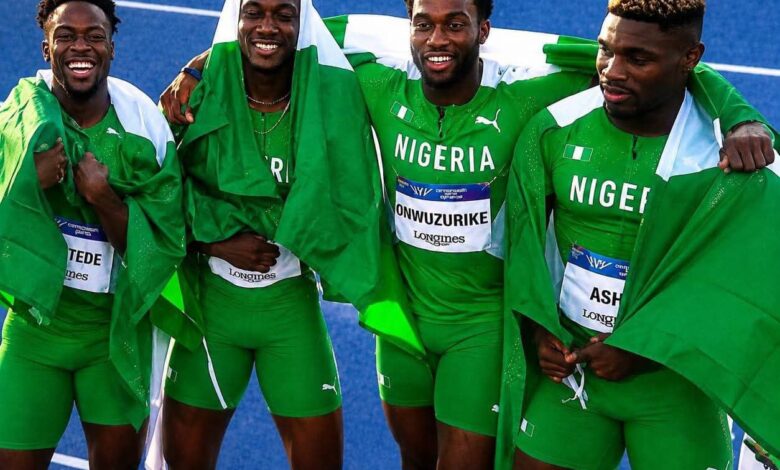
Team Nigeria ended its campaign at the 2026 Commonwealth Games in Glasgow, Scotland, on a high note, finishing seventh on the final medals table with an impressive total of 24 medals to emerge as the highest-ranked African nation at the competition.
The final standings, released on the official X account of the Glasgow 2026 Commonwealth Games on Sunday evening, showed Nigeria winning 10 gold, seven silver and seven bronze medals. The performance secured the country a place among the top 10 nations at the Games and reinforced its reputation as one of Africa’s leading sporting powers.
Nigeria finished just behind New Zealand, which claimed sixth place with 36 medals, including 10 gold, 14 silver and 12 bronze. Jamaica came eighth with 19 medals, Wales finished ninth with 31 medals, while Malaysia completed the top 10 with 16 medals.
Australia dominated the Games, topping the medals table with a remarkable 171 medals made up of 70 gold, 45 silver and 56 bronze medals.
England finished second with 110 medals, comprising 29 gold, 45 silver and 36 bronze, while Canada came third with 62 medals, including 19 gold, 20 silver and 23 bronze.
India and host nation Scotland completed the top five after both countries won 39 medals. India, however, finished ahead of Scotland because it secured more silver medals.
For Nigeria, the Glasgow Games produced several memorable performances, with athletes excelling across athletics, para sports and field events.
The country’s first gold medal came through Esther Nworgu, who delivered a dominant performance in the women’s lightweight para powerlifting event. Her victory set the tone for Team Nigeria and boosted confidence within the delegation during the early stages of the competition.
Nigeria continued its strong showing with more outstanding performances from several athletes.
Ezekiel Nathaniel claimed gold in the men’s 400-metre hurdles after producing an impressive run that confirmed his status as one of the country’s rising stars in athletics.
Goodness Nwachukwu also made headlines after breaking her own world record in the women’s F42 discus throw. Her record-breaking effort earned her the gold medal and became one of Nigeria’s biggest highlights at the Games.
In para powerlifting, Idris Riluwan added another gold medal to Nigeria’s tally with a commanding performance in the men’s event, further strengthening the country’s long-standing dominance in the sport.
Shot put specialist Chukwuebuka Enekwechi also etched his name into Nigeria’s sporting history by winning gold in the men’s shot put. His victory marked another major achievement for Nigerian athletics on the international stage.
One of the most talked-about performances came from sprint hurdler Tobi Amusan. Despite struggling with injury during the competition, the world-class athlete showed determination to finish on the podium, winning the bronze medal in the women’s 100-metre hurdles.
Although many had expected Amusan to challenge for gold, her ability to compete despite fitness concerns earned praise from fans and sports officials, who described her performance as a reflection of resilience and commitment to the country.
Nigeria’s success at the Games was driven not only by established stars but also by a new generation of athletes who demonstrated that the country’s future in international sports remains bright.
The medal haul represented one of Nigeria’s strongest outings at the Commonwealth Games in recent years and highlighted the country’s growing strength in athletics and para sports.
The Commonwealth Games, often referred to as the “Friendly Games,” bring together athletes from countries and territories that are members of the Commonwealth of Nations. The event is held every four years and features competition in athletics, swimming, wrestling, boxing, weightlifting, cycling, gymnastics and several other sports.
Nigeria has traditionally been one of Africa’s strongest competitors at the Commonwealth Games, regularly winning medals in athletics, wrestling, boxing, weightlifting and para sports.
The country’s athletes have produced several memorable moments over the years, with many using the Games as a platform to launch successful careers at the Olympic Games and World Championships.
The Glasgow 2026 edition continued that tradition, with Nigerian athletes competing strongly against some of the world’s best sportsmen and women.
Beyond the medals, Nigeria’s performance also reflected the growing investment in para sports. Athletes in para powerlifting and para athletics once again delivered several podium finishes, reinforcing the country’s reputation as one of the world’s leading nations in those events.
Nigeria’s seventh-place finish also ensured that it remained comfortably ahead of every other African nation on the medals table.
South Africa finished 11th with 28 medals, including seven gold, 11 silver and 10 bronze. Northern Ireland placed 12th, while Kenya came 13th with 12 medals made up of three gold, four silver and five bronze.
Cyprus occupied 14th position with 12 medals, including one gold, five silver and six bronze, while Mauritius finished 15th with four medals.
Cameroon placed 16th after winning five medals, while Jersey, Samoa and Sri Lanka shared 17th position after each secured one gold and one silver medal.
Fiji completed the top 20 with one gold and one bronze medal.
Further down the standings, Uganda finished 27th with three medals, Namibia ended 29th with three medals, while Ghana finished 30th after winning two medals.
Lesotho and Zambia each claimed two bronze medals during the Games, while Gabon picked up one bronze medal to make the final medals table.
For Team Nigeria, the Glasgow campaign will be remembered as one of determination, resilience and excellence. From Esther Nworgu’s opening gold medal to Goodness Nwachukwu’s world-record performance and the courageous effort of Tobi Amusan despite injury, the athletes gave Nigerians plenty to celebrate.