
Political parties and candidates contesting the 2027 general elections have signed a national peace accord, pledging to run issue-based campaigns and reject violence, hate speech, misinformation, personal attacks and other acts capable of threatening the electoral process.
The accord was signed in Abuja on Tuesday at a ceremony organised by the National Peace Committee in partnership with The Kukah Centre, a day before the statutory commencement of public campaigns and rallies for the elections.
The event brought together the Chairman of the Independent National Electoral Commission, Prof Joash Amupitan; political party leaders; presidential candidates; National Assembly candidates; the Inspector-General of Police, Olatunji Disu; members of the diplomatic community and other stakeholders.
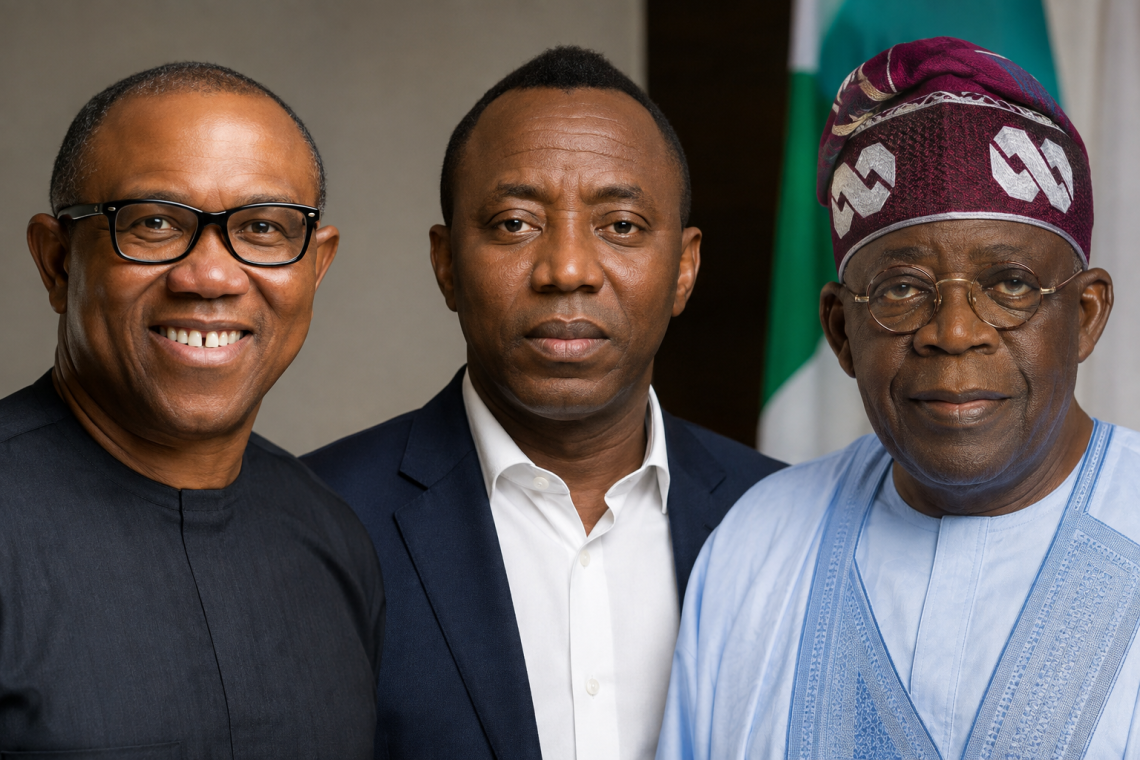
President Bola Tinubu was represented at the event by the Secretary to the Government of the Federation, Senator George Akume. Other presidential candidates who signed the accord included the Nigeria Democratic Congress candidate, Peter Obi; Social Democratic Party candidate, Adewole Adebayo; and African Action Congress candidate, Omoyele Sowore.
Also present were the National Chairman of the All Progressives Congress, Prof Nentawe Yilwatda; Peoples Redemption Party candidate Donald Duke; Labour Party candidate Chibuzor Okereke; Deputy President of the Senate, Barau Jibrin; PRP National Chairman, Hakeem Baba-Ahmed; lawmakers and other party leaders.
However, former Vice-President Atiku Abubakar, the presidential candidate of the African Democratic Congress, and Oyo State Governor Seyi Makinde, the presidential candidate of the Allied Peoples’ Movement, were absent.
The Chairman of the National Peace Committee and former Head of State, General Abdulsalami Abubakar (retd.), was represented by former Chief of Defence Staff, General Martin Agwai (retd.).
The agreement comes amid growing political activities ahead of the 2027 elections, with issues such as the economy, insecurity, unemployment, poverty, infrastructure, education, healthcare and the credibility of elections expected to dominate the campaign.
According to INEC’s revised timetable, the presidential and National Assembly elections will hold on January 16, 2027, while governorship and State House of Assembly elections are scheduled for February 6, 2027.
Speaking through Akume, Tinubu urged political parties and candidates to place the national interest above personal and partisan ambitions.
He warned that the struggle for political power must not become a do-or-die affair and called on politicians to avoid using ethnic and religious sentiments to win votes.
“Signing this peace accord is a solemn pledge to the Nigerian people that we, as leaders, will put the nation’s interests above personal or partisan ambitions,” the President said.
Tinubu acknowledged that political campaigns would naturally produce disagreements among candidates but said such differences should not threaten national unity.
He urged candidates to campaign on ideas, policies and programmes that could improve the lives of Nigerians.
“Let us campaign on superior ideas. Let us debate issues and promote the best policies to expand opportunities for our people,” he said.
The President also pledged the commitment of the APC to the accord, saying the party rejected violence, hate speech, misinformation, incitement and the misuse of social media and artificial intelligence to manipulate voters.
He commended the National Peace Committee for its interventions in Nigeria’s electoral process since 2014.
Tinubu also pointed to the use of technology by INEC, including Permanent Voter Cards and the Bimodal Voter Accreditation System, as measures that had improved election management.
The INEC chairman, Amupitan, said the peace accord was more than a symbolic event, describing it as an opportunity for political actors to set the rules for responsible campaigns before rallies and public campaigns began.
He noted that Wednesday, August 19, marked the statutory commencement of public campaigns for the 2027 elections.
“Before the first campaign flag is unfurled, before the first rally is staged, and before political rhetoric fills our public space, it is necessary that those who seek to lead this nation first gather to establish the ethical boundaries of their contest,” he said.
Amupitan said Nigerians expected candidates to focus on the problems confronting the country rather than engage in personal attacks and inflammatory statements.
He disclosed that information from the National Peace Committee’s Election Security Information Hub showed an “alarming resurgence” of hate speech, political division, misinformation and personality-based campaigns.
He urged political parties and candidates to make the economy, security, infrastructure, healthcare, education and social inclusion central to their campaigns.
“Electoral contests in a constitutional democracy are not total wars; they are competitive job interviews before the electorate. Nigerians do not want insults; they want solutions,” Amupitan said.
The INEC chairman also warned against premature claims of victory and the spread of unverified information on social media.
He said the increasing use of artificial intelligence and digital platforms had created new challenges for election management, including the spread of false information and foreign interference.
Amupitan said INEC was preparing to deploy about 1.4 million ad hoc personnel for the 2027 elections across more than 176,000 polling units.
He added that the commission was using lessons from recent elections, including the governorship polls in Anambra, Ekiti and Osun states and the Federal Capital Territory Area Council election, to strengthen its preparations.
He, however, stressed that INEC’s technology and administrative preparations alone could not guarantee peaceful elections.
“We provide the pitch and the refereeing, but the quality of the game depends on the players,” he said.
Amupitan assured all political parties that INEC had no preferred candidate and would provide a level playing field.
Abdulsalami said the National Peace Committee had facilitated 30 peace accords since 2015, including five national-level accords and 25 subnational agreements.
He said the committee had also established faith-based peace structures in 23 states.
According to him, the latest accord was designed to address the growing use of personal attacks, character assassination and ethnic and religious sentiments in political campaigns.
He said the agreement encouraged candidates and parties to compete on ideas, respect opposing views, protect voters, respect electoral institutions and reject hate speech and misinformation.
He also disclosed that the committee had established the Election Security Information Hub to monitor electoral offences and security developments and provide early warning to stakeholders.
However, the accord immediately faced criticism from some of the candidates.
Obi said politicians should not need a peace accord before behaving responsibly.
“We don’t even need to sign this. We’re seeking an office where we should be exemplary. You can’t answer ‘His Excellency’ without being an excellent person,” he said.
The former Anambra State governor said his participation was driven by his desire to change the electoral system from within.
He also called for accountability over deaths allegedly recorded during the recent Osun governorship election, saying nobody should die because of an election.
Obi said his major concern ahead of 2027 was whether Nigerians’ votes would count.
“I don’t have any fear, except to say that, please, for the sake of the children of Nigeria, can we have an election where people’s votes will count?” he asked.
Sowore, however, expressed stronger reservations about the effectiveness of the accord.
He described the agreement as a “ritual of sorts”, arguing that previous peace accords had not stopped election-related violence.
Sowore alleged that about 50 people died in connection with the recent Osun governorship election, although the figure was not independently established at the ceremony.
He also criticised INEC over the uploading of results from the Osun election, alleging that some results had not been uploaded to the commission’s portal.
He argued that a peace agreement without enforceable sanctions would have little effect on political actors who violate it.
Sowore called for what he described as a “justice accord” that would impose consequences on politicians and parties that breach their commitments.
The police leadership also pledged to provide security for voters, candidates, electoral officials and other participants during the election period.
Disu was represented by the Deputy Inspector-General of Police in charge of Operations, Umar Shehu.
Shehu said the police were not interested in which candidate or party won the election but were focused on ensuring that eligible Nigerians could vote without fear or intimidation.
“The Nigeria Police is not interested in who wins or loses but is interested and committed to a peaceful election where Nigerians of eligible age will exercise their franchise without fear,” he said.
The Chairman of the Inter-Party Advisory Council, Yusuf Dantalle, urged political parties, candidates and campaign organisations to respect the terms of the accord.
He called for an end to fake news, insults and personal attacks, urging politicians to promote tolerance and constructive debate.
The signing of the accord has therefore set the tone for the 2027 campaign season. With political activities expected to intensify in the coming months, the major test will be whether the commitments made in Abuja will translate into responsible conduct at rallies, on television, online and at polling stations.