
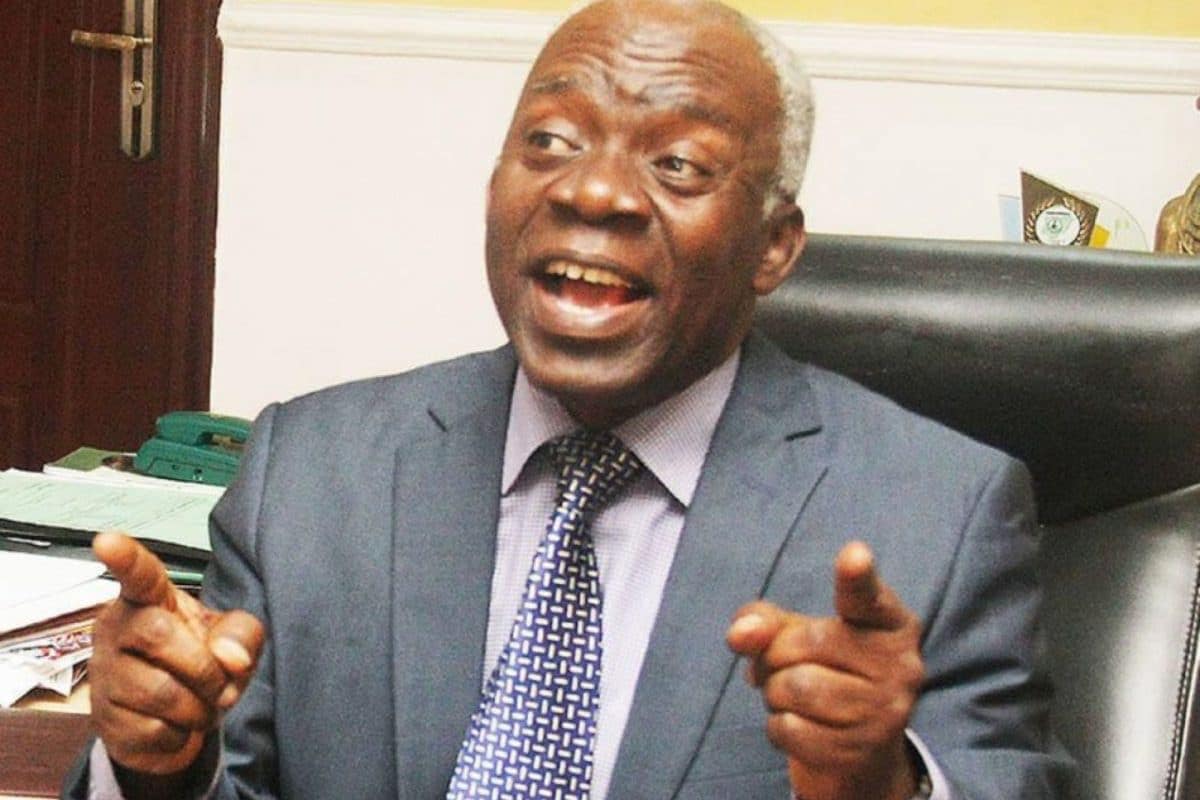
Human rights lawyer and Senior Advocate of Nigeria, Femi Falana, has said the financial savings expected from the removal of fuel subsidy have been wiped out by the devaluation of the naira and what he described as the Federal Government’s neoliberal economic policies.
Falana, who spoke on Channels Television’s *Sunday Politics*, questioned the economic gains of the subsidy removal policy introduced by President Bola Tinubu in May 2023.
He said the subsidy had effectively ended before Tinubu announced its removal on May 29, 2023, because no money had been provided for the payment of fuel subsidy in the 2023 budget.
According to the senior lawyer, the government therefore needs to explain what happened to the money that was expected to be saved from the end of subsidy payments.
“At the commercial rate, by the time President Tinubu announced in May that fuel subsidy was gone, it had already gone because not a dime was earmarked for subsidy that year,” Falana said.
He also questioned the whereabouts of the estimated $10 billion which, according to him, would have been spent on importing fuel under the subsidy system.
“The $10 billion that would have been spent on the importation of fuel, where is it?” he asked.
Falana argued that whatever savings were made from the removal of the subsidy had been consumed by the fall in the value of the naira.
“The naira, the exchange rate, has been devalued. So it’s been eaten up by devaluation and other neoliberal policies of the government,” he said.
The Tinubu administration removed petrol subsidy immediately after the President was sworn in on May 29, 2023. The announcement brought an immediate end to the long-standing system under which the government paid part of the cost of imported petrol to keep the pump price below the market rate.
The government had defended the decision as necessary to reduce pressure on public finances and redirect money previously spent on subsidy to infrastructure, social programmes and other areas of the economy.
However, the policy led to a sharp increase in the price of petrol, with serious effects on transport fares, food prices and the cost of goods and services across the country.
The removal of subsidy also came alongside major changes in the foreign exchange market. The naira weakened significantly against major currencies, increasing the cost of importing petrol and other goods. Since Nigeria depended heavily on imported refined petroleum products at the time, changes in the exchange rate had a direct impact on the cost of fuel.
Falana’s argument centres on this link between subsidy removal and the exchange rate. While the government expected to reduce its spending by no longer paying petrol subsidies, the weaker naira meant that the cost of importing fuel rose sharply.
The lawyer therefore questioned whether the country had actually gained the level of financial relief expected from the subsidy policy.
His comments add to the wider debate over the economic consequences of the policy, which remains one of the most controversial decisions of the Tinubu administration.
The government has repeatedly argued that subsidy removal was unavoidable because the subsidy regime had become too costly and was open to abuse. Officials have also said that keeping petrol prices artificially low was putting a heavy burden on government finances while benefiting people who could afford to pay the market price.
The administration has introduced several measures aimed at reducing the impact of the reforms on Nigerians. These have included cash transfers, student loans, support for businesses and various social intervention programmes.
Despite these measures, many Nigerians have continued to complain about the high cost of living. Transport costs have risen, food prices have increased and households have struggled with higher costs of basic goods.
The government has also been working to reduce Nigeria’s dependence on imported refined petroleum products. The return of the Dangote Petroleum Refinery to large-scale production has been presented as an important step towards reducing petrol imports and easing pressure on the country’s foreign exchange reserves.
Before the refinery became a major supplier, Nigeria spent a large amount of foreign exchange importing refined petroleum products despite being a major crude oil producer.
The government has maintained that the long-term benefits of the reforms will become clearer as domestic refining increases, foreign exchange pressures ease and investment in the economy improves.
But critics, including labour unions and civil society groups, have continued to demand greater transparency over the use of the funds saved from subsidy removal.
Falana’s latest comments are likely to add to those calls, particularly his question about the estimated $10 billion that he said would have been spent on fuel imports under the former subsidy arrangement.
The senior lawyer’s position also reflects a broader concern over whether the economic reforms have produced enough benefits for ordinary Nigerians.
For many households, the key issue remains whether the savings from subsidy removal are being converted into better living conditions, improved public services and lower economic pressure.
Falana therefore called attention to the need for the government to account for the financial gains from the policy, while pointing to the naira’s devaluation and other economic measures as factors that, in his view, have reduced or erased the expected benefits.