
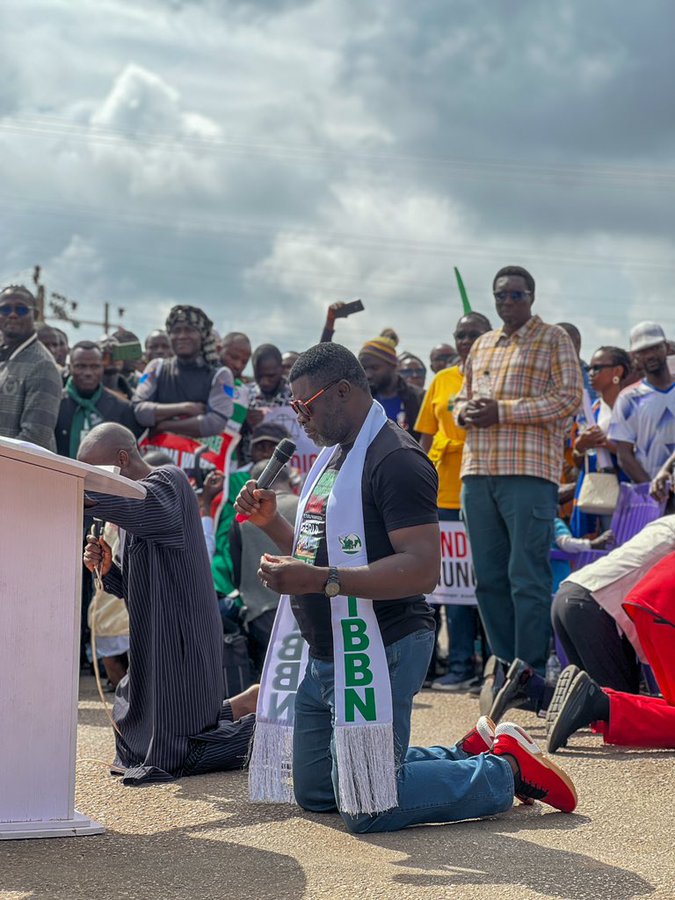
The Nigerian Police Force (NPF) has revealed that approximately ₦9 billion was allegedly raised by unnamed groups and individuals to fuel chaos during the recent EndBadGovernance protests across the country.
This revelation came from the Force Public Relations Officer, ACP Muyiwa Adejobi, who disclosed the information during the Civil Space Guard Conference.
The conference, organized by the Wole Soyinka Centre for Investigative Journalism (WSCIJ) in collaboration with the Kingdom of the Netherlands, was held in Abuja.
Adejobi emphasized that the police had previously warned about potential risks of foreign interference in the protests.
“We always receive intelligence,” he explained.
He mentioned that he had issued warnings on behalf of the Inspector-General of Police (IGP), alerting the public to possible involvement by foreign mercenaries who could exploit the demonstrations.
However, Adejobi noted that these warnings were largely ignored by the public.
“But due to a trust deficit, people often think we are not truthful when we make certain claims,” he stated.
Adejobi lamented that many Nigerians were skeptical of police intelligence reports, dismissing them as exaggerated or unfounded.
He noted that while some Nigerians were genuinely protesting economic challenges, others allegedly took advantage of the protests for financial gain.
According to Adejobi, the scale of funds allegedly raised is alarming.
“They indeed raised funds — we are talking about N9 billion,” he disclosed.
The funds, Adejobi claimed, were distributed with the intent to cause chaos across Nigeria.
“I’m sure you were not aware that someone received that money,” he told the audience.
“From that protest alone, ₦9 billion was generated, and the funds were actually distributed to incite chaos in Nigeria,” he said.
The EndBadGovernance protests erupted on August 1, 2024, with Nigerians across the country taking to the streets to express frustration over the rising cost of living.
The cost of essential goods and services has skyrocketed in recent months, fueled by inflation and foreign exchange challenges, making daily life increasingly difficult for millions of Nigerians.
The protests called for government action to address these economic hardships, with demonstrators demanding reforms and more responsive governance.
While the protests were relatively peaceful in southern Nigeria, violence soon erupted in northern states, resulting in significant property damage.
Public facilities, private businesses, and other assets suffered destruction as tensions escalated in the northern region.
A notable feature of the northern protests was the display of foreign flags, including Russian flags, which appeared as tensions rose.
Some protesters reportedly called for Russian President Vladimir Putin to “intervene,” urging external assistance in addressing Nigeria’s domestic issues.
This unusual development added a complex layer to the protests, raising concerns about the influence of foreign interests.
In response, the Nigerian Police has cited this as a sign of potential foreign manipulation, suggesting that external forces may be seeking to exploit Nigeria’s internal challenges for their own benefit.
Adejobi underscored that while some protesters had genuine concerns, others allegedly hijacked the movement to serve their own interests.
“While some were genuinely trying to protest and express their grievances to the government, others attempted to exploit the situation for financial gain,” he said.
According to Adejobi, the influx of funds turned the protests into a tool for those seeking to incite chaos rather than a peaceful movement aimed at reform.
The revelation has sparked debate over the motivations behind the protests and the potential for foreign interests to influence Nigerian affairs.