
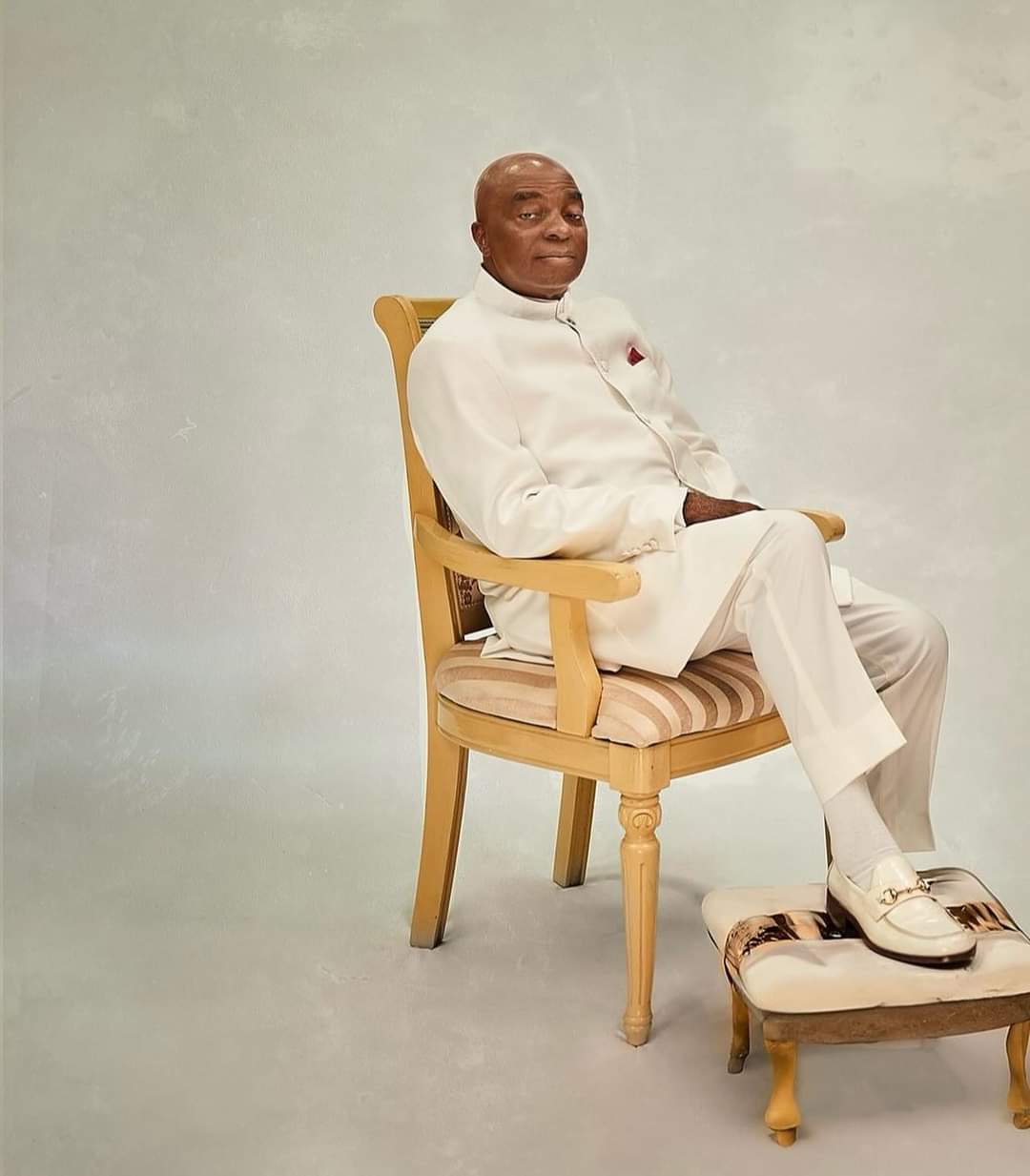
The Nigerian Supreme Council for Islamic Affairs (NSCIA) has demanded the Federal Government revoke the private airstrip licence issued to Living Faith Church, popularly known as Winners Chapel.
This decision was made public in a communique following the council’s 10th Expanded General Purpose Committee (EGPC) meeting held at the Abuja National Mosque.
The communique strongly criticized the granting of the airstrip licence, describing it as “an aberration of the highest order.”
The council stated that such a licence could pose significant risks to national security and disrupt the nation’s fragile peace.
The licence had been granted by the Minister of Aviation and Aerospace Development, Festus Keyamo, in October.
Keyamo announced that the airstrip would remain under the Federal Government’s management through the Nigerian Airspace Management Agency (NAMA).
This announcement sparked controversy, with many questioning the need for a private airstrip linked to a religious organization.
Members of the House of Representatives have also expressed concerns.
They have called for the Federal Government to review and revoke similar licences granted to private entities, citing growing security concerns.
The NSCIA echoed these fears, emphasizing that granting such licences to individuals or private organizations is dangerous.
According to the council, the implications of such decisions could be far-reaching, especially in a country facing multiple security challenges.
“Security is not something to gamble with,” a representative from the council stated.
The meeting was presided over by the President-General of the NSCIA and Sultan of Sokoto, Alhaji Muhammad Sa’ad Abubakar III.
Other prominent Muslim leaders attended the session, including Prof. Is-haq Oloyede, Secretary-General of NSCIA, and Alhaji Yahaya Abubakar, Etsu Nupe.
During the same meeting, the NSCIA addressed the issue of discrimination against Islamic marriage certificates in Nigeria.
The council condemned what it described as “unwarranted discrimination” against Muslim couples.
It noted that many authorities, both within and outside the country, fail to recognize Islamic marriage certificates.
This forces Muslim couples to obtain additional certificates under conditions that do not align with Islamic law.
The council vowed to take renewed steps to address this issue.
It described the situation as unfair and urged the government to respect the rights of Muslims in the country.
The NSCIA also reaffirmed its position on organizing national Qur’anic recitation competitions, known as musabaqah.
The council stated that the only accredited body for organizing these competitions is the Centre for Islamic Studies at Usmanu Danfodiyo University, Sokoto.
“No other person or group of persons is allowed to hijack the process or undermine the authority of the Centre,” the communique read.
This reaffirmation comes as some groups have reportedly attempted to take over the organization of the competitions.
The council warned that such actions would not be tolerated, calling for unity and respect for established institutions.
The NSCIA meeting brought together prominent Muslim leaders from across the country.
The Deputy President-General of the NSCIA (South), Alhaji Rasaki Oladejo, and Prof. Khalid Abubakar of Jama’atu Nasril Islam were among those in attendance.
Other attendees included Prof. Muslih Yahaya, Executive Secretary of the Muslim Ummah of Southwest Nigeria (MUSWEN), and Prof. Salisu Shehu, Deputy Secretary-General of NSCIA.
The meeting was described as a significant step in addressing issues affecting the Muslim community in Nigeria.
Leaders called for unity and greater efforts to protect the interests of Muslims nationwide.
The NSCIA’s call for revocation of Oyedepo’s airstrip licence has sparked mixed reactions among Nigerians.
While some support the council’s stance, others see the demand as unnecessary and divisive.
Critics argue that the private airstrip is a legitimate project and does not pose a direct threat to national security.
However, supporters of the NSCIA believe the licence represents a dangerous precedent.